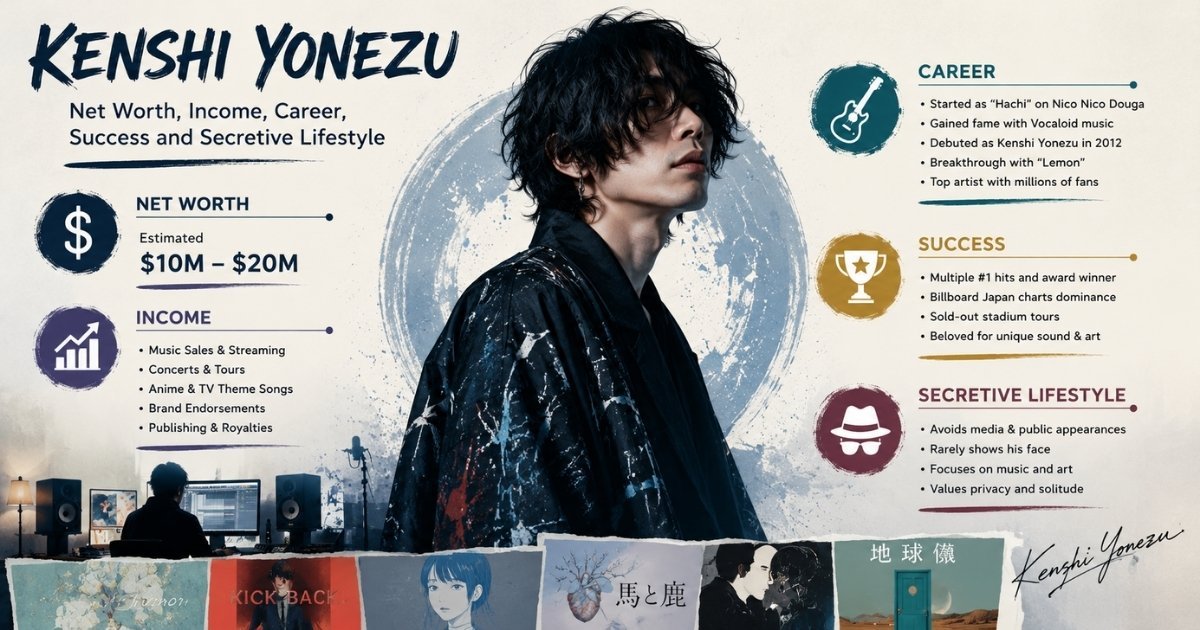
Kenshi Yonezu is a highly successful Japanese singer-songwriter, producer, and illustrator with an estimated net worth of $10 million to $20 million. He began his music career producing Vocaloid tracks under the alias Hachi before transitioning to his real name. Known for chart-topping hits like “Lemon” and “Kick Back,” Kenshi Yonezu maintains a famously private and hidden lifestyle, rarely appearing on live television or sharing personal details with the public.
Kenshi Yonezu has completely transformed the landscape of modern Japanese pop music. Over the last decade, the talented singer, songwriter, and illustrator has evolved from an anonymous internet creator into a defining cultural icon. His journey represents a massive shift in how artists can achieve mainstream success entirely on their own terms, bypassing the traditional idol machinery that historically dominated the Japanese music industry.
For many fans outside of Japan, the first exposure to Kenshi Yonezu comes through high-profile anime theme songs. Tracks like “Peace Sign” for My Hero Academia or “Kick Back” for Chainsaw Man have propelled him to international recognition. However, his domestic success is even more staggering. His music videos routinely garner hundreds of millions of views, and his albums achieve multi-platinum status in an era where physical media sales are steadily declining globally.
Despite his massive commercial success, Kenshi Yonezu remains an enigma. He actively avoids the celebrity spotlight, preferring to let his multifaceted art speak for itself. He illustrates his own album covers, directs music videos, and meticulously controls his creative output. This fierce independence has only fueled public curiosity about the man behind the music.
This comprehensive guide explores the fascinating trajectory of Kenshi Yonezu. We will break down his musical evolution from his early internet days, analyze his estimated net worth and revenue streams, and uncover the details of his notoriously private lifestyle.
Table of Contents
Kenshi Yonezu Profile Data
| Category | Detail |
|---|---|
| Full Name | Kenshi Yonezu |
| Former Alias | Hachi |
| Birth Date | March 10, 1991 |
| Birthplace | Tokushima, Japan |
| Professions | Singer, Songwriter, Record Producer, Illustrator |
| Estimated Net Worth | $10 Million – $20 Million |
| Biggest Hit Song | “Lemon” (Over 800 million YouTube views) |
| Notable Anime Contributions | My Hero Academia, Chainsaw Man, Spirited Away (Stage Play) |
How did Kenshi Yonezu start his music career?
The musical journey of Kenshi Yonezu is a blueprint for the modern digital artist. Long before he was selling out stadium tours, he was building a massive, dedicated following from the confines of his bedroom.
What was Kenshi Yonezu’s early career like as Hachi?
In 2009, Kenshi Yonezu began uploading original music to the Japanese video-sharing website Niconico (formerly Nico Nico Douga). At this time, he used the pseudonym “Hachi” and utilized Vocaloid software—specifically the voicebank Hatsune Miku—to perform his vocal tracks. Vocaloid software allows producers to synthesize singing by typing in lyrics and melodies, which was the perfect tool for an introverted creator who was hesitant to use his own voice.
As Hachi, Kenshi Yonezu created frantic, highly complex digital rock songs. Tracks like “Matryoshka” and “Panda Hero” became massive viral hits within the Vocaloid community. His unique production style featured chaotic rhythms, cryptic lyrics, and his own hand-drawn music videos. This era established Kenshi Yonezu as a prodigy in the internet music scene. His ability to fuse electronic music with traditional rock instrumentation set a new standard for online creators. By operating under an alias, he was able to freely experiment with sound and visual art without the pressure of a public persona.
How did Kenshi Yonezu transition to mainstream success?
In 2012, Kenshi Yonezu decided to step out from behind the Vocaloid software and release music under his real name, using his own voice. He released his debut independent album, diorama, which he wrote, produced, arranged, and sang entirely by himself. The album was a critical success, proving that his songwriting skills translated perfectly to his own vocal performances.
His major-label debut came in 2014 with the album Yankee. This record featured a more polished, accessible alternative rock sound while retaining the intricate melodies that defined his earlier work. It was his 2017 album Bootleg, however, that catapulted Kenshi Yonezu to superstardom. Bootleg won Album of the Year at the 60th Japan Record Awards and featured collaborations with prominent artists, showcasing his ability to blend diverse musical genres.
The turning point for his global recognition arrived in 2018 with the release of the single “Lemon.” Written as the theme song for the television drama Unnatural, “Lemon” became a cultural phenomenon. The song deals heavily with themes of grief and loss, resonating deeply with millions of listeners. “Lemon” topped the Billboard Japan Hot 100 year-end charts for two consecutive years, a historic achievement that solidified Kenshi Yonezu as the premier male solo artist in Japan.
What is Kenshi Yonezu’s estimated net worth?
Determining the exact net worth of Kenshi Yonezu is challenging due to the notoriously private nature of Japanese financial disclosures for entertainers. However, industry experts estimate Kenshi Yonezu’s net worth sits between $10 million and $20 million. This wealth is accumulated through multiple, highly lucrative revenue streams that benefit heavily from his status as a primary songwriter.
How much revenue does Kenshi Yonezu generate from music sales and streaming?
Unlike many pop stars who rely on a team of writers and producers, Kenshi Yonezu writes, composes, and arranges almost all of his music. This means he retains a significantly larger portion of the royalties. His physical album sales remain incredibly strong. His 2020 album Stray Sheep sold over one million physical copies in Japan alone, an astonishing feat in the digital streaming era.
Streaming revenue also forms a massive pillar of his wealth. Kenshi Yonezu boasts millions of monthly listeners on platforms like Spotify and Apple Music. Furthermore, his YouTube channel is an absolute juggernaut. With multiple music videos surpassing the 100-million-view mark—and “Lemon” approaching one billion views—ad revenue from YouTube constitutes a massive, passive income stream.
Additionally, Japan possesses a robust karaoke culture. Every time a song is selected in a karaoke parlor, the songwriter earns a small royalty fee. Because songs like “Lemon,” “Pretender,” and “Flamingo” are staples in Japanese karaoke rooms, Kenshi Yonezu earns substantial continuous royalties from this avenue alone.
Do anime theme songs and brand partnerships boost Kenshi Yonezu’s wealth?
Anime tie-ins are incredibly lucrative for Japanese musicians. When Kenshi Yonezu provides a theme song for a popular anime, it guarantees massive global exposure. His track “Kick Back” for the hit series Chainsaw Man was a monumental success, becoming the first Japanese-language song to be certified Gold by the Recording Industry Association of America (RIAA). These anime contracts often come with high upfront fees, alongside the backend streaming royalties generated by global anime fans.
Kenshi Yonezu also engages in highly selective brand partnerships. He has collaborated with major international corporations, most notably starring in a commercial campaign for PlayStation. He also provided the theme song for the globally acclaimed video game Final Fantasy XVI. Furthermore, Kenshi Yonezu has collaborated with the luxury fashion brand Loewe, demonstrating his cultural cachet extends far beyond music. By carefully selecting high-paying, prestigious partnerships, Kenshi Yonezu maximizes his income while maintaining his artistic integrity.
What do we know about Kenshi Yonezu’s hidden lifestyle?
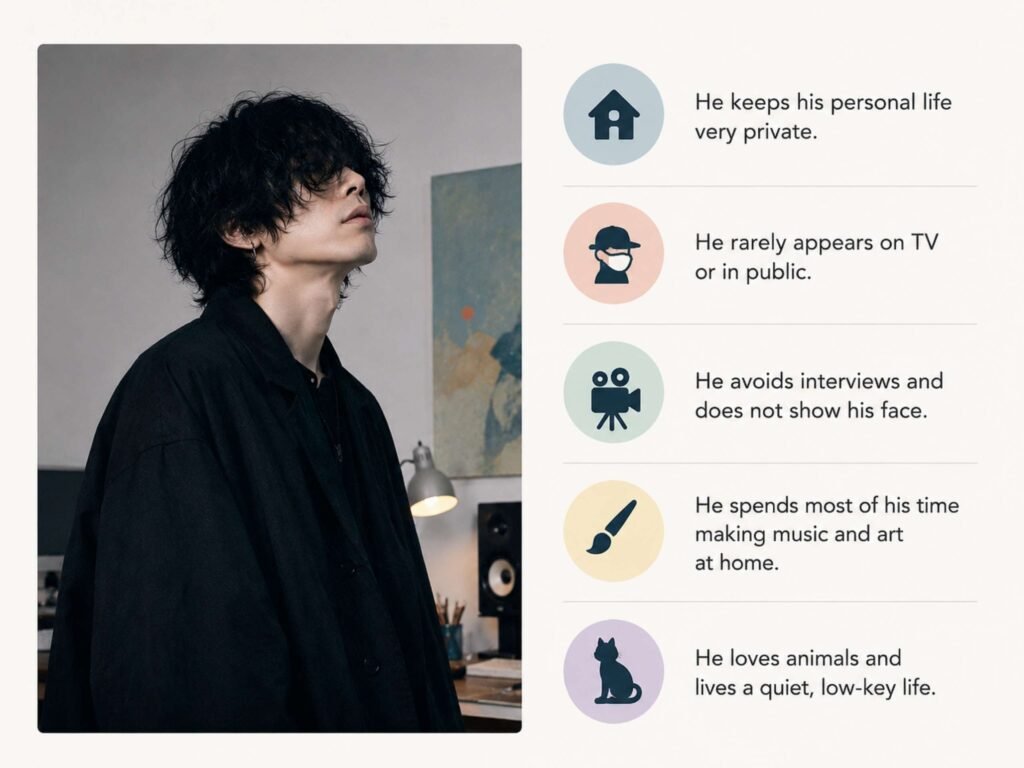
In a celebrity culture that demands constant social media presence and public vulnerability, Kenshi Yonezu takes the opposite approach. He is famously reclusive, rarely participating in variety shows or traditional media press tours. This intense privacy has created an aura of mystery around the artist.
How does Kenshi Yonezu balance massive fame with extreme privacy?
Kenshi Yonezu prefers to communicate with his audience strictly through his art. He rarely posts personal updates on social media, using his platforms almost exclusively to announce new music, showcase his illustrations, or promote tours. When he does appear in public, his physical presentation often shields him; he is known for his signature long bangs that frequently cover his eyes, serving as a literal and metaphorical barrier between himself and the public.
His refusal to conform to the standard idol lifestyle is a conscious choice. Kenshi Yonezu has openly expressed discomfort with massive crowds and the intense scrutiny that accompanies fame. By strictly limiting his public appearances, he protects his mental energy and ensures that public discourse remains focused on his music rather than his private life. His first television performance of “Lemon” during the prestigious NHK Kōhaku Uta Gassen was broadcast from a remote, candlelit museum in his hometown of Tokushima, rather than the main studio stage. This setup perfectly encapsulated his desire to perform on his own terms.
What has Kenshi Yonezu shared about his personal struggles and artistic process?
While he hides his daily life, Kenshi Yonezu is remarkably candid about his mental health and personal struggles in his lyrics and rare interviews. At the age of 20, Kenshi Yonezu was diagnosed with high-functioning autism. He has spoken about how this diagnosis helped him understand his lifelong feelings of alienation and difficulty communicating with others.
Music became his primary vehicle for navigating the world. His artistic process is highly solitary. He not only produces the music but also creates the visual identity for his projects. Kenshi Yonezu illustrates the cover art for his singles and albums, ensuring that the visual aesthetic perfectly matches the sonic landscape of his work. This level of control requires intense focus and isolation, which aligns perfectly with his natural disposition.
Furthermore, he has publicly discussed being diagnosed with Marfan syndrome, a genetic disorder that affects the body’s connective tissue. This condition often results in a tall, thin physical stature and can cause joint and cardiovascular issues. By occasionally opening up about these diagnoses, Kenshi Yonezu has fostered a deep connection with fans who also struggle with physical or mental health challenges, proving that great art can emerge from profound personal difficulty.
Kenshi Yonezu’s Lasting Impact on Japanese Music
Kenshi Yonezu represents a new archetype of the global pop star. He proved that an artist can rise from the underground internet scene to the absolute pinnacle of the music industry without compromising their artistic vision or sacrificing their personal privacy.
His impact on Japanese music cannot be overstated. He bridged the gap between the niche Vocaloid subculture and the mainstream pop audience, paving the way for other internet-born artists like Yoasobi and Ado to achieve similar crossover success. By demanding total creative control over his songwriting, production, and visual art, Kenshi Yonezu has elevated the standard for what audiences expect from solo musicians.
As he continues to release critically acclaimed albums and secure high-profile international collaborations, Kenshi Yonezu’s legacy is firmly cemented. He remains a brilliant, elusive artist who speaks loudest when the music starts playing.
Japanese music fans often compare Kenshi Yonezu’s success with that of Hikaru Utada, another artist who has left a lasting impact on the industry.
Frequently Asked Questions (FAQ)
What was Kenshi Yonezu’s name before he became famous?
Before releasing music under his real name, Kenshi Yonezu produced Vocaloid music under the alias “Hachi.” As Hachi, he became a legendary figure in the Nico Nico Douga internet community, creating massive hits like “Matryoshka” and “Donut Hole.”
Does Kenshi Yonezu draw his own album covers?
Yes, Kenshi Yonezu is a highly skilled illustrator and draws his own album and single covers. His distinct, slightly surreal art style is a crucial part of his brand identity and perfectly complements the themes of his music.
Why does Kenshi Yonezu hide his face?
Kenshi Yonezu is naturally introverted and has expressed discomfort with the extreme public scrutiny of fame. He often uses his hair to cover his eyes and rarely appears on live television, choosing instead to maintain a strong boundary between his private life and his public artistic persona.
What is Kenshi Yonezu’s biggest hit song?
“Lemon” is widely considered Kenshi Yonezu’s biggest hit. Released in 2018 as the theme for the drama Unnatural, the song broke numerous chart records in Japan and its music video has accumulated hundreds of millions of views on YouTube.
Has Kenshi Yonezu written songs for other artists?
Yes, Kenshi Yonezu has written and produced highly successful songs for other artists. His most notable production credit is “Paprika,” a song written for the children’s choral group Foorin, which won the Grand Prix at the 61st Japan Record Awards.
Drake’s remarkable achievements illustrate how music careers can generate long-term wealth and influence.
