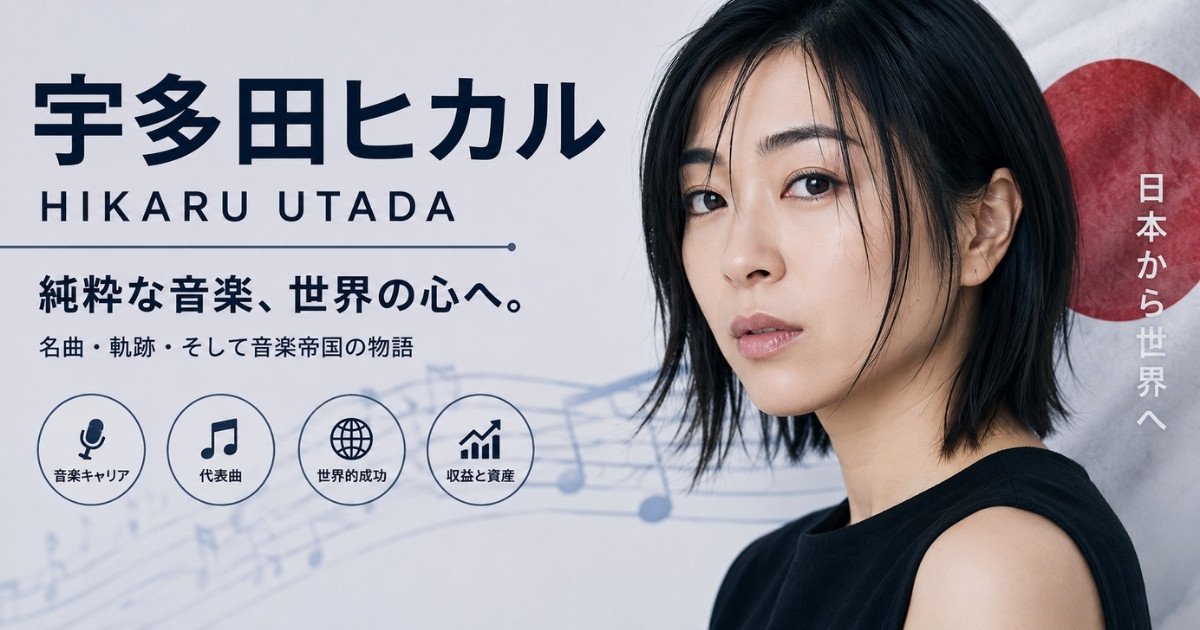
Hikaru Utada is a Japanese-American singer, songwriter, and producer with an estimated net worth of $55 million. They achieved unprecedented music industry success primarily through record-breaking album sales—including First Love, the best-selling album in Japanese history—and by writing the globally recognized theme songs for the Kingdom Hearts video game franchise.
Hikaru Utada completely reshaped the landscape of Japanese pop music in the late 1990s and early 2000s. By introducing R&B elements into mainstream J-pop and writing highly personal lyrics, Utada captured the attention of millions across the globe. For anyone interested in the economics of the global music industry, understanding Utada’s career trajectory offers a fascinating look at how talent, timing, and cross-cultural appeal generate monumental financial success.
This post explores the exact factors that contributed to Hikaru Utada’s net worth, the milestones that define their music industry success, and how their involvement in major video game franchises cemented their legacy worldwide.
Table of Contents
What Is Hikaru Utada’s Net Worth in 2024?
Financial analysts and industry insiders estimate Hikaru Utada’s net worth to be around $55 million. Unlike many pop stars who rely heavily on relentless touring and brand endorsements to build their wealth, Utada generated the vast majority of their fortune through direct music sales, songwriting royalties, and strategic licensing deals.
Because Utada writes and co-produces almost all of their own music, they retain a much larger share of publishing royalties compared to artists who rely on outside songwriters. Every time a song like “Automatic” or “First Love” plays on the radio, streams on a digital platform, or features in a television show, Utada earns royalty payments. Over a career spanning more than two decades, these cumulative royalties form the bedrock of their financial stability.
Furthermore, Utada’s ability to cross over into different media formats has created diversified income streams. Their music frequently appears in high-profile Japanese television dramas, commercial campaigns for major brands like Suntory, and international video game releases. This smart approach to music publishing ensures a steady flow of passive income, maintaining their high net worth even during periods when they step away from the public eye.
How Did Hikaru Utada Achieve Record-Breaking Music Industry Success?
The story of Hikaru Utada’s music industry success is fundamentally tied to their debut album, but their background set the stage for this triumph. Born in New York City to Japanese parents who were both heavily involved in the music industry—their father was a record producer and their mother was a famous enka singer—Utada was immersed in music production from a very young age.
The Explosive Debut of First Love
In 1999, at the age of 16, Hikaru Utada released their debut Japanese-language album, First Love. The album was a cultural phenomenon. It sold over 2 million copies in its first week alone. First Love eventually sold over 7 million copies in Japan and an additional 3 million copies overseas, making it the best-selling album in the history of the Oricon charts.
The success of First Love was driven by Utada’s unique vocal phrasing, which blended English and Japanese seamlessly, and a heavy influence of American R&B. This sound was incredibly fresh to the Japanese market at the time. The massive sales of this single album provided an immediate and massive boost to Utada’s net worth, establishing them as an industry powerhouse before they even graduated from high school.
The Historic Sales Battle: Distance vs. A Best
Utada’s sophomore album, Distance, was released in 2001. The release date coincided exactly with the release of A Best, a compilation album by rival J-pop superstar Ayumi Hamasaki. This created a massive media frenzy in Japan, driving record store traffic to unprecedented levels.
Distance sold exactly 3 million copies in its first week of release, setting a world record for the highest first-week album sales in a single territory. This record stood globally until Adele released 25 in 2015. The incredible commercial performance of Distance proved that Hikaru Utada was not a one-hit wonder, solidifying their long-term earning potential and securing their position at the top of the Japanese music industry.
What Are Hikaru Utada’s Major Discography Milestones?
To understand the sheer scale of Hikaru Utada’s commercial success, it helps to look at the numbers. They have sold over 37 million records worldwide. Below is a data table outlining the performance of their most impactful Japanese studio albums.
| Album Title | Release Year | Peak Oricon Chart Position | Approximate Copies Sold (Japan) |
|---|---|---|---|
| First Love | 1999 | 1 | 7.65 Million |
| Distance | 2001 | 1 | 4.47 Million |
| Deep River | 2002 | 1 | 3.60 Million |
| Ultra Blue | 2006 | 1 | 909,000 |
| Heart Station | 2008 | 1 | 1.01 Million |
| Fantôme | 2016 | 1 | 700,000+ |
| Hatsukoi | 2018 | 1 | 380,000+ |
| Bad Mode | 2022 | 1 | 150,000+ |
As the music industry shifted from physical CDs to digital downloads and streaming, Utada’s physical sales naturally decreased. However, their streaming numbers remain exceptionally high. Songs from Fantôme and Bad Mode have charted aggressively on Apple Music and Spotify, ensuring that Utada continues to monetize their new releases effectively in the digital era.
How Did Kingdom Hearts Boost Hikaru Utada’s Global Reach?
While Hikaru Utada is a household name in Japan, their introduction to the Western world came primarily through a partnership with Square Enix and Disney. In 2002, Utada wrote and performed the theme song for the PlayStation 2 game Kingdom Hearts.
The Cultural Impact of Simple and Clean
The English version of the theme, “Simple and Clean” (along with its Japanese counterpart, “Hikari”), became an instant classic among gamers. Kingdom Hearts went on to sell millions of copies worldwide, acting as a massive promotional vehicle for Utada’s music. Because gamers spend dozens of hours interacting with the game and its cinematic sequences, the emotional attachment to “Simple and Clean” was profound.
Continuing the Legacy with Sanctuary and Face My Fears
Utada returned to provide the theme song for Kingdom Hearts II with the track “Sanctuary” (and “Passion” in Japanese). Once again, the song became deeply embedded in video game culture. Years later, for the release of Kingdom Hearts III, Utada collaborated with American electronic musician Skrillex to create the theme “Face My Fears.”
This track was a massive commercial success, debuting on the US Billboard Hot 100 chart. The Kingdom Hearts franchise has sold over 36 million copies worldwide. By tying their music to one of the most beloved gaming franchises of the 21st century, Hikaru Utada secured a loyal international fanbase, generated substantial international royalty income, and heavily bolstered their overall net worth.
What Are the Main Sources of Hikaru Utada’s Income?
Understanding how a modern artist maintains a multi-million dollar fortune requires looking at their diverse revenue streams. Hikaru Utada’s financial portfolio within the music industry is remarkably stable.
Songwriting and Publishing Royalties
As mentioned earlier, retaining publishing rights is the most lucrative move a musician can make. Hikaru Utada holds the writing credits for almost their entire catalog. This means they earn mechanical royalties every time a physical or digital copy is sold, and performance royalties every time a song is played in public, on television, or on the radio.
Album Sales and Digital Streaming
Physical album sales in Japan remain stronger than in many Western countries, and Utada continues to sell physical media in high volumes. Additionally, Utada’s transition to streaming platforms was highly successful. Their back catalog generates millions of streams per month on Spotify and Apple Music, providing a continuous, reliable income stream.
Touring and Live Performances
Although Hikaru Utada does not tour as frequently as other major pop stars, their live shows are massive events. Tours like the Utada United tour in 2006, the Wild Life concerts in 2010, and the Laughter in the Dark tour in 2018 sold out rapidly. By keeping their live performances relatively rare, Utada ensures high ticket demand and maximum profitability for each show they choose to perform.
Commercial Tie-Ins and Brand Endorsements
In Japan, it is highly common for pop music to be tied to television commercials. Utada has licensed their music to massive corporations like Suntory, Nissan, and NTT DoCoMo. These licensing deals are exceptionally lucrative and serve as both a source of income and a high-visibility marketing tool for the songs themselves.
The Human Activities Hiatus and Triumphant Return
In 2010, Hikaru Utada made a highly publicized decision to step away from the music industry. They announced an indefinite hiatus to focus on “human activities,” expressing a desire to experience life as a normal person after spending their entire adolescence and young adulthood in the intense spotlight of international fame.
During this period, Utada lived quietly in London, got married, and had a child. This hiatus lasted for six years. From a business perspective, stepping away for that long can be career suicide in the fast-moving pop music industry.
However, Utada’s return in 2016 with the album Fantôme proved their enduring appeal. The album debuted at number one on the Oricon charts and won Album of the Year at the Japan Record Awards. Fantôme showcased a more mature, deeply personal songwriting style, dealing heavily with themes of grief and motherhood following the tragic passing of Utada’s mother. The immense commercial and critical success of this comeback album proved that Hikaru Utada’s music industry success relies on genuine artistic connection rather than just fleeting pop trends.
Evaluating the Long-Term Success of Hikaru Utada
Hikaru Utada’s music industry success is a testament to the power of artistic authenticity combined with smart business practices. By retaining control over their songwriting, embracing cross-media opportunities like video game soundtracks, and knowing when to step away from the spotlight to protect their mental health, Utada has built a sustainable and highly lucrative career.
Their estimated net worth of $55 million reflects decades of hard work, record-breaking album sales, and an international legacy that continues to grow. Whether you discover their music through a classic J-pop playlist or while battling Heartless in a Kingdom Hearts game, Hikaru Utada’s cultural and financial impact on the global music industry is undeniable.
Fans of Japanese entertainment can learn more about the rising wealth of top stars through Ado net worth and Kanna Hashimoto net worth.
Frequently Asked Questions About Hikaru Utada
What is Hikaru Utada’s highest-selling album?
Hikaru Utada’s highest-selling album is First Love, released in 1999. It sold over 7.6 million copies in Japan, making it the highest-selling album in the country’s history, and it sold over 10 million copies worldwide.
How much money did Hikaru Utada make from Kingdom Hearts?
While the exact contractual payout for their involvement in Kingdom Hearts is kept private, industry experts believe Hikaru Utada has earned millions of dollars from the franchise through upfront licensing fees, mechanical royalties from soundtrack sales, and digital streaming revenue generated by the global fanbase.
Does Hikaru Utada write their own music?
Yes, Hikaru Utada writes, composes, and co-produces the vast majority of their music. This high level of creative control is a major reason why their net worth is so high, as they retain the highly lucrative publishing royalties for their songs.
Why did Hikaru Utada go on hiatus?
Hikaru Utada went on hiatus in 2010 to focus on personal growth and “human activities.” Having been a massive celebrity since the age of 15, they wanted to step away from the music industry to experience normal adult life, travel, and focus on their personal life before returning to music in 2016.
Does Hikaru Utada sing in English or Japanese?
Hikaru Utada is bilingual and sings in both English and Japanese. They have released multiple full-length English albums (such as Exodus and This Is The One) targeted at Western markets, and they frequently mix English phrases into their primary Japanese discography.
If you are interested in learning how a Punjabi music sensation built a global entertainment empire, explore Diljit Dosanjh’s net worth and career success.
