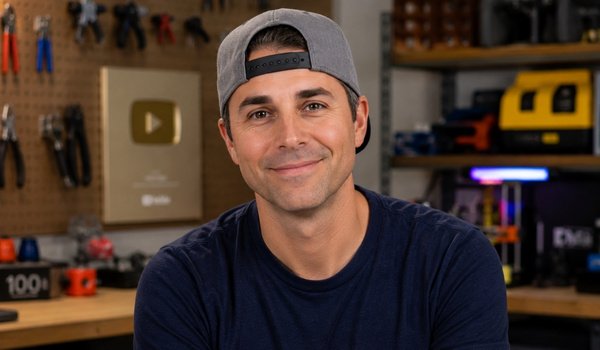
Who Is Mark Rober and How He Turned Engineering Into Global Entertainment
Mark Rober is an American YouTuber, engineer, and inventor who worked at NASA’s Jet Propulsion Laboratory and Apple before building one of the world’s most popular science channels. He’s best known for ambitious engineering projects like the glitter bomb package, the world’s largest Super Soaker, and elaborate squirrel obstacle courses—all explained with infectious curiosity.
If you’ve ever watched a video where someone built a real-life version of something that seemed impossible, there’s a good chance Mark Rober was behind it. With well over 60 million subscribers, he’s turned engineering into entertainment that appeals to kids, adults, scientists, and skeptics alike. But how did a former rocket scientist end up dropping watermelons from extreme heights and outsmarting porch pirates for a living?
This post breaks down who Mark Rober is, what he did before YouTube, why his videos resonate with so many people, and how he’s using his platform to change the way science is taught. Whether you’re a longtime fan or just discovered one of his viral clips, you’ll come away understanding what makes him one of the most influential science communicators of his generation.
What Did Mark Rober Do Before He Became a YouTuber?
Long before he was a household name, Mark Rober was a working engineer with a serious résumé. He earned a degree in mechanical engineering from Brigham Young University and later a master’s from the University of Southern California. That education set him up for a career most engineers only dream about.
Rober spent nine years at NASA’s Jet Propulsion Laboratory (JPL), where he worked on the Curiosity rover that landed on Mars in 2012. Seven of those years were dedicated to that single mission. Working on hardware destined for another planet is no small feat, and it gave him a deep, practical understanding of how to solve complex problems under enormous pressure.
After NASA, he took his talents to Apple, where he reportedly spent time in the company’s product design group working on virtual reality projects. So by the time his YouTube channel took off, Rober wasn’t a hobbyist playing with gadgets—he was a seasoned professional who had already built things that operated on Mars and inside one of the world’s most secretive tech companies.
How Did Mark Rober Start His YouTube Channel?
Mark Rober’s path to YouTube began somewhat by accident. Back in 2011, while still at NASA, he created a clever Halloween costume using two iPads—one strapped to his chest and one to his back—to create the illusion of a hole going straight through his body. He filmed a quick explainer, posted it online, and it racked up millions of views almost overnight.
That early viral success showed him something important: people were genuinely curious about how things worked, and they responded to clear, fun explanations. He kept making videos on the side, gradually refining his style and tackling bigger ideas.
Over time, what started as a side project became his full-time focus. He left his engineering jobs to pursue content creation seriously, and the channel grew into one of the most recognizable science and engineering destinations on the entire platform. The combination of genuine expertise and an approachable personality proved to be a winning formula.
What Are Mark Rober’s Most Famous Videos?
Mark Rober’s catalog is full of projects that blend serious engineering with pure entertainment. A few stand out as cultural moments in their own right.
His glitter bomb package series is perhaps his signature work. Frustrated that thieves were stealing packages from his porch, Rober engineered a decoy package that sprays glitter, releases a foul smell, and records the culprits’ reactions on hidden phones. The videos became massive hits and spawned multiple sequels with increasingly sophisticated traps.
He also built the world’s largest Super Soaker and the world’s largest Nerf gun, both of which earned Guinness World Records. These projects scale up beloved toys to absurd, functional proportions—exactly the kind of “I wonder if you could actually do that” idea that defines his work.
Another fan favorite is his series of backyard squirrel obstacle courses, where he designed elaborate ninja-warrior-style challenges to test how clever squirrels really are. The videos are funny and surprisingly heartwarming, but they also sneak in real lessons about animal behavior and problem-solving.
Each of these projects shares a common thread: they start with a simple, relatable question and answer it with a level of engineering rigor most people would never attempt.
Why Are Mark Rober’s Videos So Popular?
The appeal of Mark Rober’s content comes down to a few key ingredients working together. First, there’s the spectacle. Watching someone drop a watermelon from a great height or fire a giant water cannon is inherently entertaining, no science background required.
But underneath the spectacle is real substance. Rober doesn’t just show you the cool result—he walks you through the engineering, the math, and the failures along the way. He makes complex concepts feel accessible without dumbing them down, which builds trust with viewers of all ages.
His personality matters too. Rober comes across as genuinely excited and kind, never condescending. He celebrates curiosity rather than showing off, and that warmth makes people want to keep watching. Choose his videos if you want science that’s rigorous but never boring—he manages both better than almost anyone in the space.
There’s also a strong sense of optimism running through his work. Rober frequently emphasizes that mistakes are part of the process and that anyone can learn to think like an engineer. That message resonates far beyond the typical science-content audience.
How Is Mark Rober Trying to Change Science Education?
Beyond entertainment, Mark Rober has put real effort into improving how science is taught. He’s a strong advocate for what he calls the “Super Mario Effect”—the idea that framing challenges as games, where failure is just feedback rather than punishment, helps people learn and persist longer. He shared this concept in a popular TED talk that has been viewed millions of times.
Rober founded CrunchLabs, an education company that ships build-it-yourself toy kits to subscribers along with video lessons that explain the engineering principles behind each project. The goal is to put hands-on learning directly into kids’ hands and spark the same curiosity that drives his channel.
He has also been involved in major charity efforts. Through campaigns connected to causes like Team Trees and Team Seas, he’s helped raise enormous sums of money for environmental projects, using his platform to mobilize millions of viewers toward real-world impact.
These efforts reflect a clear mission: Rober isn’t just making fun videos, he’s trying to inspire the next generation of curious, capable problem-solvers. That sense of purpose gives his work staying power beyond any single viral hit.
What Can Creators and Educators Learn From Mark Rober?
There’s a lot to take away from Rober’s approach, whether you’re a content creator, a teacher, or just someone who wants to explain ideas more effectively.
The biggest lesson is that expertise plus accessibility is a powerful combination. Rober never hides his technical depth, but he always translates it into something a curious 10-year-old could follow. That balance is rare and valuable.
He also proves the value of starting with a question people actually care about. Nobody wakes up wondering about fluid dynamics, but plenty of people wonder how big a Super Soaker could really get. By leading with curiosity instead of jargon, he pulls viewers into learning without them even noticing.
Finally, his consistency and patience offer a quiet lesson. He spends weeks or months on a single video, refining ideas and embracing failures along the way. That commitment to quality over quantity has built a level of trust that quick, shallow content rarely earns.
The Lasting Impact of an Engineer Who Made Science Fun
Mark Rober turned a NASA-and-Apple engineering background into one of the most beloved science channels in the world, and he did it by treating curiosity as the starting point for everything. His videos entertain, but they also teach, inspire, and remind people that learning can be genuinely fun.
If you want to see what he’s about, start with the glitter bomb series for the entertainment, then watch his TED talk on the Super Mario Effect to understand the philosophy behind his work. For families, CrunchLabs offers a hands-on way to bring that same spirit of exploration home.
The broader takeaway is simple: science doesn’t have to be intimidating. When it’s framed with curiosity, humor, and respect for the audience, it can reach millions—and maybe inspire a few of them to build something amazing of their own.
Frequently Asked Questions
Who is Mark Rober?
Mark Rober is an American engineer, inventor, and YouTuber known for his elaborate engineering and science videos. He previously worked at NASA’s Jet Propulsion Laboratory and Apple before becoming a full-time content creator.
What did Mark Rober work on at NASA?
At NASA’s Jet Propulsion Laboratory, Mark Rober worked on the Curiosity Mars rover, which landed on Mars in 2012. He spent several years of his nine-year tenure at JPL on that mission.
What is Mark Rober’s most famous video?
His glitter bomb package videos are among his most famous, in which he built a booby-trapped decoy package to catch porch thieves. He’s also known for his record-setting Super Soaker and Nerf gun builds.
What is CrunchLabs?
CrunchLabs is an education company founded by Mark Rober that ships build-it-yourself toy kits and accompanying video lessons to subscribers, designed to teach engineering and science concepts through hands-on projects.
What is the Super Mario Effect?
The Super Mario Effect is a learning concept Mark Rober popularized in a TED talk. It suggests that treating challenges like a video game—where failure is feedback rather than punishment—helps people stay motivated and learn more effectively.
Shop authentic Japanese goods online with HinodeMart.com and experience safe transactions with worldwide shipping.
