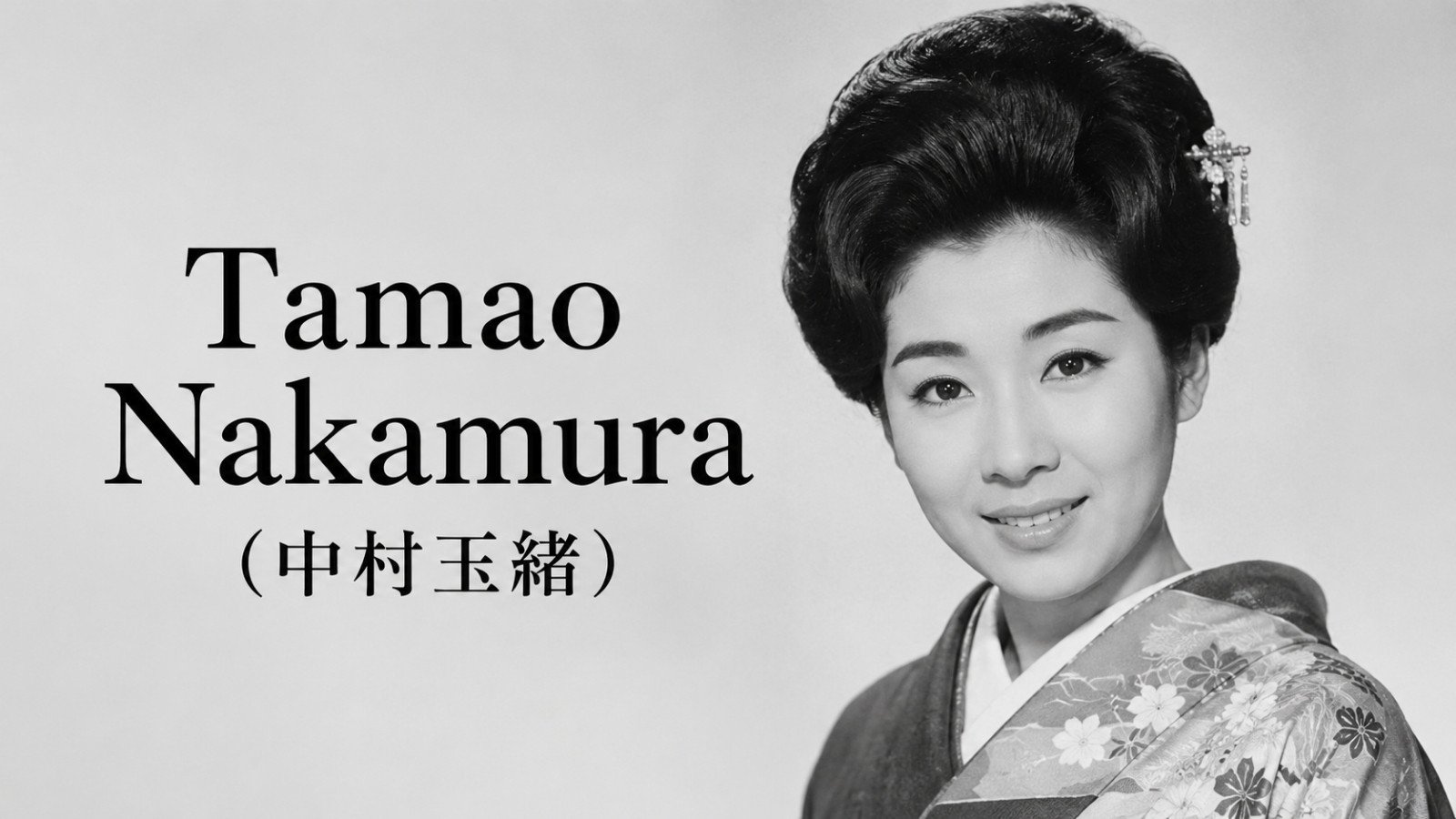
Tamao Nakamura (中村玉緒) is one of Japan’s most celebrated actresses, with a career spanning over seven decades in film, television, and stage. Born into Kabuki royalty in 1938, Nakamura built a remarkable legacy through her powerful dramatic roles, her resilience through personal tragedy, and her enduring presence in Japanese popular culture.
She has been called many things over the years—a screen goddess, a Kabuki princess, a survivor. But perhaps the most accurate description of Tamao Nakamura is simply this: one of the most enduring figures in the history of Japanese entertainment.
Few actresses can claim a career that spans more than 70 years, multiple entertainment mediums, and the kind of cultural weight that makes them a household name across generations. Nakamura is one of them. From her early days as a young ingénue in 1950s Japanese cinema to her celebrated appearances on contemporary television, her story is one of extraordinary talent shaped by extraordinary circumstances.
Table of Contents
Who Is Tamao Nakamura (中村玉緒)?
Born on May 20, 1938, in Kyoto, Japan, Tamao Nakamura entered the world already connected to greatness. She is the daughter of Utaemon Nakamura VI, one of the most revered Kabuki actors in Japanese history—a National Living Treasure. Growing up surrounded by the discipline, artistry, and tradition of Kabuki theater gave Nakamura a foundation unlike almost any other actress of her generation.
Her given name, 玉緒 (Tamao), carries a meaning rooted in beauty and elegance—a fitting name for someone who would dedicate her life to the performing arts.
How Did Tamao Nakamura Begin Her Acting Career?
Nakamura made her film debut in 1954, at just 15 years old, with the Daiei Motion Picture Company—one of the most prominent Japanese film studios of the postwar era. She quickly established herself as a versatile and emotionally compelling actress, particularly in period dramas (jidaigeki) and films that demanded nuanced portrayals of complex women.
Her early work placed her alongside some of the defining names of Japanese cinema’s golden age. She appeared in films directed by celebrated directors and became recognized for her ability to convey deep emotional truth—an instinct no doubt sharpened by years of observing the rigorous expressiveness of Kabuki performance.
What Are Tamao Nakamura’s Most Notable Roles and Achievements?
Throughout the 1960s and 1970s, Nakamura cemented her reputation as one of Japan’s premier dramatic actresses. She appeared in a broad range of films—from elegant historical dramas to crime features—demonstrating a range that few could match.
She earned the prestigious Japan Academy Prize, the country’s most distinguished film award, recognizing her sustained contribution to Japanese cinema. Her work across both film and television gave her a reach that extended well beyond the art-house crowd, making her a genuinely beloved public figure.
On television, Nakamura proved equally compelling. Her appearances in long-running NHK taiga dramas—Japan’s prestigious annual historical drama series—brought her to millions of viewers and underscored her status as a national institution.
What Was Tamao Nakamura’s Personal Life Like?
Nakamura’s personal life brought both profound joy and profound sorrow. In 1965, she married Tomisaburo Wakayama, a popular actor known for his role in the iconic Lone Wolf and Cub film series. The couple had two sons together.
Their marriage ended in divorce, and in the decades that followed, Nakamura faced the unimaginable. Both of her sons passed away—a grief that she has spoken about publicly and with remarkable composure. Rather than retreating from public life, she channeled that grief into her work and her presence as a public figure, becoming something of a symbol of dignified resilience for many Japanese viewers.
How Did Tamao Nakamura Reinvent Herself for a New Generation?
One of the most remarkable chapters in Nakamura’s career came later in life, when she embraced a kind of cultural reinvention. She became a regular presence on variety programs and talk shows, where her sharp wit, warmth, and surprising sense of humor endeared her to younger audiences who may not have grown up watching her films.
This willingness to evolve—to step outside the gravity of her dramatic reputation and simply be entertaining—speaks to an intelligence about public life that is rare among actresses of her stature. Rather than guarding a legacy built on solemnity, she let people see more of who she actually was.
Her appearances became events in themselves. Nakamura carries herself with the kind of unhurried confidence that only comes from decades of standing in front of cameras and knowing, absolutely, that you belong there.
What Is Tamao Nakamura’s Cultural Significance in Japan?
To understand Nakamura’s place in Japanese culture, it helps to understand what she represents. She is a direct link to the classical performing arts through her father’s Kabuki legacy, a survivor of the Japanese film industry’s golden age, and a television personality who has remained relevant well into the 21st century. That combination is essentially unmatched.
She has received numerous honors from Japanese cultural institutions, reflecting not just her professional achievements but her role as a keeper of a certain kind of artistic tradition. Her name carries weight in conversations about Japanese cinema, theater, and television simultaneously—a rare achievement.
The Legacy That Keeps Growing
Tamao Nakamura’s career defies the usual arcs. There was no single peak followed by a slow fade. Instead, there has been a continuous presence—evolving, adapting, and remaining genuinely compelling at every stage.
For anyone interested in Japanese cinema and its history, her filmography is essential viewing. For those curious about how an artist navigates personal loss without letting it extinguish their light, her life offers something even more instructive.
She remains active, sharp, and—by all accounts—as captivating as ever. In a career already defined by longevity, Tamao Nakamura shows no signs of writing the final chapter just yet.
Japan has produced many enduring cultural figures, and alongside Tamao Nakamura’s remarkable acting legacy, Guts Ishimatsu’s journey from boxing champion to Japanese icon highlights another fascinating path to national fame.
Frequently Asked Questions About Tamao Nakamura
When was Tamao Nakamura born?
Tamao Nakamura was born on May 20, 1938, in Kyoto, Japan.
Who is Tamao Nakamura’s father?
Her father is Utaemon Nakamura VI, one of Japan’s most celebrated Kabuki actors and a designated National Living Treasure.
When did Tamao Nakamura start her acting career?
Nakamura made her acting debut in 1954 at the age of 15, signing with the Daiei Motion Picture Company.
Who was Tamao Nakamura married to?
Nakamura was married to actor Tomisaburo Wakayama, best known internationally for the Lone Wolf and Cub film series. The couple later divorced.
What awards has Tamao Nakamura received?
Nakamura has received the Japan Academy Prize, among other honors, recognizing her significant contributions to Japanese film and entertainment.
Is Tamao Nakamura still active?
Yes. Nakamura has remained active in Japanese television and public life well into the 21st century, regularly appearing on variety programs and special broadcasts.
Readers interested in other influential Japanese cultural icons may also enjoy learning about Takashi Murakami’s net worth and luxury art empire, which highlights the global success of one of Japan’s most celebrated contemporary artists.
