The Essential Japan Travel Packing List for Every Season
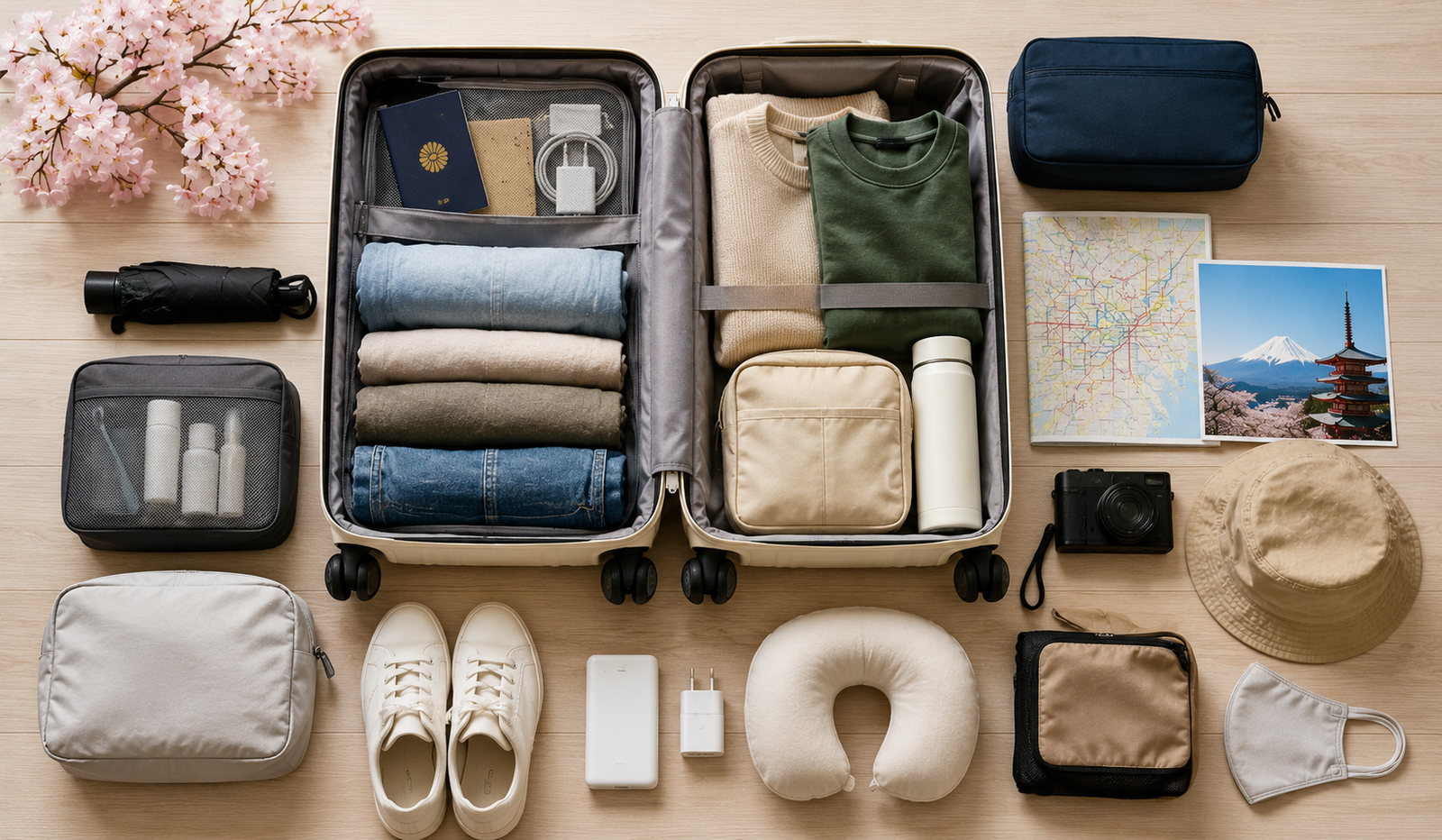
Packing for Japan requires balancing comfort, cultural awareness, and practicality. Key items include comfortable walking shoes, layered clothing for variable weather, a portable Wi-Fi device or SIM card, IC card for transit, and cash in yen. This guide walks through everything you need—and what to leave at home.
Japan is one of the most visited countries in the world, and for good reason. From the neon-lit streets of Tokyo to the serene bamboo groves of Kyoto, every corner of the country offers something remarkable. But getting your packing wrong can turn an otherwise perfect trip into a stressful one—whether that’s wearing the wrong shoes for temple visits or scrambling for an ATM because you didn’t bring enough cash.
This guide is for anyone planning a trip to Japan who wants to pack smart, pack light, and arrive prepared. Whether you’re heading there for a week or a month, the principles stay the same: bring what you need, understand the culture, and leave room for the souvenirs you’ll inevitably come home with.
By the end of this post, you’ll know exactly what to pack, what to skip, and how to handle the quirks of traveling through one of the world’s most organized—and wonderfully unique—countries.
What Kind of Clothing Should You Pack for Japan?
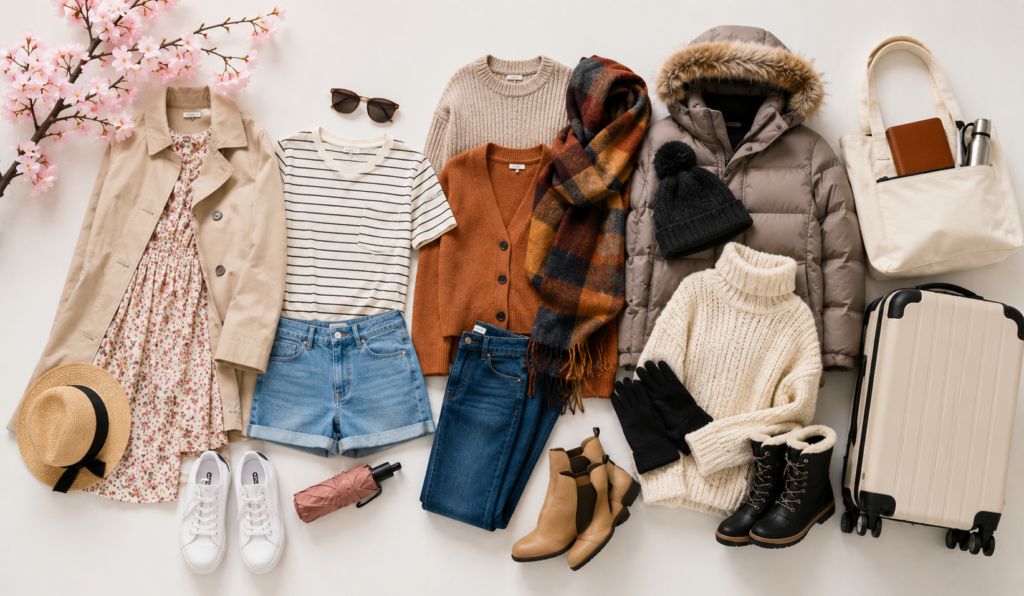
Clothing is where most travelers either overpack or get it wrong entirely. Japan’s climate varies significantly depending on the region and time of year. Tokyo summers are hot and humid, often reaching 35°C (95°F), while Hokkaido winters can drop well below freezing. Kyoto in spring and autumn is mild and magical—but the shoulder-season weather can shift quickly.
How Should You Layer for Japan’s Variable Weather?
Layering is your best strategy regardless of when you travel. A light base layer, a mid-layer like a cardigan or zip-up, and a packable outer shell give you flexibility without bulk. Avoid heavy coats unless you’re visiting in the depths of winter.
For spring (March–May) and autumn (September–November), pack:
- Light long-sleeve shirts and short-sleeve tops
- A medium-weight jacket or denim jacket
- A compact rain jacket (Japan sees frequent light showers)
- Comfortable trousers and one or two pairs of jeans
For summer travel, prioritize breathable fabrics like linen and moisture-wicking materials. For winter visits, thermal underlayers become essential, especially if you’re planning to explore rural areas or ski resorts in Nagano or Niseko.
What Should You Wear for Temple and Shrine Visits?
Japan has thousands of temples and shrines, and while dress codes are rarely as strict as those in parts of Europe or the Middle East, respectful attire goes a long way. Avoid overly revealing clothing at sacred sites. More practically, many temples require you to remove your shoes before entering—so slip-on footwear or shoes with easy laces make a real difference over the course of a multi-day itinerary.
Modesty aside, the more pressing concern at religious sites is etiquette: quiet, respectful movement, and following posted signage. Clothing is secondary.
What Shoes Are Best for Traveling Around Japan?
This deserves its own section—because footwear choices in Japan are not like footwear choices anywhere else.
Japan is a walking country. Even in major cities, daily step counts of 15,000 to 20,000 are entirely normal when you’re sightseeing. You will walk more than you think. Blisters from ill-fitting shoes can derail even the best-planned itinerary, so prioritize comfort over style.
At the same time, shoes that are difficult to remove are a constant inconvenience. Traditional ryokan (Japanese inns) require guests to remove shoes at the entrance. Many restaurants, particularly those with tatami seating, do the same. Choosing slip-on sneakers, loafers, or well-fitting shoes with easy closures will save you time and awkwardness every single day.
Pack two pairs of footwear: one comfortable walking shoe or sneaker for daily exploring, and one slightly dressier option for evenings out or upscale dining. If you’re visiting in summer, a pair of sandals serves as a useful third option.
Avoid brand new shoes. Break them in at home first—Japan is not the place to discover a blister problem.
What Tech and Connectivity Essentials Should You Bring to Japan?
Do You Need a Portable Wi-Fi Device or a SIM Card for Japan?
Staying connected in Japan is both easy and important. Google Maps is your best friend for navigating public transit, and many restaurants and attractions require online reservations. You have two main options:
Pocket Wi-Fi: A portable router that creates a Wi-Fi hotspot, sharable with multiple devices. You can rent one at major airports including Narita and Haneda, or arrange pickup in advance. The advantage is flexibility—ideal if you’re traveling with others or have multiple devices.
Data SIM card: A local SIM that gives your phone direct data access. These are available at airport counters and convenience stores. Many are data-only, meaning you won’t be able to make traditional phone calls.
Either option works well. The choice comes down to your travel style and how many devices you’re managing. For solo travelers, a data SIM is usually simpler and cheaper. For small groups sharing the cost, pocket Wi-Fi makes more financial sense.
A universal travel adapter is also worth packing. Japan uses Type A plugs (the same two-flat-prong design used in the US), so American travelers won’t need an adapter. However, travelers from Europe, the UK, or Australia will.
What Is an IC Card and Why Do You Need One for Japan’s Transit System?
An IC card—such as Suica or Pasmo—is a rechargeable prepaid card used for public transportation across Japan. You tap in and tap out on trains, subways, and buses in Tokyo, Osaka, Kyoto, and beyond. Many convenience stores and vending machines also accept IC cards as payment.
Loading an IC card onto Apple Pay or Google Pay before you arrive (available for some card types) is even more convenient. Otherwise, pick one up at any major train station upon arrival and load it with ¥3,000–¥5,000 to start.
Learn more about how to use a Suica card in Japan before your trip.
How Much Cash Should You Bring to Japan?
Japan remains a cash-heavy society. This surprises many travelers who assume that a technologically advanced country would be universally card-friendly. While card acceptance has grown—particularly in larger cities since the 2020 Olympics—many small restaurants, local shops, temples, and rural businesses still operate on cash only.
A practical starting point is to budget ¥5,000–¥10,000 (approximately $35–$70 USD) per day in cash, depending on your spending habits. Convenience stores like 7-Eleven and Japan Post ATMs reliably accept international cards, making it easy to withdraw yen as needed.
Keep smaller denomination bills and coins handy. Many vending machines—and Japan has more vending machines per capita than almost any other country in the world—require exact change or small bills.
What Toiletries and Health Items Are Worth Packing?
Japan’s pharmacies (called drugstores or 薬局, yakkyoku) are excellent. Brands like Matsumoto Kiyoshi and Welcia stock an impressive range of skincare, medicines, and daily essentials. You don’t need to overpack toiletries—you can restock in Japan easily, often at lower cost than back home.
That said, a few items are worth bringing from home:
- Prescription medications: Bring more than you need, along with documentation. Some medications common in Western countries are restricted or unavailable in Japan.
- Blister plasters and pain relief: A travel first-aid kit with basics is always sensible.
- Deodorant: Western-style antiperspirant deodorant can be harder to find. Japanese products tend to be lighter formulations.
- Feminine hygiene products: Widely available, but sizing and product types may differ.
- High-SPF sunscreen: Japan summers are intense. Quality sunscreen is available locally, but brands you trust from home may offer better peace of mind.
Bring a small towel or handkerchief. Many public restrooms in Japan—especially at temples, parks, and older facilities—don’t provide paper towels or hand dryers.
What Miscellaneous Items Make a Big Difference When Traveling in Japan?
Some of the most useful travel items are the ones that don’t fit neatly into a category.
A compact umbrella: Japan’s weather is unpredictable, and carrying an umbrella is second nature to most Japanese people. A lightweight, packable one weighs almost nothing and will be used constantly. Convenience stores sell cheap umbrellas if you forget.
A small day bag or tote: Japanese convenience stores sell beautiful and affordable reusable bags, but arriving with a foldable tote is handy from day one. Many stores now charge for plastic bags.
A reusable water bottle: Japan’s tap water is safe to drink and high quality. Refilling a water bottle keeps you hydrated without generating plastic waste—though vending machines are everywhere if you prefer bottled options.
Luggage forwarding knowledge: Japan’s takkyubin (luggage forwarding) services, offered by companies like Yamato Transport, allow you to send heavy luggage ahead to your next hotel for a small fee. This is especially useful when traveling between cities or navigating crowded train stations.
Copies of your documents: Keep a printed or digital copy of your passport, travel insurance, and accommodation bookings accessible without internet.
Check out Japan’s official tourism website for destination-specific packing advice by region and season.
What Should You Leave at Home When Packing for Japan?
Knowing what not to pack is as important as knowing what to bring.
Excess luggage: Japan’s trains and elevators can be crowded, and rolling a large suitcase through a narrow ryokan corridor is awkward. Pack light and use luggage forwarding services when needed.
Revealing or beach-style clothing for city use: Japan is a conservative country in terms of public dress. While swimwear is fine at beaches and onsen, walking city streets in revealing outfits draws unwanted attention and is generally out of place.
Self-defense sprays or any restricted items: Japan has strict customs regulations. Items like pepper spray, certain medications, and some electronic devices can be restricted or outright prohibited. Check the Japan Customs website before packing anything you’re uncertain about.
Too many shoes: Shoes take up disproportionate space in luggage. Two pairs—three at most—is plenty for most trips.
The Bottom Line: Pack Thoughtfully and Enjoy the Journey
Japan rewards prepared travelers. The country is organized, efficient, and easy to navigate once you understand its rhythms—but arriving without cash, the wrong footwear, or no way to connect to the internet adds unnecessary friction to an otherwise seamless experience.
Use this packing list as a framework, then customize it for your specific destinations and travel dates. Pack light enough to move comfortably, bring what you genuinely need, and leave room—literally and figuratively—for everything Japan has to offer.
Frequently Asked Questions About Packing for Japan
What is the most important thing to pack when traveling to Japan?
Comfortable walking shoes and cash in yen are the two most critical items. Japan involves significant daily walking, and many businesses—particularly smaller restaurants, temples, and rural shops—operate cash-only.
Do I need a visa to visit Japan as a tourist?
Citizens of many countries, including the United States, Canada, Australia, and most EU nations, can visit Japan visa-free for up to 90 days. Always verify current entry requirements through your country’s embassy or Japan’s Ministry of Foreign Affairs before departure.
Can I use my credit card in Japan?
Credit cards are accepted at major hotels, department stores, and chain restaurants in large cities. However, smaller establishments, local eateries, temples, and rural businesses frequently require cash. Never rely exclusively on card payment.
What should I pack for visiting Japan in summer?
Summer in Japan (June–August) is hot and humid. Pack lightweight, breathable clothing in moisture-wicking or linen fabrics, high-SPF sunscreen, a portable fan (available cheaply in convenience stores), and a compact umbrella for both rain and sun.
Is it worth using a Japan Rail Pass?
A Japan Rail Pass is worth purchasing if you plan to travel between multiple cities—particularly on Shinkansen bullet trains. For travelers staying primarily in one city, an IC card is usually more cost-effective. Compare your planned routes before buying.
What is a ryokan, and does it affect what I pack?
A ryokan is a traditional Japanese inn. Most require guests to remove shoes at the entrance, wear provided yukata (a casual kimono), and sleep on futon bedding. Pack comfortable, easily removable shoes and minimal sleepwear, as it’s typically provided.
