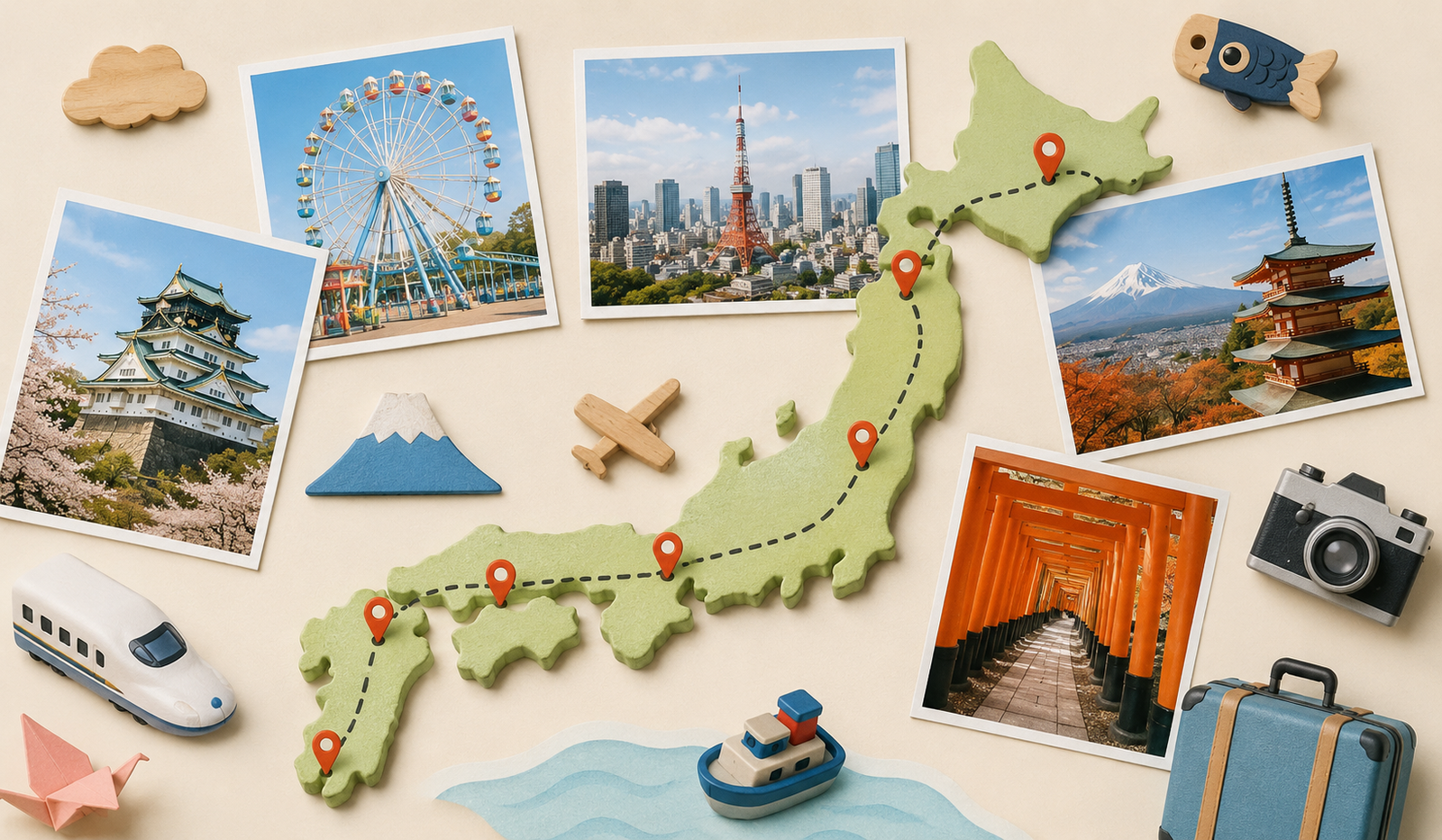
Japan is one of the most family-friendly destinations in the world, offering clean streets, safe public transport, and activities that genuinely delight children of all ages. A well-planned Japan itinerary with kids typically spans 10–14 days and includes Tokyo, Kyoto, and Osaka—balancing cultural experiences with theme parks and kid-friendly food stops.
Traveling to Japan with children sounds daunting. A long-haul flight, an unfamiliar language, and a culture that operates very differently from most Western countries—on paper, it’s a lot to navigate. But here’s the reality: Japan is arguably the most family-friendly country on the planet.
The streets are immaculately clean. The trains run on time. Convenience stores stock hot meals, snacks, and everything you forgot to pack. Children are welcomed warmly in restaurants, temples, and even ryokans (traditional Japanese inns). And the sheer variety of experiences—from neon-lit arcades in Tokyo to bamboo forests in Kyoto—means there is always something to hold a child’s attention.
This guide walks you through a complete Japan family itinerary, covering what to see, where to stay, how to get around, and how to keep kids happy from the first day to the last. Whether you’re traveling with toddlers or teenagers, Japan has a way of becoming the trip your family talks about for years.
Why Is Japan Such a Great Destination for Family Travel?
Japan’s appeal to families runs deeper than its famous attractions. Safety is a significant factor. Japan consistently ranks among the world’s safest countries, and the low crime rate means parents can feel relaxed even in crowded urban environments. Lost children are almost always returned safely to their parents, and it’s common to see young Japanese children commuting to school unaccompanied—a level of trust in public spaces that is rare elsewhere.
The country’s infrastructure is also exceptionally family-friendly. Most train stations have elevators, making stroller navigation manageable. Baby-changing rooms are widely available in shopping centers and public facilities. And the Japanese cultural value of omotenashi—the spirit of selfless hospitality—means that locals go out of their way to help families, even when there’s a language barrier.
Food is another major win. While Japanese cuisine might seem unfamiliar at first, children tend to love it. Ramen, sushi, tempura, yakitori, takoyaki (octopus balls), and mochi are all crowd-pleasers for younger travelers. Many restaurants display realistic plastic food models in their windows, which makes ordering easy and surprisingly fun for kids.
How Many Days Do You Need for a Japan Itinerary with Kids?
The honest answer: the more time you have, the better. But a 10- to 14-day itinerary is the sweet spot for most families. It gives you enough time to explore Japan’s three major family destinations—Tokyo, Kyoto, and Osaka—without rushing between them.
A shorter trip of 7 days is possible but tends to feel exhausting with children, especially given the jet lag adjustment. A longer trip of 3 weeks opens up opportunities to explore lesser-known destinations like Hiroshima, Nara, or the Japanese Alps, and is worth considering if your children are older and more adaptable travelers.
For the purposes of this guide, the itinerary is built around 12 days—enough time to experience the highlights without feeling overwhelmed.
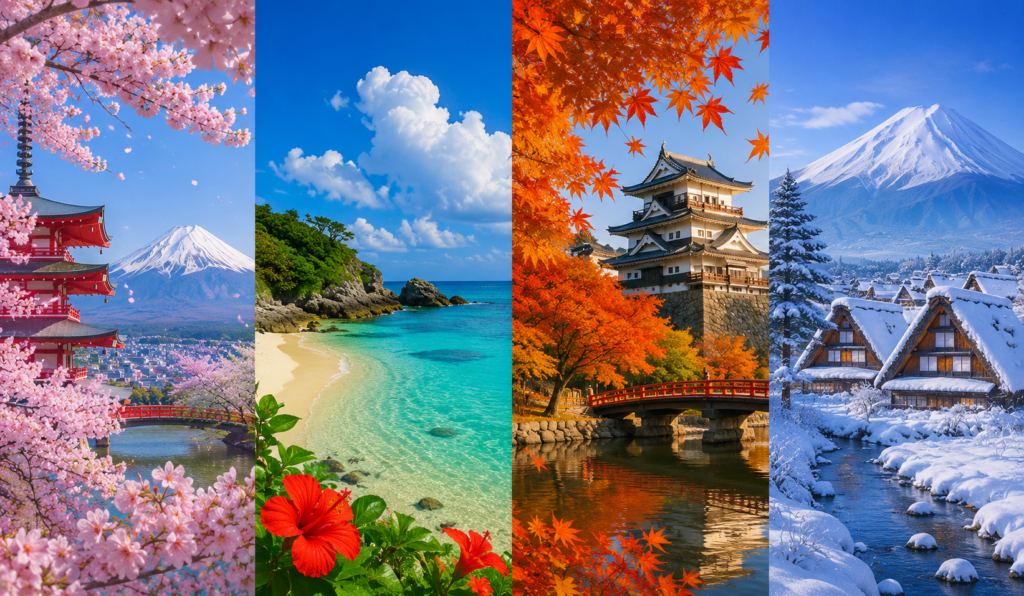
What Is the Best Time of Year to Visit Japan with Kids?
Timing matters significantly in Japan. The country has four distinct seasons, each with its own appeal—and its own challenges.
Spring (late March to early May) is the most popular time to visit, and for good reason. Cherry blossom season (sakura) typically peaks between late March and mid-April, blanketing parks and riverbanks in pink and white flowers. The weather is mild, and picnicking under cherry trees (hanami) is a magical experience for children. The trade-off is that this is peak tourist season, meaning higher accommodation prices and larger crowds.
Autumn (October to November) is equally stunning, with vivid red and orange foliage across the country. The weather is comfortable, crowds are smaller than spring, and it’s an excellent time for outdoor exploration.
Summer (June to August) is hot and humid, and the rainy season (tsuyu) runs through June. That said, summer also brings colorful festivals (matsuri) and fireworks displays that children absolutely love.
Winter (December to February) is the least visited season, which means fewer crowds and lower prices. Northern regions like Hokkaido offer excellent skiing, but central and southern Japan remain accessible and worth visiting.
For most families, autumn or spring will offer the most comfortable and memorable experience.
What Does a Sample Japan Family Itinerary Look Like?
Here is a practical 12-day framework that balances major attractions with realistic travel pacing for families.
Days 1–4: Tokyo — Where the Energy Never Stops
Tokyo is a sensory explosion, and children tend to love every minute of it. Start your first full day in Asakusa, one of Tokyo’s oldest districts. The Senso-ji Temple is photogenic and culturally rich, and the surrounding Nakamise shopping street sells snacks, traditional toys, and keepsakes that children enjoy browsing. This is also a good place to try ningyo-yaki, small cake-shaped pastries filled with red bean paste.
Dedicate a day to Odaiba, an artificial island in Tokyo Bay packed with family entertainment. teamLab Borderless—a stunning digital art museum—offers an interactive, immersive experience that appeals to children and adults equally. The museum uses projection mapping and motion-sensing technology to create environments where visitors can walk through and interact with art. Read more about teamLab Borderless and how to book tickets here.
Reserve another day for Akihabara (electronics and anime culture) and Harajuku (colorful fashion and Takeshita Street’s famous crepe shops). Older children and teenagers especially enjoy these neighborhoods. If your kids are fans of Nintendo, a visit to the Nintendo Store in Shibuya is a must.
For theme park fans, Tokyo Disneyland and Tokyo DisneySea are both located on the outskirts of the city and easily accessible by train. Tokyo DisneySea, in particular, is unique to Japan and widely considered one of the most beautifully designed theme parks in the world.
Days 5–6: Nikko or Hakone Day Trip (Optional)
From Tokyo, families can take a manageable day trip or two-night detour. Hakone offers views of Mount Fuji on clear days, open-air art museums, and relaxing onsen (hot spring baths)—many of which are family-friendly. Nikko, north of Tokyo, features ornate shrines set among cedar forests and is rich with history.
Both destinations give children a first taste of Japan beyond the city, and the scenic train journeys are part of the experience.
Days 7–9: Kyoto — Japan’s Cultural Heart
Kyoto is where ancient Japan comes to life. The city is home to over 1,600 Buddhist temples and 400 Shinto shrines, and while that might sound overwhelming, families can focus on a handful of highlights without museum fatigue setting in.
The Fushimi Inari Shrine, with its thousands of vermillion torii gates winding up a forested mountain, is one of Japan’s most iconic sights. Children find it genuinely magical to walk through the tunnel of gates, and the hike can be adjusted to suit different fitness levels and ages. Go early in the morning to avoid the biggest crowds.
Arashiyama is another must-visit area, featuring the famous bamboo grove, a monkey park (where wild Japanese macaques roam freely), and a scenic river. The combination of nature and wildlife makes it particularly engaging for younger children.
For a hands-on cultural experience, many Kyoto workshops offer opportunities to try matcha tea ceremony, furoshiki fabric wrapping, or wagashi (traditional sweet-making). These experiences are memorable and give children a meaningful connection to Japanese culture beyond sightseeing.
Days 10–12: Osaka — Food, Fun, and Theme Parks
Osaka is often called Japan’s kitchen (tenka no daidokoro), and it earns the title. The city’s street food culture is accessible and delicious, with takoyaki (octopus balls), okonomiyaki (savory pancakes), and kushikatsu (deep-fried skewers) all available from stalls and casual restaurants throughout the city.
Dotonbori, Osaka’s famous entertainment district, is a riot of neon signs, giant mechanical crabs, and the smell of sizzling food. Children love the spectacle, and the area is safe and walkable.
If your children are Harry Potter fans, Universal Studios Japan in Osaka is non-negotiable. The Wizarding World of Harry Potter is considered one of the best in the world, and the park also features Nintendo World—another immersive, interactive experience unique to this location.
Before leaving Osaka, consider a brief stop in Nara, a 45-minute train ride away. The city’s deer park is home to hundreds of freely roaming deer that bow for crackers and let visitors pet them. For most children, this is one of the most memorable moments of the entire trip.
How Do You Get Around Japan with Kids?
Japan’s public transportation system is world-class, and the Japan Rail (JR) Pass is the most practical option for families covering multiple cities. The pass provides unlimited travel on most JR trains, including the famous shinkansen (bullet train), for a fixed period of 7, 14, or 21 days. Booking the JR Pass before you leave home is generally more affordable than purchasing it in Japan. Learn more about purchasing the JR Pass for your family here.
Within cities, subway systems are efficient and easy to navigate using Google Maps. IC cards like Suica or Pasmo work as prepaid travel cards that can be used on trains, buses, and even in convenience stores—a genuinely convenient option for families who want to avoid fumbling for cash.
For travel with strollers, most major train stations have elevators and ramps. It’s worth noting that during peak rush hours, trains in Tokyo and Osaka can be extremely crowded, so planning travel around off-peak times makes the experience considerably more comfortable.
What Should You Pack When Traveling to Japan with Kids?
Packing thoughtfully can make or break a family trip. Japan’s pharmacies (yakkyoku) are well-stocked, but some familiar medicines and products may not be available, so bring adequate supplies of any prescription medications and children’s pain relievers.
Comfortable walking shoes are essential. A 12-day itinerary will involve significant amounts of walking, and children need footwear that can handle long days on foot. Slip-on shoes are practical, as many temples and traditional restaurants require removing shoes at the entrance.
A portable Wi-Fi router or SIM card is worth renting or purchasing upon arrival. Reliable internet access simplifies navigation, translation, and booking tickets on the go. Many airports and convenience stores offer rental options.
Finally, pack a small backpack for each child old enough to carry one. Giving kids their own bag with snacks, a water bottle, and small activities creates a sense of ownership and responsibility that tends to improve behavior during long travel days.
Your Family’s Japan Adventure Starts Here
Japan rewards careful planning. The families who return from this trip most satisfied are those who built in enough downtime between big activities, kept realistic daily schedules suited to their children’s ages and energy levels, and embraced the spontaneous moments—a chance encounter with a shrine festival, an unexpected ramen discovery down a side street, or a child’s face the first time they see a bullet train.
The country’s combination of safety, hospitality, variety, and sheer wonder makes it one of the most rewarding family travel destinations in the world. Start planning early, book accommodation in advance during peak seasons, and get the JR Pass sorted before departure. The logistics, once figured out, fade into the background—leaving room for the experiences your family will carry home.
Frequently Asked Questions About Traveling to Japan with Kids
Is Japan safe for families with young children?
Yes. Japan consistently ranks among the safest countries in the world for travelers. Low crime rates, clean environments, and a culture of public safety make it an excellent destination for families with children of all ages.
What is the best age to take children to Japan?
Japan is accessible for all ages, but children aged 5 and older tend to get the most out of the experience. Toddlers can enjoy Japan too, particularly given the accessible infrastructure, but managing very young children on long travel days requires extra planning.
How much does a family trip to Japan cost?
Costs vary widely depending on travel style and time of year. Flights are typically the largest expense. Within Japan, budget-conscious families can manage on approximately $150–$200 USD per day (including accommodation, food, and local transport), while families choosing mid-range hotels and experiences should budget $300–$500 USD per day.
Do Japanese restaurants accommodate picky eaters?
Most children adapt quickly to Japanese food. Ramen, rice dishes, teriyaki chicken, and sushi rolls are widely available and tend to be popular with younger travelers. Convenience stores like 7-Eleven and FamilyMart also sell familiar foods like sandwiches, hot dogs, and pasta.
Is it hard to get around Japan without speaking Japanese?
Not at all. Major tourist areas have English signage, and Google Translate’s camera function handles menus and signs effectively. Most train stations have English-language displays, and many hotel staff speak conversational English.
What is the best way to buy train tickets for a family in Japan?
The JR Pass is the most practical option for families covering multiple cities. It can be purchased online before departure and covers most long-distance trains, including the shinkansen. For city travel, loading a Suica or Pasmo IC card is the simplest approach.
