Japan offers an incredible mix of ancient traditions and cutting-edge technology. Navigating the country means stepping off a lightning-fast bullet train and walking straight into a centuries-old wooden temple. This unique balance makes it one of the most fascinating travel destinations on the planet, drawing millions of visitors eager to experience its rich culture, breathtaking landscapes, and world-renowned culinary scene.
Planning a trip to this island nation can feel overwhelming. With thousands of shrines, countless regional delicacies, and sprawling mega-cities, narrowing down an itinerary takes careful thought. First-time visitors often wonder where to start, while returning travelers search for off-the-beaten-path destinations to explore.
This guide breaks down the absolute best places to visit in Japan. From neon-lit streets and bustling fish markets to serene bamboo forests and tropical beaches, you will find exactly what you need to craft the perfect itinerary. Keep reading to discover the cities, regions, and hidden gems that will make your Japanese adventure unforgettable.
Table of Contents
Top Destinations for First-Time Visitors
If you are planning your initial trip, certain cities are absolute must-sees. They provide the perfect introduction to the country’s culture, history, and modern lifestyle.
Tokyo: The Neon-Lit Metropolis
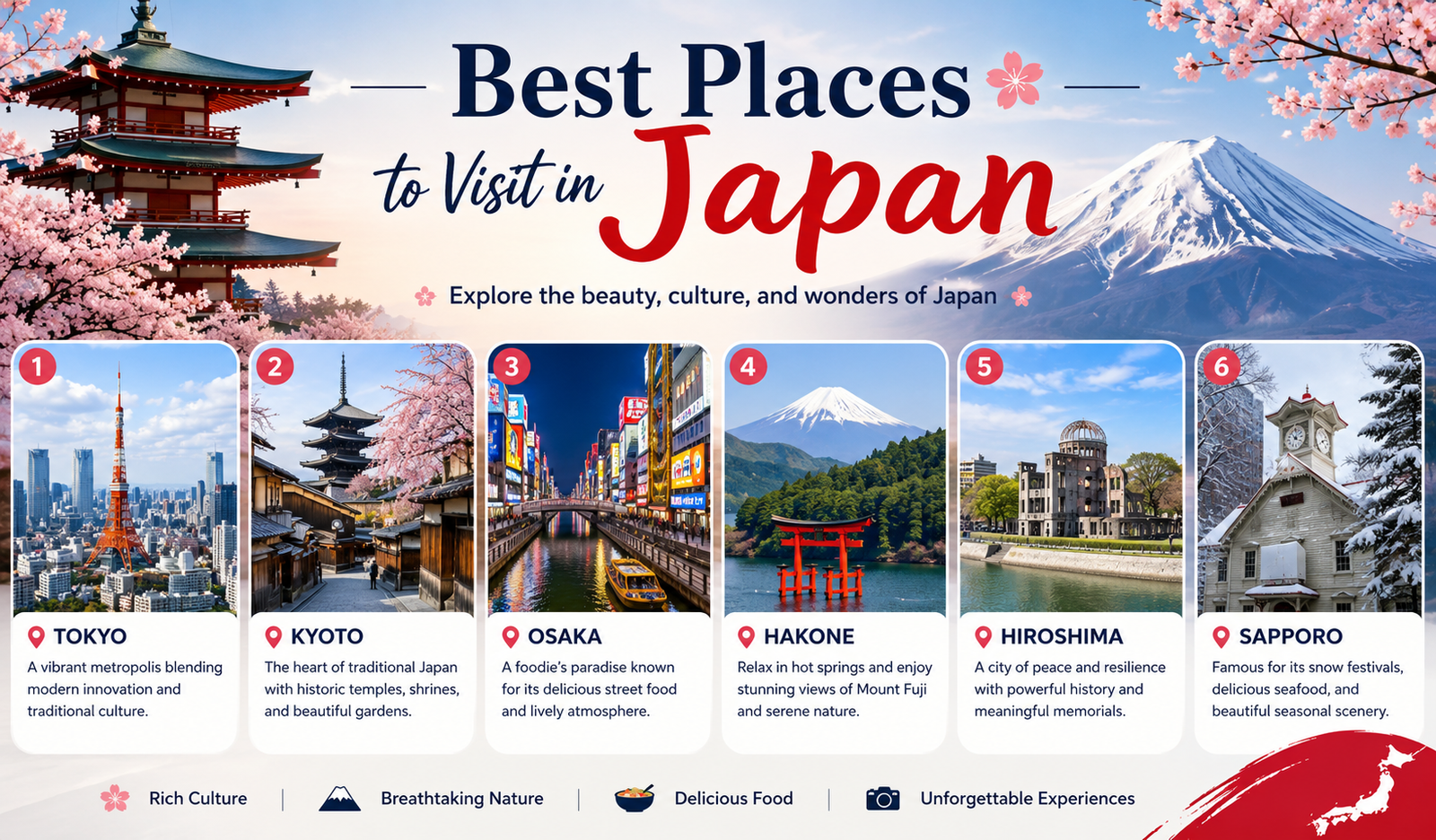
Tokyo is a sprawling megalopolis that seamlessly blends the ultra-modern with the traditional. Neighborhoods here function almost like independent cities, each offering a distinct atmosphere. Shibuya and Shinjuku boast towering skyscrapers, flashing billboards, and endless entertainment options. You can spend hours just wandering through the bustling streets, shopping at quirky boutiques, or dining at tiny yakitori alleys.
For a slower pace, Asakusa offers a glimpse into Tokyo’s past. The historic Senso-ji Temple features stunning architecture and a lively shopping street selling traditional snacks. Meanwhile, Akihabara caters to fans of anime, manga, and electronics. Tokyo’s public transit system is incredibly efficient, making it easy to jump between these diverse districts in a single day.
Kyoto: The Cultural Heart
Kyoto served as Japan’s capital for over a thousand years and remains the cultural epicenter of the nation. It is home to thousands of classical Buddhist temples, Shinto shrines, and traditional wooden houses. Walking through the streets of the Gion district, you might even spot a geisha making her way to an evening appointment.
Key highlights include the golden pavilion of Kinkaku-ji, which reflects beautifully over a tranquil pond, and the iconic Fushimi Inari Shrine, famous for its thousands of vibrant red torii gates winding up the mountain. To fully appreciate Kyoto, rent a bicycle. The city is relatively flat and biking allows you to explore the tranquil Arashiyama bamboo grove and philosopher’s path at your own pace.
Osaka: The Kitchen of Japan
Osaka is fiercely proud of its culinary heritage. Known as the nation’s kitchen, the city offers some of the best street food in the world. The Dotonbori district comes alive at night, filled with giant mechanical crabs, neon signs, and vendors selling local specialties like takoyaki (octopus balls) and okonomiyaki (savory cabbage pancakes).
Beyond the food, Osaka features a more relaxed and outgoing local culture compared to Tokyo. Visitors enjoy exploring Osaka Castle, which provides a striking contrast against the modern city skyline. Universal Studios Japan is also located here, attracting thrill-seekers and pop culture fans from around the globe.
Hidden Gems and Natural Wonders
While the big cities draw the most attention, Japan’s natural landscapes are equally spectacular. Stepping away from the urban centers reveals volcanic mountains, deep forests, and pristine lakes.
Hokkaido: Winter Wonderland and Summer Blooms
The northernmost island of Hokkaido is a paradise for outdoor enthusiasts. During the winter months, it transforms into a world-class skiing and snowboarding destination. The annual Sapporo Snow Festival attracts artists who sculpt massive, intricate designs out of ice and snow.
In the summer, the climate remains mild and pleasant. The island becomes famous for its sweeping fields of lavender and brightly colored flowers, particularly in the Furano and Biei regions. Hokkaido is also renowned for its high-quality dairy products and incredibly fresh seafood.
Hakone: Hot Springs and Mount Fuji Views
Located just a short train ride from Tokyo, Hakone offers a perfect weekend retreat. The region is famous for its onsen (hot springs), which have been used for relaxation and healing for centuries. Many visitors choose to stay in a ryokan, a traditional Japanese inn, where they can soak in thermal waters and enjoy multi-course kaiseki meals.
Hakone also provides some of the best viewing points for Mount Fuji. You can take a scenic boat cruise across Lake Ashi or ride the Hakone Ropeway over volcanic valleys. On a clear day, the snow-capped peak of Fuji stands majestically in the distance, providing a picture-perfect backdrop.
Nara: Ancient Temples and Bowing Deer
Nara was actually Japan’s first permanent capital, predating even Kyoto. It is famous for Nara Park, where hundreds of wild, yet friendly, sika deer roam freely. These deer are considered sacred messengers of the gods. You can buy special crackers to feed them, and many have learned to bow in exchange for a treat.
The park is also home to Todai-ji Temple, a massive wooden structure that houses a 15-meter-tall bronze Buddha statue. The sheer scale of the building and the statue inside leaves visitors in awe, making Nara an essential day trip from Kyoto or Osaka.
Historic Cities with Deep Roots
Japan’s history is complex, marked by periods of isolation, feudal warfare, and rapid modernization. Several cities offer profound insights into these historical eras.
Hiroshima: Resilience and Peace
Hiroshima is a city synonymous with tragedy, but visiting today reveals a vibrant, beautiful metropolis dedicated to peace. The Hiroshima Peace Memorial Park and Museum offer a sobering, deeply moving look at the events of August 6, 1945, and the city’s subsequent recovery.
A short ferry ride from the city takes you to Miyajima Island. Here, the Itsukushima Shrine appears to float on the water during high tide. The island offers hiking trails up Mount Misen, rewarding climbers with panoramic views of the Seto Inland Sea.
Kanazawa: Samurai Districts and Pristine Gardens
Kanazawa was largely spared from air raids during World War II, allowing its historical districts to survive intact. The city features well-preserved samurai and geisha districts, where you can wander through narrow streets flanked by traditional earthen walls.
The crown jewel of Kanazawa is Kenrokuen, classified as one of Japan’s three most beautiful landscape gardens. Featuring classical elements like stone lanterns, tranquil ponds, and plum groves, the garden offers stunning scenery in all four seasons.
Island Getaways
When most people think of Japan, they imagine snow-capped mountains and dense cities. However, the southern islands offer a completely different experience, characterized by white sand beaches and tropical climates.
Okinawa: Tropical Beaches and Ryukyu Culture
Okinawa sits far south of the mainland, possessing a unique culture, language, and history. The region was once the independent Ryukyu Kingdom, and its architecture and cuisine reflect this distinct heritage.
The beaches here rival those found in Hawaii or Southeast Asia. Crystal clear waters make it a premier destination for snorkeling and scuba diving. Visitors can explore vibrant coral reefs and swim alongside sea turtles.
Ishigaki and the Yaeyama Islands
For an even more remote tropical experience, travel to Ishigaki and the surrounding Yaeyama Islands. Kabira Bay on Ishigaki Island is famous for its emerald waters and pearl cultivation. From here, you can take a short boat ride to Taketomi Island, where traditional Ryukyu houses with red-tiled roofs and coral stone walls are preserved beautifully.
Frequently Asked Questions About Visiting Japan
When is the best time to visit Japan?
Spring (March to May) and autumn (September to November) are generally considered the best times to travel. Spring brings the famous cherry blossoms, while autumn offers spectacular red and gold foliage. The weather during these seasons is mild and comfortable for walking. Summer can be very hot and humid, while winter is quite cold, though perfect for winter sports.
Do I need to buy a Japan Rail (JR) Pass?
The JR Pass can save you a significant amount of money if you plan to travel extensively between multiple cities (such as Tokyo, Kyoto, Osaka, and Hiroshima) within a short timeframe. However, if you are only staying in one region, it might be cheaper to buy individual tickets. Calculate your expected routes before purchasing.
Is it difficult to travel if I do not speak Japanese?
While English is not widely spoken in rural areas, traveling in major cities and tourist destinations is quite manageable. Train stations, major restaurants, and attractions usually have English signage. Downloading a translation app and learning a few basic phrases like “Arigato” (Thank you) and “Sumimasen” (Excuse me) will go a long way.
What are the rules regarding tattoos in hot springs?
Traditionally, tattoos are associated with organized crime in Japan, and many public baths (onsen) prohibit entry to guests with tattoos. If you have small tattoos, you can sometimes cover them with waterproof bandages. Alternatively, look for tattoo-friendly onsens or book a ryokan with a private bath.
Planning Your Japanese Adventure
Japan is a country that rewards careful planning just as much as spontaneous exploration. Whether you are navigating the intricate subway lines of Tokyo, finding inner peace in a Zen garden in Kyoto, or eating your way through the vibrant streets of Osaka, every destination offers something entirely unique.
Start by deciding what kind of experience you want. If history and culture are your priorities, focus on the Kansai region. If you prefer nature and outdoor activities, look toward Hokkaido or the Japanese Alps. By prioritizing your interests and allowing room for unexpected discoveries, you will create a travel itinerary that captures the true magic of Japan. Start booking those flights, pack comfortable walking shoes, and get ready for the trip of a lifetime.
