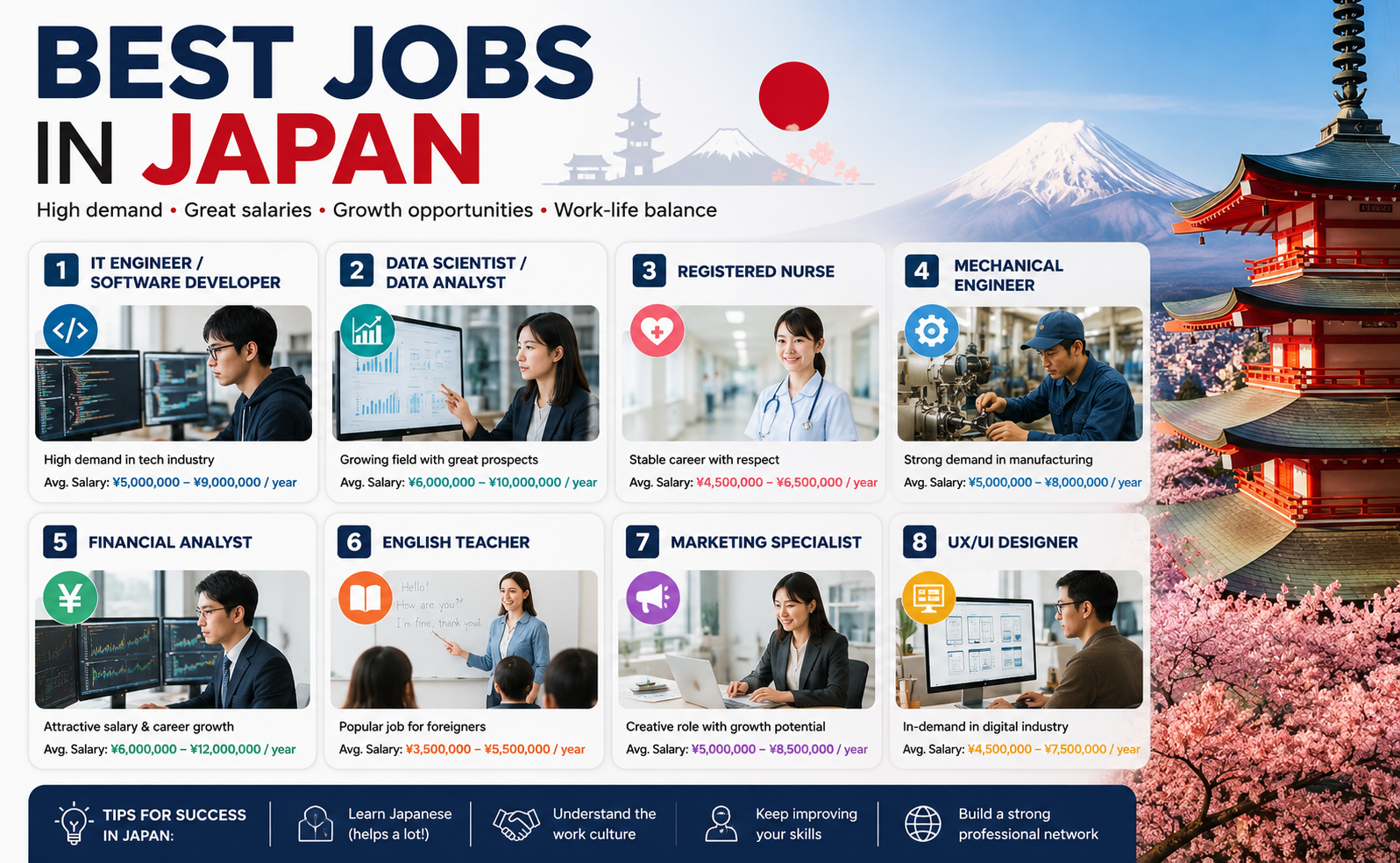
Japan offers a unique blend of rich cultural history and cutting-edge technological advancement. For many professionals across the globe, securing a job in this country represents a major career milestone.
The Japanese job market is currently undergoing a massive shift. A shrinking working-age population has created a significant demand for skilled workers, both domestic and international. Companies are actively seeking fresh talent to help them innovate and compete on a global scale.
Finding the right role requires a solid understanding of the current economic landscape. You need to know which industries are growing and what skills are most highly valued by local employers. This guide highlights the best jobs in Japan right now, detailing what makes them attractive and how you can position yourself for success in this dynamic market.
The Most In-Demand Jobs in Japan
Certain sectors offer exceptional opportunities for career growth, competitive salaries, and long-term stability. Here are the top roles to consider if you want to build a career in Japan.
IT Professional and Software Developer
The tech industry in Japan is booming. Companies of all sizes are rushing to digitize their operations, leading to a massive shortage of qualified IT professionals. Software developers, network engineers, and cybersecurity experts are highly sought after.
Many international tech firms have headquarters in Tokyo, creating an environment where English is often the primary business language. This makes the IT sector one of the most accessible fields for foreign workers who may not yet speak fluent Japanese. Roles in artificial intelligence and machine learning are particularly lucrative, offering excellent compensation packages and flexible working conditions.
English Teacher (ALT or Eikaiwa)
Teaching English remains one of the most popular entry points into the Japanese workforce. You can work as an Assistant Language Teacher (ALT) in public schools or teach at private conversation academies known as Eikaiwas.
While the starting salary might not compete with corporate roles, teaching provides visa sponsorship, a structured work environment, and plenty of free time to explore the country. It is an excellent way to immerse yourself in the culture, build a local network, and improve your Japanese language skills before transitioning into other industries.
Bilingual Recruiter
Recruitment is a fast-paced, high-reward industry in Japan. Because there is a fierce war for talent, companies rely heavily on recruitment agencies to find bilingual candidates.
If you have strong communication skills and a drive to succeed, recruiting can be incredibly lucrative. Compensation is heavily commission-based, meaning top performers can earn significantly more than the average corporate salary. It also provides unparalleled networking opportunities, allowing you to connect with executives across various sectors.
Sales and Marketing Manager
As Japanese companies look to expand their products and services overseas, they need experts who understand international markets. Sales and marketing managers with global experience are critical to this expansion.
These roles involve localizing marketing campaigns, managing international client relationships, and driving revenue growth. A strong understanding of both Western and Asian business practices is highly valued. While some Japanese proficiency is usually required, the primary focus is on your ability to bridge cultural gaps and deliver results.
Engineering and Manufacturing Specialists
Japan is globally recognized for its manufacturing prowess. The automotive, electronics, and robotics industries are foundational to the national economy. Mechanical engineers, electrical engineers, and quality assurance specialists are in constant demand.
Working in Japanese manufacturing offers the chance to be at the forefront of hardware innovation. Companies like Toyota, Sony, and Honda offer stable careers with comprehensive benefits. These roles often require specialized degrees and a commitment to precision and continuous improvement.
What to Consider Before Applying
Working in a new country comes with a unique set of challenges. The Japanese corporate culture is famous for its emphasis on hierarchy, consensus-building, and dedication. Understanding these cultural nuances is just as important as having the right technical skills.
Language is another major factor. While industries like IT and recruitment offer English-only roles, learning Japanese will drastically improve your career prospects and daily life. Even basic conversational skills demonstrate respect for the culture and a willingness to integrate into the team.
Frequently Asked Questions (FAQ)
Do I need to speak fluent Japanese to work in Japan?
Not always. Industries like technology, recruiting, and language education offer numerous roles that require little to no Japanese. However, achieving at least a conversational level (JLPT N4 or N3) will significantly broaden your job options and help you integrate into the workplace.
What is the average salary in Japan?
Salaries vary widely depending on the industry and location. The national average is around 4 to 5 million JPY per year. Specialized roles in IT, engineering, and bilingual recruitment often command much higher starting salaries, sometimes exceeding 8 to 10 million JPY for experienced professionals.
How difficult is it to get a work visa?
Getting a work visa is a straightforward process provided you have a job offer from a company willing to sponsor you. You generally need a university degree or several years of relevant professional experience to meet the immigration requirements.
Take the Next Step Toward Your Career in Japan
Relocating for work is a major life decision, but the professional and personal rewards can be immense. By targeting high-demand industries and understanding the local business culture, you can build a successful and fulfilling career overseas.
Start by updating your resume to highlight any international experience or technical skills. Research companies that sponsor visas, and consider taking introductory Japanese language classes to give yourself a competitive edge. Your ideal job in Japan might be closer than you think.
