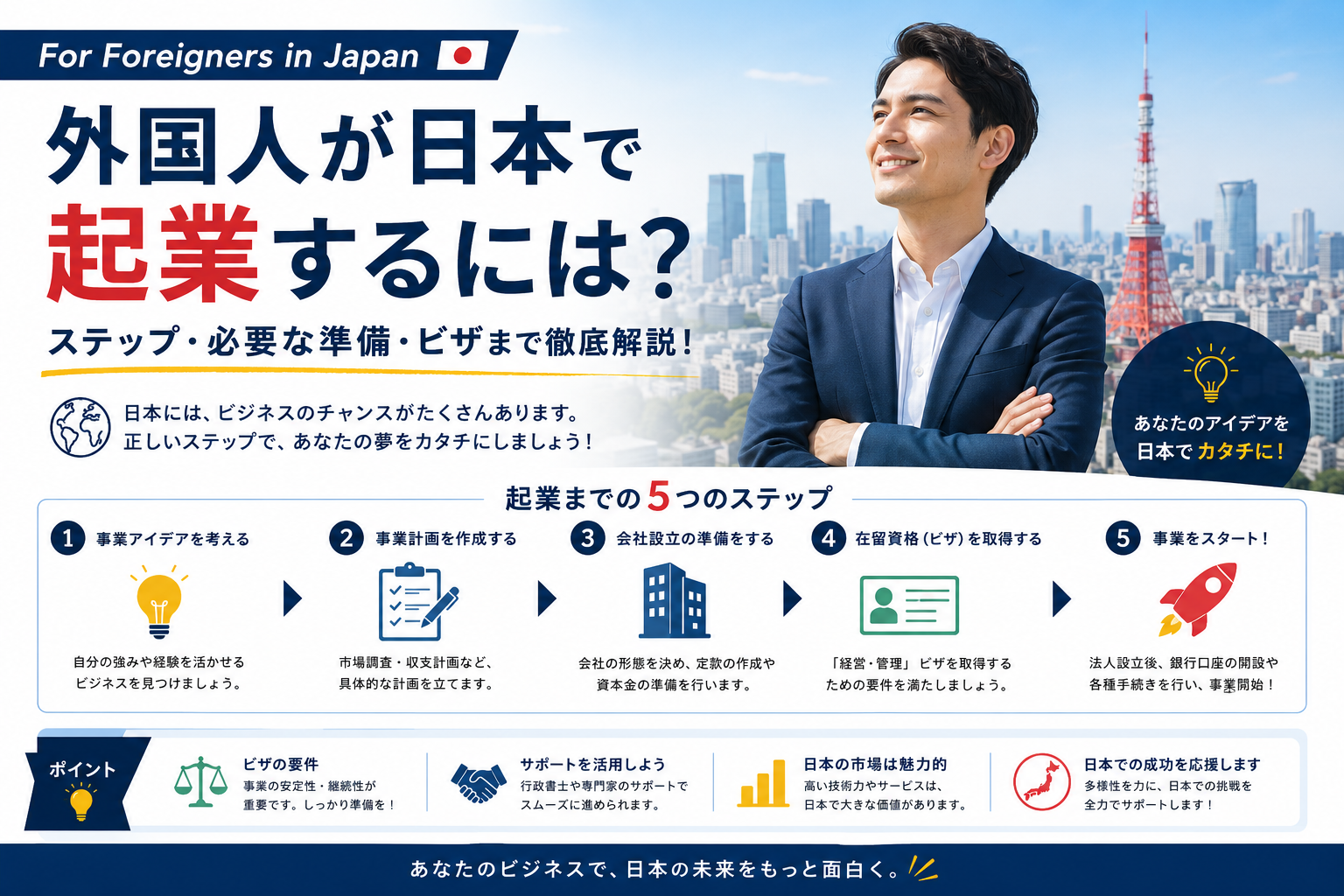
Japan offers a robust economy, world-class infrastructure, and a highly educated workforce. For foreign entrepreneurs, expanding into this market presents massive opportunities for growth and innovation. The Japanese government has also made significant regulatory changes over recent years to attract global talent and international investment.
However, navigating the local legal landscape requires careful planning. Language barriers, unique corporate structures, and strict immigration rules can make the process feel overwhelming. Knowing exactly what to expect will save you time, capital, and frustration.
This guide breaks down the essential requirements for setting up a company in Japan. You will learn about visa options, corporate structures, and the exact steps needed to get your enterprise off the ground.
Visa Requirements for Foreign Entrepreneurs
Before you can legally operate a company in Japan, you need the right residency status. You cannot manage a business on a standard tourist visa.
The Business Manager Visa
The most common route for foreign business owners is the Business Manager Visa. To qualify, you must secure a physical office space in Japan. You also need to invest a minimum of 5 million JPY (approximately $33,000 USD) into the business as paid-in capital, or hire at least two full-time employees who are Japanese nationals or permanent residents.
The Start-Up Visa
Several municipalities in Japan, including Tokyo, Fukuoka, and Kyoto, offer a Start-Up Visa. This initiative gives foreign entrepreneurs up to one year to fulfill the strict requirements of the Business Manager Visa. During this period, you receive support from local government offices to help you secure funding, find office space, and build a business plan.
Structuring Your Japanese Company
Selecting the right corporate entity is a crucial early decision. Japan offers a few different business structures, but most foreign investors choose between two primary types of subsidiary companies.
Kabushiki Kaisha (KK)
A Kabushiki Kaisha is equivalent to a joint-stock corporation. It is the most recognized and prestigious business type in Japan. A KK issues shares and is governed by a board of directors. Local customers, suppliers, and banks generally trust the KK structure the most, making it easier to secure loans and attract top talent.
Godo Kaisha (GK)
A Godo Kaisha is similar to a Limited Liability Company (LLC). It is faster and cheaper to incorporate than a KK. A GK does not issue shares; instead, the partners invest capital and manage the company directly. Many prominent foreign companies, including Apple and Amazon, use the GK structure for their Japanese subsidiaries due to its internal flexibility and lower setup costs.
Step-by-Step Details for Incorporation
Starting a business in Japan involves a specific sequence of administrative tasks. Below is a detailed table outlining the standard process for incorporating a company as a foreigner.
| Phase | Action Required | Key Documents & Details | Estimated Timeline |
|---|---|---|---|
| 1. Preparation | Determine company structure (KK or GK), secure a registered office address, and draft a business plan. | Lease agreement, founder identification, and detailed business plan. | 1 – 2 weeks |
| 2. Articles of Incorporation | Draft the Articles of Incorporation. For a KK, these must be notarized by a Japanese notary public. | Articles of Incorporation, personal seal (hanko) certificates. | 1 week |
| 3. Capital Deposit | Deposit the initial capital (minimum 5 million JPY for the Business Manager Visa) into a personal bank account. | Bank statement proving the transfer and balance. | 1 – 2 weeks |
| 4. Registration | File the company registration documents with the local Legal Affairs Bureau. | Application form, Articles of Incorporation, proof of capital. | 1 – 2 weeks |
| 5. Post-Registration | Notify the tax office, submit payroll forms, and enroll in social and labor insurance. | Company registry certificate, corporate seal. | 2 – 3 weeks |
Opening a Corporate Bank Account
Securing a corporate bank account is notoriously challenging for new foreign-owned businesses in Japan. Banks implement strict anti-money laundering protocols and will closely scrutinize your application.
To improve your chances of approval, ensure your company website is fully functional and translated into Japanese. Prepare printed materials outlining your business model, expected revenue, and client base. It often helps to apply at a bank where you already hold a personal account, or to seek introductions through a local business partner or accountant.
Ready to Launch Your Japanese Business?
Entering the Japanese market takes patience and a willingness to adapt to local business customs. By securing the correct visa, choosing the right corporate structure, and following the official registration steps, you set a strong foundation for long-term success.
Your next step is to consult with a local bilingual legal professional or administrative scrivener. They can review your business plan, guide you through the Articles of Incorporation, and help you navigate the nuances of the Japanese banking system. With the right support network, you can turn your international business goals into a reality.
