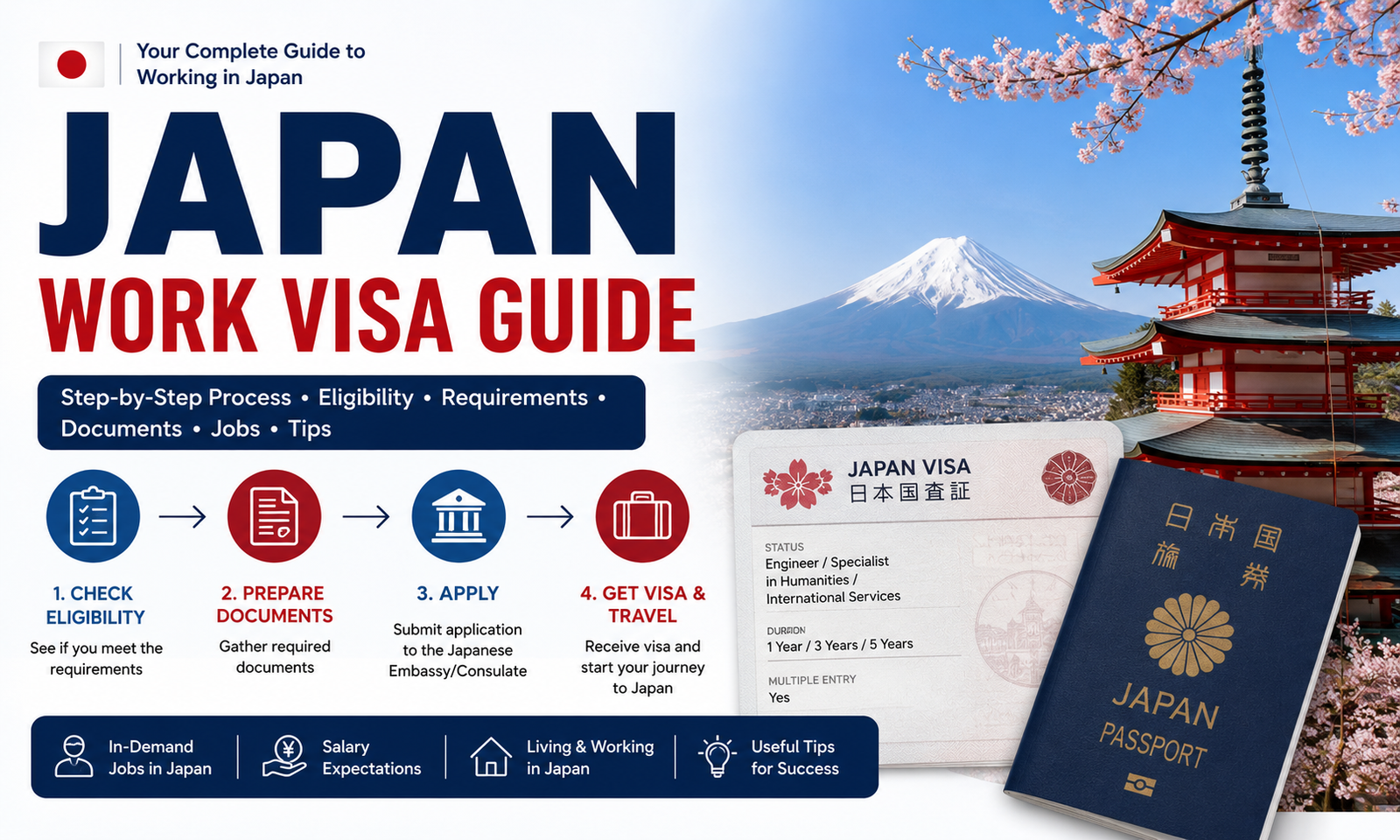
Moving to Japan is a dream for professionals around the globe. The country offers a unique blend of ancient traditions and cutting-edge technology, alongside excellent food, safe cities, and a highly respected work culture. Taking the leap to move overseas is exciting. However, the first hurdle you must cross is navigating the Japanese immigration system.
Securing a work visa can seem intimidating at first glance. The paperwork is extensive, the rules are specific, and the timelines can be unpredictable. Many potential expats find themselves overwhelmed by the sheer volume of information available online. You might wonder which visa category fits your career, what documents you need to prepare, or how long you will have to wait before booking your flight.
This guide simplifies the entire Japan work visa process. You will learn about the different visa categories, the exact requirements you need to meet, and the step-by-step application procedure. By the end of this article, you will have a clear, actionable roadmap to successfully apply for your Japanese work visa and start your new career abroad.
Table of Contents
Understanding the Japanese Work Visa System
The Japanese government does not issue a single, universal “work visa.” Instead, the system is divided into nearly 30 specific status of residence categories. Each category corresponds to a particular professional field. You must apply for the visa type that directly matches the job you have been offered in Japan.
Engineer / Specialist in Humanities / International Services
This is the most common work visa for foreign professionals. It covers a broad spectrum of white-collar jobs. The “Engineer” section applies to IT professionals, software developers, and mechanical engineers. The “Specialist in Humanities” portion covers roles in sales, marketing, accounting, and business consulting. Finally, “International Services” is typically used for foreign language teachers, translators, and interpreters.
To qualify for this category, your university degree must relate to the job you will be doing. For example, a marketing graduate cannot easily get a visa to work as a software engineer unless they have extensive, documented professional experience in that specific field.
Intra-company Transferee
If you currently work for an international company that has a branch or subsidiary in Japan, this might be your easiest route. The Intra-company Transferee visa allows organizations to move established employees to their Japanese offices. The main requirement is that you must have worked for the company outside of Japan for at least one full year before the transfer takes place.
Skilled Labor
The Skilled Labor visa is designed for individuals who possess a specialized skill that is not commonly found among the local Japanese workforce. The most frequent applicants for this visa are foreign cuisine chefs (such as French, Indian, or Italian chefs). It also applies to sports instructors, pilots, and sommeliers. This category usually requires several years of proven, documented work experience in the specific trade.
Specified Skilled Worker (SSW)
Introduced in 2019, the Specified Skilled Worker visa addresses severe labor shortages in specific blue-collar industries. These industries include nursing care, construction, agriculture, and hospitality. Unlike the standard professional visas, the SSW visa often requires passing both a Japanese language proficiency test and a specialized skills test related to the industry.
Basic Requirements for a Standard Work Visa
Before you start filling out application forms, you need to ensure you meet the baseline requirements set by the Japanese Immigration Services Agency. While specific criteria vary slightly by visa type, the following prerequisites apply to the vast majority of applicants.
A Valid Job Offer
You cannot apply for a Japanese work visa without a sponsor. You must have a confirmed job offer from a company located in Japan. Your future employer plays a critical role in the application process, as they will need to submit paperwork on your behalf to the local immigration bureau. Independent freelancers cannot easily get a standard work visa without a primary client acting as a sponsor.
Educational Background or Professional Experience
Immigration officials want to see that you are qualified for the role you have been hired to perform. For most white-collar visas, you need a bachelor’s degree or higher from a recognized university. If you do not have a university degree, you can still qualify by proving you have 10 years of relevant professional experience in that specific field. For some International Services roles (like teaching English), the experience requirement is reduced to three years.
A Clean Criminal Record
Japan has strict policies regarding criminal history. Having a criminal record, especially offenses related to drugs or violence, can result in an immediate denial of your visa application. You may be asked to provide a police clearance certificate from your home country during the application process.
Step-by-Step Application Process
Getting a work visa for Japan involves two main phases. First, your employer applies for a Certificate of Eligibility (COE) in Japan. Second, you use that COE to apply for the actual visa in your home country. Here is exactly how the process unfolds.
Step 1: Secure a Job Offer and Sign a Contract
Your journey begins with a successful job hunt. Once you pass your interviews and receive an offer, you will sign an employment contract. This contract is a required document for immigration. Make sure the contract clearly states your salary, job duties, and employment duration. The salary must be equal to or greater than what a Japanese national would earn for the same work.
Step 2: Prepare Documents for the COE
The Certificate of Eligibility is a document issued by the regional immigration authority in Japan. It certifies that you meet all the conditions for landing in Japan. You will need to send several documents to your employer, including:
- A completed COE application form
- A high-quality ID photo (4cm x 3cm)
- A copy of your passport
- A copy of your university degree or graduation certificate
- Your updated resume detailing your work history
- Proof of previous employment (if applying based on experience)
Your employer will gather their own corporate documents, such as tax records and company registration files, and submit the entire package to immigration.
Step 3: Wait for the COE Approval
This is often the most stressful part of the process. Processing times for a Certificate of Eligibility generally range from one to three months. During this time, immigration officials review your qualifications and your employer’s financial stability. You simply have to be patient. Once approved, the immigration bureau will mail the physical or electronic COE to your employer, who will then forward it to you.
Step 4: Apply for the Visa at Your Local Embassy
With your COE in hand, you are ready for the final paperwork phase. You must visit the Japanese embassy or consulate nearest to your residence. You will submit:
- Your valid passport
- A completed visa application form
- A recent passport-style photo
- The original Certificate of Eligibility (or a printed copy if issued electronically)
Embassy processing is usually quite fast. Most applicants receive their passport back with the visa stamp within five to seven business days.
Step 5: Arrive in Japan and Get Your Residence Card
Your work visa allows you to board a flight to Japan. The actual immigration status is granted when you land. At the airport, immigration officers will review your visa and COE. They will take your fingerprints and a photograph. Before you leave the airport, they will print and hand you a Residence Card (Zairyu Card). This card is your official ID in Japan, and you must carry it with you at all times.
Frequently Asked Questions (FAQ)
To help you prepare further, here are answers to some of the most common questions regarding the Japan work visa process.
How long does it take to get a Japan work visa from start to finish?
From the moment you sign your employment contract to the day you board your flight, the entire process usually takes between two and four months. The biggest variable is the processing time for the Certificate of Eligibility, which can fluctuate depending on the time of year and the specific immigration office handling the application.
Do I need to speak Japanese to get a work visa?
For standard professional visas like the Engineer/Specialist in Humanities category, there is no strict legal requirement to speak Japanese. Your eligibility is based on your education and the job offer. If an employer hires you for an English-speaking role, immigration will approve it. However, holding a Japanese Language Proficiency Test (JLPT) certificate can strengthen your application and make daily life in Japan much easier.
Can I bring my family with me to Japan?
Yes, you can bring your legal spouse and dependent children to Japan under a “Dependent” visa. You can apply for their Certificates of Eligibility at the same time as yours, or you can bring them over after you have settled in. Note that dependents cannot work full-time, though they can apply for special permission to work part-time (up to 28 hours per week). Unmarried partners and extended family members do not qualify for dependent visas.
How long is a Japanese work visa valid?
Immigration grants work visas in increments of 1, 3, or 5 years. First-time applicants usually receive a 1-year visa. Before your visa expires, you must apply for an extension. As long as you remain employed, pay your taxes, and have a clean record, extending your visa is generally a straightforward process. Over time, you may be upgraded to a 3-year or 5-year visa.
What happens if I want to change jobs?
Your work visa is tied to your professional field, not a specific employer. If you find a new job that falls under the exact same visa category, you do not need to apply for a new visa immediately. You simply notify immigration of your job change. However, if your new job requires a different visa category, you must apply for a “Change of Status of Residence” before you start working.
Take the Next Step Toward Your Career in Japan
Navigating the Japan work visa process requires patience, organization, and a clear understanding of the rules. By ensuring your qualifications align with the correct visa category and preparing your documents meticulously, you can minimize delays and start your new chapter smoothly. Gather your academic records, update your resume, and start connecting with potential employers. The vibrant culture and exciting career opportunities of Japan are waiting for you.
