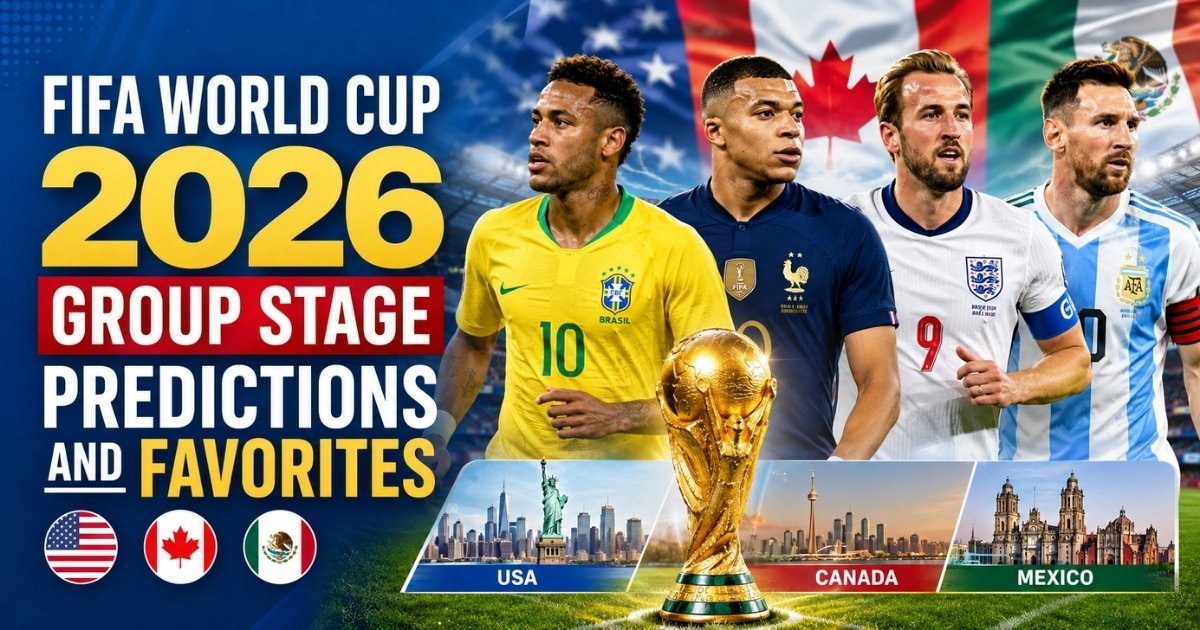
The 2026 FIFA World Cup will feature an expanded 48-team format across the United States, Canada, and Mexico—making group stage predictions more unpredictable than ever. Based on current FIFA rankings, form, and squad depth, Brazil, France, England, and Argentina are the strongest early favorites to advance deep into the tournament.
The 2026 FIFA World Cup is unlike anything the sport has seen before. For the first time in history, 48 nations will compete across three host countries—the United States, Canada, and Mexico—with matches scheduled across 16 cities from Vancouver to Guadalajara. That expansion alone reshapes everything: more teams, more group stage matches, and—crucially—more room for upsets.
Under the new format, 12 groups of four teams will each play three matches. The top two teams from every group, along with the eight best third-place finishers, will advance to the 32-team knockout stage. This expanded structure makes the FIFA World Cup 2026 Group Stage one of the most unpredictable phases in World Cup history. With 16 more nations competing compared to Qatar 2022, the battle for qualification is expected to be fiercer than ever, making it increasingly difficult to predict which teams will progress to the knockout rounds.
This post breaks down the key groups to watch, the favorites to top their pools, the underdogs worth keeping an eye on, and the teams most likely to flame out early. Whether you’re filling out a bracket, placing a wager, or simply settling an argument with a friend, here’s what the data and the football suggests.
Table of Contents
How Does the Expanded 48-Team Format Change Group Stage Dynamics?
Before diving into picks, it’s worth understanding how the new structure shifts the competitive landscape.
In previous 32-team tournaments, eight groups of four teams produced clean, decisive outcomes. Stronger nations rarely slipped up because the margin for error was slim—one bad result could end everything. The expanded format changes that calculus slightly. With 16 third-place qualifiers advancing, a team can lose a group match and still progress. That extra safety net could embolden smaller nations to play more aggressively against heavyweights, rather than parking the bus and hoping for a draw.
It also means seeding becomes more critical. The top seeds—drawn primarily from the top 12 FIFA-ranked nations—will want to avoid each other until the knockout rounds. FIFA’s seeding pot is expected to be finalized closer to the December 2025 draw, but current rankings give us a strong signal of who those top seeds will be.
Who Are the Strongest Teams Heading Into the 2026 World Cup Group Stage?
Brazil: The Relentless Favorite
Brazil enters 2026 as the team most expected to finally end a 24-year title drought since their last triumph in 2002. Under a rebuilt squad that blends experienced stars with a new generation of technical attackers, the Seleção consistently rank inside the FIFA top five. Their group stage record at recent World Cups has been near-flawless, and with home-continent pressure removed—a factor that arguably weighed on them in Brazil 2014—expect a more liberated performance.
Prediction: Top their group comfortably.
France: Defending Their Pedigree
France’s squad depth remains extraordinary. Even accounting for the inevitable generational transition between now and 2026, Les Bleus consistently field one of the most balanced squads in international football—strong in midfield, clinical in attack, and solid defensively. France topped their group at both the 2018 and 2022 World Cups, and there’s little reason to expect that changes.
Prediction: Group winners, barring a nightmare draw.
England: Talent Rich, History Poor
England arrive at 2026 with arguably their most talented generation in decades. A Euros finalist in 2021 and 2024, the Three Lions have been knocking on the door without breaking through. The group stage has historically been kind to England—it’s the knockout rounds where things unravel. Expect them to top or finish second in their group with relative ease.
Prediction: Top-two finish in their group.
Argentina: Champions Defending Their Crown
As reigning world champions, Argentina will carry the weight of expectation—and Lionel Messi will almost certainly be playing in what is widely expected to be his final World Cup. Argentina’s group stage record is mixed; they famously lost to Saudi Arabia in their 2022 opener before recovering to win the tournament. Their ability to absorb a shock and respond is proven, but they remain vulnerable to high-press teams that disrupt their build-up play.
Prediction: Advances from the group, but not without drama.
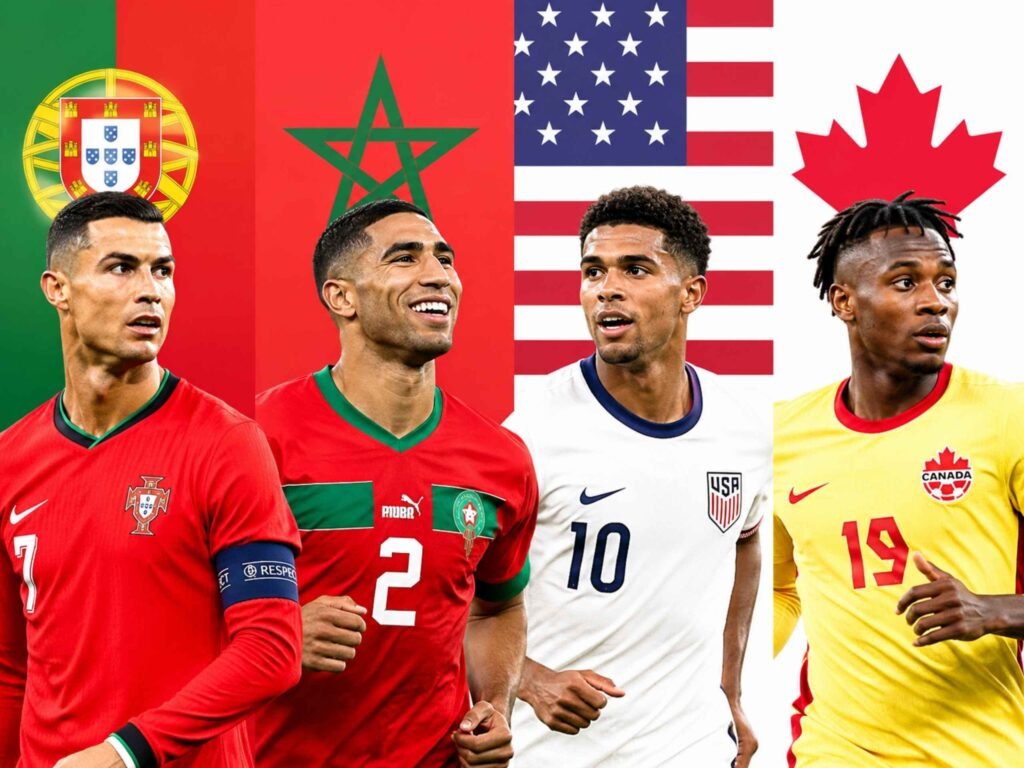
Which Dark Horses Could Cause Group Stage Upsets in 2026?
Portugal: A Team in Transition
Portugal’s trajectory post-Ronaldo—assuming his international career winds down before 2026—could be fascinating. A squad featuring Bernardo Silva, Rafael Leão, and a young core of technically gifted players has real potential. The question is leadership. Portugal have consistently underachieved in knockout football, but the group stage is where their technical quality tends to shine.
Morocco: Africa’s Emerging Superpower
Morocco’s semifinal run at Qatar 2022 was not a fluke. Their organized defensive structure, tactical discipline, and home support—large Moroccan diaspora communities exist across North America—could translate into genuine momentum in 2026. As a co-host nation, Morocco’s preparation and motivation will be at an all-time high.
United States: The Host Nation Factor
The United States haven’t reached the knockout rounds of a World Cup since 2014. But hosting changes everything—the crowd support, the reduced travel fatigue, the national momentum. USMNT’s young core, including players competing at the highest levels of European club football, will peak around 2026. Expect them to advance from the group stage, potentially for the first time in over a decade.
Which Teams Are Most at Risk of a Group Stage Exit?
Not every nation making the trip to North America will survive the group stage. The expanded 48-team field includes several nations competing in their first—or second—World Cup, some with significant quality gaps compared to established footballing powers.
Teams to watch with caution include:
- Saudi Arabia: Their stunning win over Argentina in 2022 showed what’s possible on a given day, but consistency over three matches remains a challenge.
- African debutants: Several nations qualifying from Africa’s expanded allocation (9 spots in 2026, up from 5) will include first-timers navigating World Cup pressure for the first time.
- Lower-ranked Asian qualifiers: Asia receives 8.5 spots in 2026, meaning the gap in quality between the region’s top sides (Japan, South Korea, Australia) and its lower seeds is significant.
Statistically, in every expanded-format World Cup, at least two or three nations widely expected to advance have gone out in the group stage. The 2026 field, with its larger pool of unfamiliar match-ups, is likely to produce the same.
What Group Stage Match-Ups Would Be Most Impactful in 2026?
The official draw hasn’t taken place yet—FIFA is expected to conduct it in late 2025—but certain hypothetical clashes are already generating debate:
- Brazil vs. Argentina: A group stage meeting between the two South American giants would be an all-time spectacle. The odds of it happening are low given seeding protocols, but not impossible.
- USA vs. Mexico: The “El Tráfico” rivalry has never been staged at a World Cup. Both nations co-hosting the tournament means this fixture—if it falls in the group stage—would be one of the most watched matches in the tournament’s history.
- England vs. France: A rematch of their 2022 quarterfinal in the group stage would be a genuine blockbuster, and given both teams’ expected seedings, it remains a realistic possibility depending on pot allocations.
Key Factors That Will Shape the 2026 Group Stage
Altitude and geography: Several Mexican host cities, including Guadalajara and Mexico City (Estadio Azteca), sit at high altitudes that significantly impact performance—particularly for European sides unaccustomed to playing above 1,500 meters. Teams drawn into Mexican venues will need to account for this in preparation.
Squad rotation and fatigue: With 12 groups and three matches each, coaches will need to rotate. A team that burns out its first XI in the opening two games risks fielding a weakened side for the decisive third match.
VAR and refereeing standards: FIFA’s ongoing efforts to standardize VAR protocols across confederations will be tested by the larger field. High-stakes group stage calls could shape outcomes significantly.
FIFA World Cup 2026 Group Stage Predictions: The Bottom Line
The 2026 FIFA World Cup group stage will be the most expansive—and arguably most unpredictable—in the tournament’s history. Brazil, France, and England have the squad depth and consistency to top their groups. Argentina will advance, though likely not without turbulence. Morocco and the United States, energized by home support, are legitimate contenders to progress from their respective pools.
The teams most likely to exit early are those relying on a single star performance to carry them through, or those facing the combined challenges of altitude, unfamiliar opponents, and limited World Cup experience.
The draw in late 2025 will sharpen all of these predictions considerably. Until then, the group stage puzzle remains one of football’s most compelling puzzles—and one that 48 nations will be spending the next year trying to solve.
Our latest FIFA World Cup 2026 Predictions identify the teams most likely to advance. Explore all FIFA World Cup 2026 Host Cities hosting group-stage matches. Fans can secure seats through the official FIFA World Cup 2026 Tickets process. Group-stage ticket prices vary significantly depending on match location and category.
Frequently Asked Questions About the 2026 FIFA World Cup Group Stage
How many teams will compete in the 2026 FIFA World Cup group stage?
The 2026 FIFA World Cup will feature 48 teams in the group stage—an increase from the 32-team format used at every World Cup from 1998 to 2022. The 48 teams are divided into 12 groups of four.
How many teams advance from each group at the 2026 World Cup?
The top two teams from each of the 12 groups automatically advance to the Round of 32. Additionally, the eight best third-place finishers from across all groups also qualify, bringing the total number of advancing teams to 32.
Where will the 2026 FIFA World Cup group stage matches be played?
Group stage matches will take place across 16 host cities in three countries: the United States, Canada, and Mexico. U.S. venues include New York/New Jersey, Los Angeles, Dallas, San Francisco Bay Area, Seattle, Boston, Miami, Atlanta, Kansas City, and Philadelphia. Canadian venues include Toronto and Vancouver. Mexican venues include Mexico City, Guadalajara, and Monterrey.
Which team is the favorite to win their group at the 2026 FIFA World Cup?
Based on current FIFA rankings and squad depth, Brazil and France are the two teams most consistently projected to top their groups. However, the official draw—expected in late 2025—will determine exact group compositions and significantly shape these predictions.
Can a team lose a match and still advance from the 2026 World Cup group stage?
Yes. With 16 third-place teams qualifying for the knockout rounds, a nation that finishes third in its group can still advance if its results compare favorably with other third-place finishers across all 12 groups. This creates a meaningful safety net that didn’t exist in previous formats.
Why is the 2026 World Cup group stage harder to predict than previous tournaments?
The expanded 48-team field includes more nations with limited World Cup experience, a wider quality gap between top and bottom seeds, and new geographic and altitude variables from three host countries. These factors increase the likelihood of upsets and make group stage outcomes more difficult to forecast.
