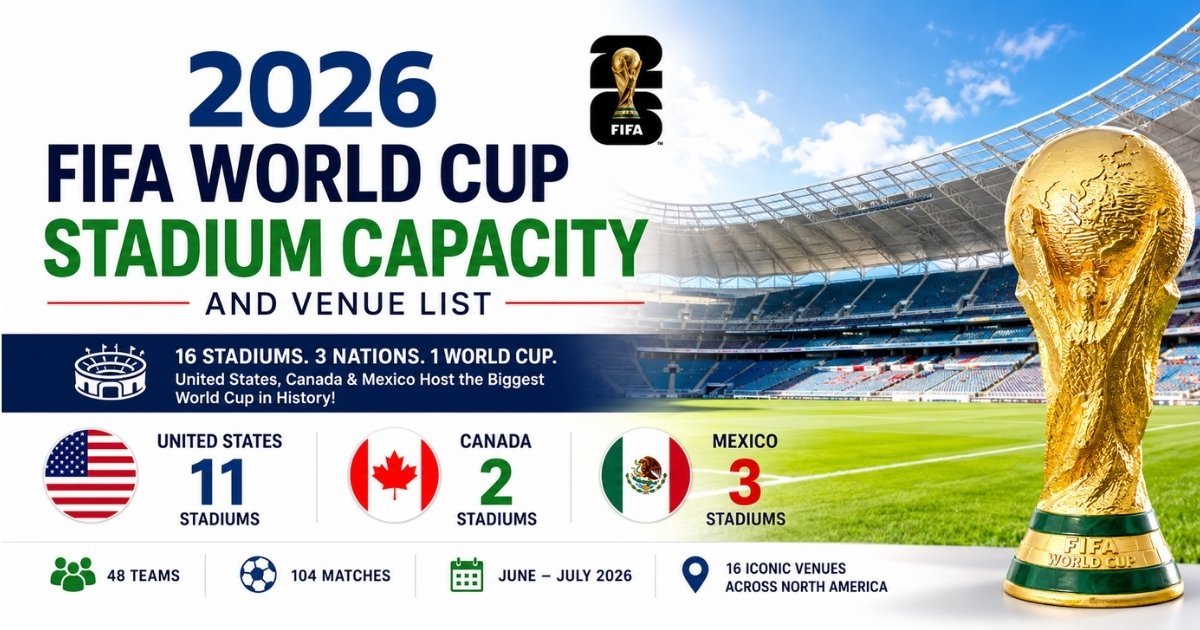
The 2026 FIFA World Cup will be hosted across 16 stadiums in the United States, Canada, and Mexico, with a combined seating capacity ranging from approximately 45,000 to over 100,000 seats. MetLife Stadium in New Jersey is the largest venue, with a capacity of around 82,500 — set to host the final.
The 2026 FIFA World Cup is unlike anything the tournament has seen before. For the first time in history, three nations — the United States, Canada, and Mexico — will co-host the world’s most-watched sporting event. Spread across 16 venues and 11 host cities, the tournament will also feature an expanded format: 48 teams instead of the traditional 32, meaning more matches, more drama, and more fans packing into stadiums from Vancouver to Guadalajara.
Knowing where games will be played — and how many people each venue holds — matters whether you’re planning to attend, following the draw, or simply keeping track of the action. Understanding the 2026 FIFA World Cup Stadium Capacity of each venue can help fans gauge ticket availability, match atmosphere, and the significance of games assigned to different stadiums. The final, for instance, doesn’t go to just any venue. It goes to the biggest.
This guide breaks down every confirmed 2026 FIFA World Cup Stadium Capacity, its location, seating capacity, and what makes each one worth knowing about. Whether you’re a casual fan or a die-hard planning your trip, this is your complete reference.
Table of Contents
How Many Stadiums Are in the 2026 FIFA World Cup?
The 2026 FIFA World Cup will use 16 stadiums across three countries:
- United States: 11 stadiums
- Mexico: 3 stadiums
- Canada: 2 stadiums
This marks the largest number of venues ever used in a single World Cup tournament. FIFA selected these stadiums based on capacity, infrastructure, fan experience, and logistical capability to handle international-scale events.
Full FIFA World Cup 2026 Stadium Capacity List
United States Venues
1. MetLife Stadium — East Rutherford, New Jersey
Capacity: ~82,500
Home to both the New York Giants and New York Jets, MetLife Stadium is the largest venue in the tournament and will host the 2026 World Cup Final. Located just outside New York City, the stadium offers an iconic backdrop for the tournament’s biggest match. It has previously hosted Super Bowls and major international events.
2. AT&T Stadium — Arlington, Texas
Capacity: ~80,000
Known as “Jerry World,” AT&T Stadium in the Dallas-Fort Worth area is one of the most technologically advanced sports venues on the planet. The stadium features the world’s largest column-free interior and a retractable roof, making it ideal for warm Texas summers.
3. SoFi Stadium — Inglewood, California
Capacity: ~70,000
Built in 2020 at a cost of approximately $5.5 billion, SoFi Stadium is among the most modern facilities in American sports. It serves as the home of the Los Angeles Rams and Chargers and is located just minutes from Los Angeles International Airport.
4. Levi’s Stadium — Santa Clara, California
Capacity: ~68,500
Home of the San Francisco 49ers, Levi’s Stadium sits in the heart of Silicon Valley. The venue hosted Super Bowl 50 in 2016 and is known for its sustainability initiatives, including a rooftop solar panel system.
5. Arrowhead Stadium — Kansas City, Missouri
Capacity: ~76,000
Arrowhead is widely considered one of the loudest stadiums in the NFL. Home to the Kansas City Chiefs — three-time recent Super Bowl champions — it will bring a passionate, electric atmosphere to the 2026 World Cup.
6. Mercedes-Benz Stadium — Atlanta, Georgia
Capacity: ~71,000
The home of Atlanta United FC (MLS) and the Atlanta Falcons, Mercedes-Benz Stadium is one of the few NFL venues with a dedicated soccer configuration. Its distinctive retractable roof and petal-shaped design make it one of the most architecturally striking venues in the tournament.
7. Lincoln Financial Field — Philadelphia, Pennsylvania
Capacity: ~69,800
Home to the Philadelphia Eagles, Lincoln Financial Field has a reputation for some of the most passionate fans in the NFL. Philadelphia was also chosen as a World Cup host city in part due to its deep sports culture and strong infrastructure.
8. Gillette Stadium — Foxborough, Massachusetts
Capacity: ~65,000
Gillette Stadium, home to the New England Patriots and New England Revolution (MLS), will represent the Boston area in the 2026 tournament. The venue previously hosted CONCACAF Gold Cup matches and international friendlies.
9. Hard Rock Stadium — Miami Gardens, Florida
Capacity: ~65,000
Miami’s World Cup venue sits just north of Miami in Miami Gardens. Hard Rock Stadium is the home of the Miami Dolphins and has hosted numerous Copa América and international soccer matches, making it well-acquainted with large-scale football events.
10. Empower Field at Mile High — Denver, Colorado
Capacity: ~76,000
Set against the Rocky Mountains, Empower Field at Mile High is one of the most visually stunning venues in the tournament. Denver’s high altitude (approximately 5,280 feet above sea level) could play a notable role in how matches unfold — a factor players and coaches will need to prepare for.
11. NRG Stadium — Houston, Texas
Capacity: ~72,000
NRG Stadium, home of the Houston Texans, features a retractable roof — a major advantage given Houston’s notoriously humid summers. The venue hosted the 1994 World Cup (as the Astrodome area) and returns to the spotlight 32 years later.
Canadian Venues
12. BC Place — Vancouver, British Columbia
Capacity: ~54,500
BC Place is home to the Vancouver Whitecaps (MLS) and the BC Lions (CFL). Canada’s westernmost World Cup venue, it features a retractable roof and has previously hosted the 2015 FIFA Women’s World Cup Final, drawing on significant experience with international soccer.
13. BMO Field — Toronto, Ontario
Capacity: ~45,736
BMO Field, home of Toronto FC (MLS), is the smallest venue in the 2026 World Cup. Upgrades are planned to bring it up to FIFA’s required standards. Toronto’s diverse, multicultural population makes it one of the most anticipated host cities of the tournament.
Mexican Venues
14. Estadio Azteca — Mexico City
Capacity: ~87,523
The Azteca is the only stadium in the world to have hosted two FIFA World Cup finals (1970 and 1986), and in 2026, it will become the first stadium to host World Cup matches across three separate tournaments. With its storied history and massive capacity, the Azteca remains one of football’s most iconic venues.
15. Estadio BBVA — Monterrey, Nuevo León
Capacity: ~53,500
Home to Club de Fútbol Monterrey, Estadio BBVA opened in 2015 and is consistently rated among the best stadium experiences in Latin America. The venue sits at the foot of the Cerro de la Silla mountain, creating a dramatic natural backdrop.
16. Estadio Akron — Guadalajara, Jalisco
Capacity: ~49,850
Also known as the Chivas Stadium, Estadio Akron is the home of Club Deportivo Guadalajara (Chivas). The privately funded stadium opened in 2010 and is known for its distinctive circular architecture and intimate atmosphere.
Which Stadium Will Host the 2026 World Cup Final?
MetLife Stadium in East Rutherford, New Jersey, will host the 2026 FIFA World Cup Final on July 19, 2026. With a capacity of approximately 82,500, it is the largest stadium in the tournament. The New York/New Jersey region was selected as the final host city, recognizing the area’s global profile and tourism infrastructure.
What Is the Largest Stadium in the 2026 World Cup?
Estadio Azteca technically holds the most seats at approximately 87,523, making it the largest stadium by official capacity in the tournament. However, MetLife Stadium (~82,500) will host the final — a decision based on multiple factors beyond raw capacity, including logistical considerations, international media access, and commercial infrastructure.
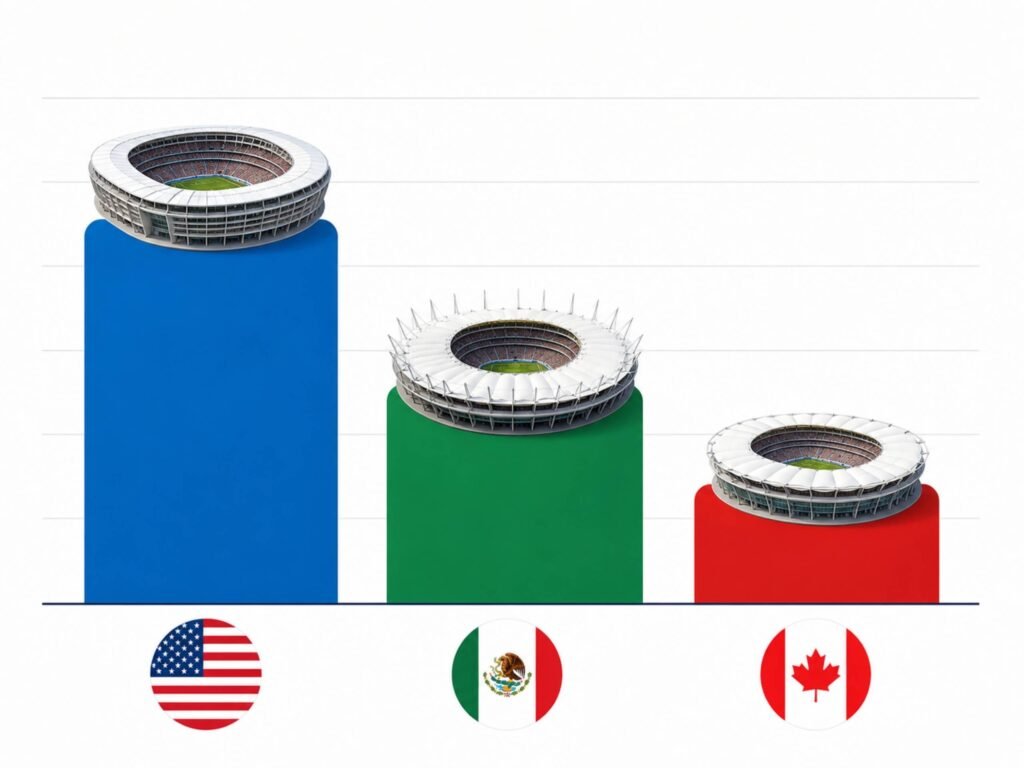
How Does Stadium Capacity Compare Across Host Countries?
The United States hosts the highest-capacity venues on average, with several exceeding 70,000 seats. Mexico brings historical weight, particularly through the Azteca. Canada’s two stadiums are smaller but are undergoing significant upgrades ahead of the tournament.
| Country | Number of Stadiums | Largest Capacity |
|---|---|---|
| United States | 11 | ~82,500 (MetLife) |
| Mexico | 3 | ~87,523 (Azteca) |
| Canada | 2 | ~54,500 (BC Place) |
Start Planning Your 2026 World Cup Experience
The 2026 FIFA World Cup promises to be the grandest edition of the tournament ever staged. With 16 venues spread across 11 cities and three countries, fans have an unprecedented range of options for where to experience the action live. Larger stadiums like MetLife, Azteca, and AT&T Stadium will host marquee knockout-stage matches, while smaller venues like BMO Field and Estadio Akron offer a more intimate setting for group-stage games.
If attending in person is on your radar, stadium capacity is one of the most important factors for ticket demand and travel planning. High-capacity venues will have more tickets available overall, but demand for knockout matches — particularly the final — will far exceed supply regardless of size.
Keep an eye on FIFA’s official ticketing platform for updates on match assignments and ticket release dates as the tournament approaches.
Learn more about the cities behind these venues in our FIFA World Cup 2026 Host Cities article. Stadium size can directly impact FIFA World Cup 2026 Tickets availability. Planning a visit? See our 2026 FIFA World Cup Travel Tips for Host Cities. Stadium capacity also influences ticket pricing across different seating categories.
Frequently Asked Questions
How many stadiums will host the 2026 FIFA World Cup?
The 2026 FIFA World Cup will be hosted across 16 stadiums — 11 in the United States, 3 in Mexico, and 2 in Canada.
What is the smallest stadium in the 2026 World Cup?
BMO Field in Toronto, Canada, is the smallest venue, with a capacity of approximately 45,736 seats. FIFA-required upgrades are planned ahead of the tournament.
Which stadium is hosting the 2026 World Cup Final?
MetLife Stadium in East Rutherford, New Jersey, will host the 2026 World Cup Final on July 19, 2026. The stadium has a seating capacity of approximately 82,500.
Will Estadio Azteca host matches in 2026?
Yes. Estadio Azteca in Mexico City will host matches in 2026, making it the first stadium in history to be used across three separate FIFA World Cup tournaments (1970, 1986, and 2026). Its capacity is approximately 87,523.
How many fans can attend the 2026 World Cup across all venues?
The combined capacity of all 16 venues is substantial — many of the US stadiums alone exceed 65,000 seats. Across all 104 matches in the expanded tournament, millions of fans will attend in person.
Which 2026 World Cup stadium has the most history?
Estadio Azteca holds the most footballing history of any venue in the tournament, having hosted two World Cup finals and iconic moments such as Diego Maradona’s “Hand of God” goal in 1986.
