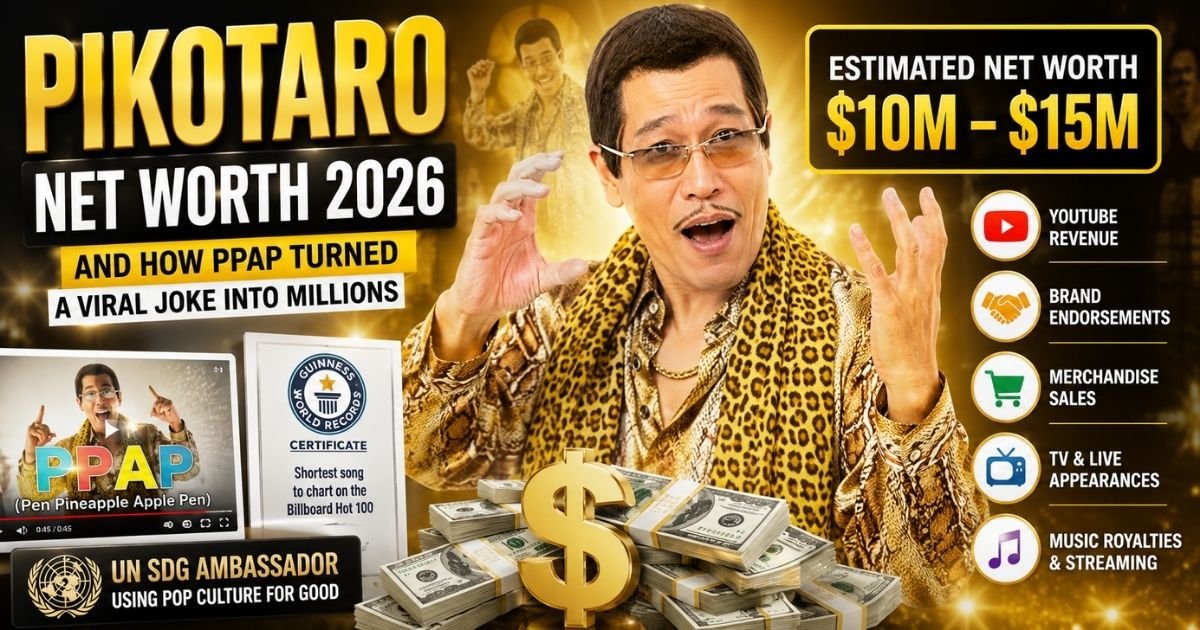
Pikotaro, the comedic alter-ego created by Japanese comedian Daimaou Kosaka (Kazuhito Kosaka), holds an estimated net worth of $10 million to $15 million. The majority of this wealth comes from the 2016 viral sensation “PPAP (Pen-Pineapple-Apple-Pen),” alongside lucrative brand endorsements, merchandise sales, television appearances, and international promotional campaigns.
Very few pop culture moments define an entire year quite like “PPAP (Pen-Pineapple-Apple-Pen)” defined 2016. With an animal-print outfit, a catchy synth beat, and completely nonsensical lyrics, the character of Pikotaro captivated the globe. The video reached millions of views in a matter of days, eventually becoming one of the most recognizable viral videos in internet history. The unprecedented success of the song also laid the foundation for Pikotaro Net Worth, transforming a simple comedic performance into a global entertainment brand with significant earning potential.
Behind the sunglasses and the leopard-print scarf is Japanese comedian and producer Kazuhito Kosaka, known professionally as Daimaou Kosaka. While many viral stars fade into obscurity after their fifteen minutes of fame, Kosaka managed to leverage the explosive success of his character into a long-lasting, highly profitable enterprise.
Understanding how a 45-second YouTube video transforms into a multimillion-dollar financial portfolio requires a closer look at the mechanics of digital monetization. This article explores the precise net worth of Pikotaro, the various revenue streams generated by the PPAP phenomenon, and how Kosaka built a sustainable career long after the initial viral wave subsided.
Table of Contents
How did PPAP impact Pikotaro’s financial success?
When Justin Bieber tweeted a link to the “PPAP” video in September 2016, calling it his “favorite video on the internet,” the song’s trajectory shifted from a regional novelty to an international phenomenon. This single endorsement resulted in millions of immediate views, drastically accelerating ad revenue on YouTube.
The financial impact of the song was multifaceted. YouTube monetization alone generated substantial income. Videos with hundreds of millions of views typically generate revenue in the millions of dollars, depending on the viewer demographic and advertiser rates. Additionally, the song charted on the US Billboard Hot 100, securing the Guinness World Record for the shortest song ever to enter the chart.
This chart placement led to digital download sales on platforms like iTunes and streaming royalties from Spotify and Apple Music. Because Kosaka wrote, produced, and performed the track himself under the Pikotaro persona, he retained a massive share of the publishing and performance royalties. Instead of splitting profits with a massive record label infrastructure, the independent nature of the release maximized his personal financial gain.
What are the primary income streams for Pikotaro today?
While the initial burst of YouTube ad revenue provided a significant cash injection, Pikotaro’s sustained wealth comes from a diversified portfolio of entertainment and business ventures.
Brand Endorsements and Commercials
Pikotaro became a highly sought-after figure for advertising in Japan and across Asia. Brands capitalized on his recognizable image to sell everything from telecommunications to snack foods. SoftBank, one of Japan’s largest telecom companies, featured Pikotaro prominently in commercial campaigns. These endorsement deals are notoriously lucrative in the Japanese entertainment industry, often paying millions of yen per contract.
Merchandise Sales
The iconic look of Pikotaro translates perfectly into merchandise. Following the PPAP boom, official merchandise—ranging from stationery and clothing to Halloween costumes and plush toys—flooded the market. Licensing deals allowed Kosaka to earn royalties on every official PPAP-branded item sold globally.
Television and Live Appearances
Kazuhito Kosaka used the Pikotaro persona to secure spots on major Japanese television networks. He appeared in variety shows, music specials, and talk shows. Beyond domestic television, he traveled internationally for paid appearances, performing at festivals, corporate events, and pop culture conventions.
Pikotaro Financial and Biographical Data
| Category | Details |
|---|---|
| Real Name | Kazuhito Kosaka |
| Stage Names | Daimaou Kosaka, Pikotaro |
| Estimated Net Worth | $10 Million – $15 Million |
| Breakout Hit | PPAP (Pen-Pineapple-Apple-Pen) |
| Year of Viral Fame | 2016 |
| Primary Income Sources | YouTube ad revenue, royalties, commercial endorsements, merchandise |
| Notable Achievements | Guinness World Record (Shortest song on Billboard Hot 100), UN SDG Ambassador |
How did Kazuhito Kosaka sustain his wealth after 2016?
The biggest challenge for any viral creator is longevity. Kosaka recognized that the Pikotaro joke had a limited shelf life, so he strategically pivoted the character to maintain public relevance.
One of the most notable career moves was becoming a public ambassador for the United Nations’ Sustainable Development Goals (SDGs) in Japan. The Japanese government utilized Pikotaro’s widespread appeal to educate the public, resulting in a specialized “SDGs” version of the PPAP song. This transition from a purely comedic internet meme to a government-endorsed educational figure opened doors to steady, highly respectable corporate and civic partnerships.
During the global health crisis in 2020, Pikotaro resurfaced with a reimagined version of his hit, titled “PPAP-2020.” The updated song promoted proper handwashing techniques. It garnered millions of views and demonstrated Kosaka’s ability to adapt his signature character to current events. The move was widely praised and resulted in a secondary wave of ad revenue and media coverage.
The Financial Legacy of a Viral Phenomenon
Kazuhito Kosaka’s creation of Pikotaro is a masterclass in monetizing internet culture. He did not simply upload a video and hope for the best; he built a tightly controlled, highly marketable brand around a 45-second joke.
By retaining ownership of his intellectual property, securing high-profile commercial endorsements, and adapting his character to fit educational and civic roles, Kosaka secured his financial future. Pikotaro serves as a textbook example for modern digital creators looking to translate a fleeting viral moment into long-term, sustainable wealth.
Another fascinating example of Japanese celebrity success is Ado, whose unique musical style has earned her widespread recognition and growing commercial success.
FAQs about Pikotaro Net Worth
How much money did Pikotaro make directly from YouTube?
While exact figures are kept private, industry estimates suggest Pikotaro earned several million dollars solely from YouTube ad revenue. The original PPAP video and its various remixes and spin-offs generated over a billion collective views across official channels.
Does Justin Bieber get royalties for sharing the PPAP video?
No. Justin Bieber’s endorsement was completely organic. He shared the video on social media because he found it entertaining, which acted as a catalyst for its global success. Bieber holds no financial stake in the PPAP intellectual property.
What is Kazuhito Kosaka doing now?
Kazuhito Kosaka continues to work in the Japanese entertainment industry as Daimaou Kosaka. He produces music, appears regularly on Japanese television variety shows, and occasionally revives the Pikotaro character for special events, commercial campaigns, and educational content.
Can anyone replicate Pikotaro’s financial success?
Choose this path only if you understand digital licensing and copyright law. Much of Kosaka’s financial success came from owning the underlying rights to his music and character design. Viral creators who do not protect their intellectual property often miss out on the merchandising and royalty revenues that built Pikotaro’s net worth.
Viral fame can generate substantial wealth, but global music stars such as Taylor Swift demonstrate how long-term brand building can create extraordinary financial success.
