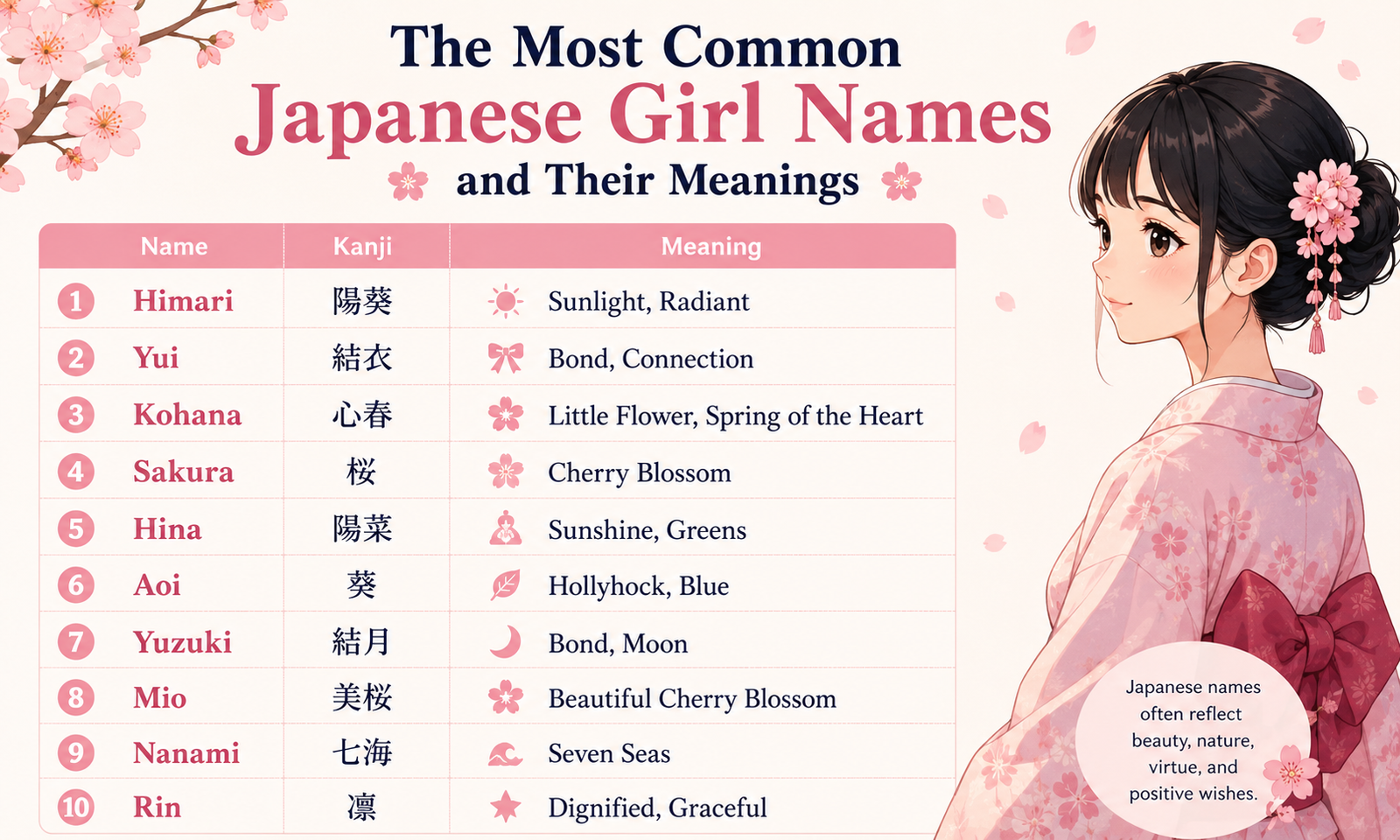
Choosing a name is a significant milestone in any culture. In Japan, this process carries a unique weight and artistic beauty. Japanese names do not just sound melodic. They carry deep layers of meaning, hopes for the child’s future, and connections to the natural world.
If you are exploring Japanese culture, writing a story with Japanese characters, or looking for inspiration for naming a child, understanding these names offers a fascinating window into the country’s values. Parents often spend weeks carefully selecting the perfect combination of characters. The characters chosen can dictate the fortune, personality, and life path the parents wish for their daughter.
The Japanese writing system adds a beautiful layer of complexity to naming. A single name can be written in dozens of different ways, with each variation changing the core meaning entirely. This makes the study of common Japanese names a rich and rewarding experience.
Below, we will look closely at the most common Japanese girl names, how the naming system works, and the specific kanji used to write them.
Understanding Japanese Naming Traditions
Before looking at specific names, it is helpful to understand how Japanese naming works. The structure and written characters differ significantly from Western naming conventions.
The Role of Kanji in Japanese Names
Japanese names are primarily written in kanji, which are logographic characters adopted from Chinese. Each kanji represents a specific concept or meaning, rather than just a sound. Because there are thousands of kanji, parents have incredible flexibility. Two girls can have the exact same name spoken aloud, such as “Hina,” but the written kanji could mean completely different things. One might mean “sunlight and greens,” while another could mean “sunny direction.”
Some parents also choose to write their daughters’ names in hiragana or katakana. These are phonetic alphabets. Writing a name in hiragana gives it a soft, gentle, and feminine appearance on paper, though it removes the specific visual meaning provided by kanji.
Popular Endings for Girl Names
Historically, certain suffixes have dominated Japanese girl names. The most famous is “-ko” (子), which translates to “child.” For much of the 20th century, names like Yuko, Keiko, and Yoshiko were incredibly common.
In recent decades, trends have shifted. Modern parents lean toward names that evoke nature, seasons, and soft sounds. Popular modern endings include:
- -mi (美): Meaning “beauty” (e.g., Naomi, Ayami).
- -ka (花/華 or 香): Meaning “flower” or “fragrance” (e.g., Haruka, Honoka).
- -na (菜 or 奈): Often referring to greens or vegetables, symbolizing fresh growth (e.g., Hina, Kanna).
The Most Popular Japanese Girl Names
Here is a detailed look at the most common Japanese girl names in recent years, complete with their popular kanji writings and meanings.
Himari (陽葵)
Himari has consistently ranked as one of the top names for baby girls in Japan over the past decade. The name has a warm, bright, and cheerful energy.
- 陽 (hi): Means “sun” or “sunlight.”
- 葵 (mari): Refers to the hollyhock flower, a plant known for turning toward the sun.
Parents who choose Himari often wish for their daughter to grow up looking toward the light, living a warm, positive, and healthy life.
Hina (陽菜)
Hina is a short, sweet name that has remained highly popular. It evokes the feeling of spring and warmth.
- 陽 (hi): Means “sun” or “sunlight.”
- 菜 (na): Means “greens” or “vegetables.”
This combination paints a picture of spring greens basking in warm sunlight. It is a lovely wish for a child to thrive and grow naturally.
Yui (結衣)
Yui is a gentle name that emphasizes human connection and grace. It is extremely popular and carries a very elegant ring.
- 結 (yu): Means “to tie,” “to bind,” or “connection.”
- 衣 (i): Means “clothing” or “garment.”
Together, the kanji suggest a person who is surrounded by good relationships and blessed with a gentle, comforting presence. It reflects a hope that the child will value bonds with family and friends.
Sakura (さくら / 桜)
Sakura translates directly to “cherry blossom.” The cherry blossom is the national flower of Japan and a powerful symbol of beauty, renewal, and the fleeting nature of life.
- 桜 (sakura): The kanji for cherry blossom.
Many parents choose to write this name in hiragana (さくら) to give it a softer, more approachable feel. It remains a timeless classic.
Mei (芽依)
Mei is a brief, modern-sounding name that carries beautiful imagery of new beginnings.
- 芽 (me): Means “sprout” or “bud.”
- 依 (i): Means “to rely on” or “trust.”
This name symbolizes a young, fresh sprout that grows reliably. It conveys a parent’s wish for their daughter to have endless potential and a trustworthy character.
Ichika (一華)
Ichika is a name that commands attention while remaining delicate. It stands out due to its simple but profound meaning.
- 一 (ichi): Means “one.”
- 華 (ka): Means “flower” or “splendor.”
The name translates roughly to “one beautiful flower” or “first flower.” It is an excellent choice for a firstborn daughter, expressing that she is a unique and brilliant presence in the world.
Akari (あかり / 明莉)
Akari is a name filled with light and hope. It is often chosen to represent a child who brings brightness into a family’s life.
- 明 (aka): Means “bright” or “clear.”
- 莉 (ri): Refers to the white jasmine flower.
Written with these kanji, Akari means a bright jasmine, combining the concepts of radiant light and sweet fragrance. It is also frequently written in hiragana (あかり).
Aoi (葵)
Aoi is a classic name that has never truly gone out of style. It is short, simple to pronounce, and visually elegant.
- 葵 (aoi): Refers to the hollyhock flower.
The hollyhock is a traditional and noble plant in Japan. Choosing this name implies a wish for the child to grow tall, beautiful, and dignified.
Mio (澪)
Mio is a name associated with water, giving it a very fluid, peaceful, and refreshing vibe.
- 澪 (mio): Means “waterway” or “channel.”
This kanji suggests a smooth, flowing life path. Parents hoping their daughter will navigate life with grace and adaptability often gravitate toward this name.
Rin (凛)
Rin is a single-kanji name that packs a powerful punch. It is less about softness and more about inner strength.
- 凛 (rin): Means “dignified,” “severe,” or “cold.”
While “cold” might sound negative in English, in Japanese, it refers to the crisp, clear, and dignified feeling of a brisk winter morning. A girl named Rin is expected to be strong, principled, and elegantly composed.
Tsumugi (紬)
Tsumugi has seen a massive surge in popularity recently. It represents traditional Japanese craftsmanship and patience.
- 紬 (tsumugi): Refers to pongee, a type of soft, durable silk fabric.
The process of making this silk involves carefully spinning and weaving threads together. Therefore, naming a daughter Tsumugi represents the hope that she will build a strong, beautiful life by carefully weaving her dreams and relationships together.
Honoka (和香)
Honoka is a name that appeals to the senses and carries a very gentle temperament.
- 和 (hono): Means “harmony,” “peace,” or “Japanese style.”
- 香 (ka): Means “fragrance” or “scent.”
This translates to a “harmonious fragrance.” It suggests a girl who brings a peaceful, calming atmosphere wherever she goes.
Koharu (心春)
Koharu literally sounds like “small spring,” but the kanji often used tell a slightly deeper story about the heart.
- 心 (ko): Means “heart” or “mind.”
- 春 (haru): Means “spring.”
This beautiful combination means a “heart of spring.” It expresses a wish for the child to have a warm, generous, and lively spirit.
Yuna (結菜)
Yuna is a popular name that combines the concepts of connection and natural growth.
- 結 (yu): Means “to tie” or “to connect.”
- 菜 (na): Means “greens” or “vegetables.”
Parents giving this name hope their daughter will grow up healthy and form strong, meaningful connections with the people around her.
Riko (莉子)
Riko is an excellent example of how the traditional “-ko” ending has survived by adapting to modern tastes.
- 莉 (ri): Refers to the white jasmine flower.
- 子 (ko): Means “child.”
This name translates to a “child of jasmine.” It bridges the gap between traditional naming conventions and the modern preference for floral, botanical kanji.
Frequently Asked Questions About Japanese Girl Names
Can Japanese names be written without Kanji?
Yes. Many parents choose to write their daughters’ names using hiragana, the phonetic Japanese alphabet. Hiragana characters have a rounded, flowing shape that many consider highly feminine and approachable. Names like Sakura (さくら), Akari (あかり), and Hinata (ひなた) are very commonly written this way. Katakana is rarely used for native Japanese names today, though it was common in the early 20th century.
Do Japanese people have middle names?
No, the concept of a middle name does not exist in standard Japanese legal and cultural systems. A person has a family name (surname) and a given name. When writing their names, Japanese people place their family name first, followed by their given name.
How do parents decide which Kanji to use?
Choosing kanji is a meticulous process. Parents consider the literal meaning of the characters, how the characters look visually when written down, and the number of strokes required to write them. There is a traditional fortune-telling practice called Seimei Handan, which claims to predict a child’s luck and future based on the stroke count of the kanji in their name. Many parents consult these stroke counts before making a final decision.
Are traditional “-ko” names completely gone?
They are no longer at the top of the baby name charts, but they have not disappeared entirely. Names like Riko (莉子) and Mako (真子) still appear. Furthermore, many adult women today have “-ko” names, meaning these names remain highly common in the general population, even if they are less frequent in kindergartens.
Selecting the Perfect Meaning
Japanese girl names offer a beautiful intersection of language, art, and philosophy. From the radiant warmth of Himari to the elegant strength of Rin, every name tells a unique story. The kanji system allows parents to embed deep, lifelong wishes into the very letters of their daughter’s name.
Understanding these common names gives you a much greater appreciation for Japanese culture and the thoughtful nature of its people. If you are choosing a Japanese name, take the time to explore the kanji options available. The right characters will add layers of poetry and purpose to the name you ultimately choose.
Meta data
Meta title
The Most Common Japanese Girl Names and Their Meanings
Meta description
Discover the most common Japanese girl names. Learn about their beautiful kanji, hidden meanings, and the cultural traditions behind naming a child in Japan.
