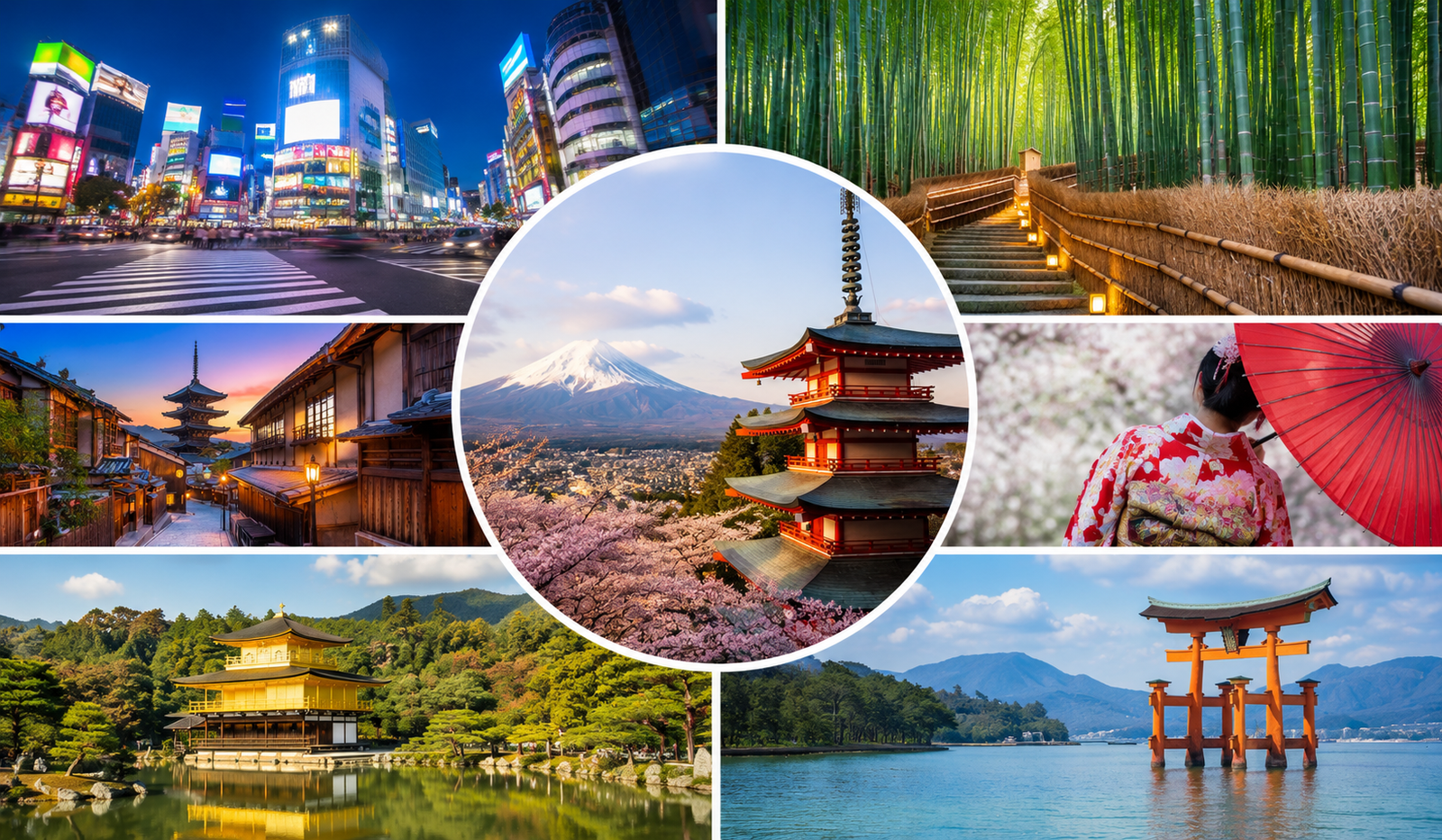
First Trip to Japan With a 7-Day Tokyo Kyoto and Osaka Itinerary
A 7-day Japan itinerary for first-timers typically covers Tokyo (3 days), Kyoto (2 days), and Osaka (2 days), traveling via the iconic Shinkansen bullet train. This route balances urban energy, ancient temples, and world-class food—giving first-time visitors the most well-rounded introduction to Japan possible.
Japan doesn’t ease you in gently. From the moment you step off the plane, it hits you with neon-lit crosswalks, the smell of ramen wafting from a basement restaurant, and bullet trains that arrive to the second. For first-time visitors, the country can feel equal parts thrilling and overwhelming—and that’s exactly why having a solid itinerary matters.
Seven days is enough time to experience Japan’s most iconic destinations without burning out. The classic Tokyo–Kyoto–Osaka route has become the gold standard for first-timers for good reason: it threads together Japan’s most compelling contrasts. You get the hypermodern chaos of Tokyo, the temple-lined streets of Kyoto, and the loud, unapologetic food culture of Osaka—all connected by one of the world’s most efficient rail networks.
This guide walks you through each day in detail, covering where to go, what to eat, how to get around, and what to book in advance. Whether you’re planning months ahead or pulling this together last minute, here’s everything you need to make your first week in Japan count.
What Do You Need to Know Before Arriving in Japan for the First Time?
Before diving into the day-by-day breakdown, a few practical basics will save you a lot of stress on the ground.
Get an IC Card: An IC card (like Suica or Pasmo) is a rechargeable transit card that works on trains, subways, and buses across Japan. You can even use it to pay at convenience stores. Pick one up at Tokyo’s Narita or Haneda airport immediately upon arrival.
Buy a JR Pass (if it makes sense for your trip): A Japan Rail Pass covers unlimited travel on most JR-operated Shinkansen lines, including the route between Tokyo, Kyoto, and Osaka. For a 7-day trip covering this classic route, the pass often pays for itself—but run the numbers based on your specific itinerary before purchasing. You can learn more about the JR Pass and calculate your savings on the official JR Pass website.
Download Google Maps and Google Translate offline: Japan’s train network is extensive and well-labeled in English in major cities, but having offline access to maps and translation makes navigation far smoother—especially in smaller neighborhoods.
Cash still matters: Despite Japan’s rapid adoption of digital payments, many smaller restaurants, shrines, and rural spots remain cash-only. Keep a few thousand yen on hand at all times.
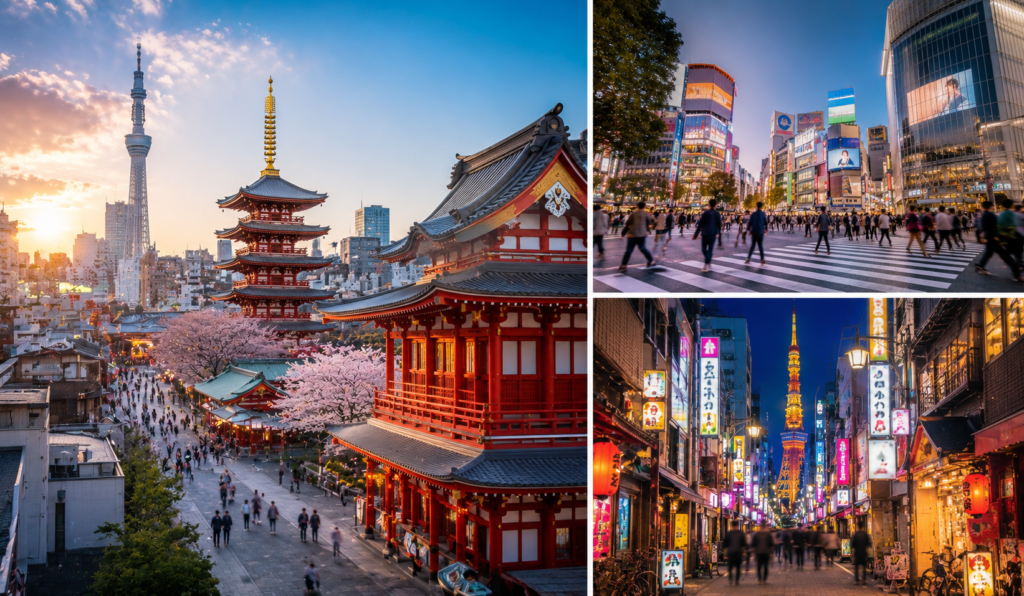
How Should You Structure Your First 3 Days in Tokyo?
Tokyo deserves at least three full days—arguably more—but three days gives you enough time to hit the highlights across different neighborhoods without rushing.
Day 1: Shibuya, Harajuku, and Shinjuku
Start your first morning in Shibuya. The famous Shibuya Crossing—often called the busiest pedestrian intersection in the world—is best experienced during rush hour, when thousands of people surge across from every direction simultaneously. Grab a coffee from a nearby café and watch it unfold from above before heading down to join the crowd yourself.
From Shibuya, walk or take a short train ride to Harajuku. Takeshita Street is the heartbeat of Japanese youth fashion and subculture: think candy-colored clothing stores, crepe stands, and the kind of street-style creativity you won’t find anywhere else. For a quieter contrast, Omotesando—just a few minutes’ walk away—offers high-end boutiques and sleek architecture along a wide, tree-lined boulevard.
Spend your evening in Shinjuku. The district splits neatly between two very different personalities: the neon-soaked, sensory overload of Kabukicho on the east side, and the quieter, labyrinthine alleys of Golden Gai on the west—a cluster of tiny bars, each seating maybe eight people, each with its own distinct personality. Pick one and settle in.
Day 2: Asakusa, Akihabara, and Ueno
Day two shifts east. Begin at Senso-ji Temple in Asakusa, Tokyo’s oldest Buddhist temple and one of the city’s most visited landmarks. Arrive early—before 8:00 a.m. if possible—to experience the temple grounds before tour groups arrive. Nakamise Shopping Street, the long arcade leading to the temple, fills quickly with vendors selling traditional snacks and souvenirs.
From Asakusa, head to Akihabara, Tokyo’s electronics and anime district. Even if you’re not particularly into gaming or manga culture, the density of multi-story arcades, gadget shops, and character cafés makes for a genuinely fascinating few hours. After that, swing through Ueno, where you’ll find the Tokyo National Museum, Ueno Park, and several other museums clustered together—a good option if the weather turns.
Day 3: Hamarikyu Gardens, Teamlab Planets, and Ginza
Use your third day to slow down and explore a different side of Tokyo. Hamarikyu Gardens, a traditional landscape garden right in the middle of the city, offers a peaceful morning walk before the crowds arrive. The garden’s tidal ponds, teahouse, and seasonal flowers make it one of Tokyo’s most underrated green spaces.
In the afternoon, book tickets for Teamlab Planets in Toyosu—a fully immersive digital art experience that has become one of Tokyo’s most talked-about attractions in recent years. Tickets sell out well in advance, so book through the official Teamlab website before you leave home.
End the day with a walk through Ginza, Tokyo’s upscale shopping and dining district. It’s the right neighborhood for a splurge dinner—or simply for browsing high-end Japanese department stores like Mitsukoshi.
Why Is Kyoto the Most Essential Stop on a First-Time Japan Trip?
Kyoto served as Japan’s imperial capital for more than a thousand years, and that history saturates every neighborhood. Nowhere else in Japan offers such a concentrated experience of temples, traditional wooden machiya townhouses, tea ceremony culture, and carefully preserved geisha districts.
Day 4: Fushimi Inari, Gion, and Nishiki Market
Catch an early Shinkansen from Tokyo to Kyoto—the journey takes roughly two hours and fifteen minutes on the Nozomi line. Store your luggage at your hotel or in coin lockers at Kyoto Station, then head straight to Fushimi Inari Taisha.
Fushimi Inari is famous for its thousands of vermilion torii gates winding up the mountain behind the main shrine. The full hike to the summit takes two to three hours, but even walking the lower trails for an hour gives you a powerful sense of the place. Go early—by 9:00 a.m., crowds begin to build steadily.
In the afternoon, explore Gion, Kyoto’s most famous geisha district. The narrow streets around Hanamikoji-dori are lined with traditional ochaya teahouses where geiko (the Kyoto term for geisha) and maiko (apprentice geisha) entertain clients behind closed doors. Early evenings offer the best chance of spotting a maiko moving between appointments—a genuinely rare sight that photos rarely capture well.
Stop at Nishiki Market on your way back—a narrow, covered shopping street nicknamed “Kyoto’s Kitchen” that stretches for several blocks and sells fresh tofu, pickled vegetables, street food skewers, and Japanese knives.
Day 5: Arashiyama and Philosopher’s Path
Spend your second Kyoto day exploring two of the city’s most scenic areas.
Arashiyama, in western Kyoto, is home to the famous bamboo grove, the serene Tenryu-ji Temple garden (a UNESCO World Heritage Site), and the Togetsukyo Bridge over the Oi River. Rent a bicycle to cover more ground. The district is most peaceful in the early morning—the bamboo grove, in particular, gets extremely busy by mid-morning.
In the afternoon, walk the Philosopher’s Path—a stone path that follows a canal for about two kilometers, lined with cherry trees (spectacular in spring) and small cafes, temples, and galleries. The walk connects Ginkaku-ji (the Silver Pavilion) at the north end to Nanzen-ji Temple at the south, with plenty worth stopping for along the way.
What Makes Osaka Worth Including in a 7-Day Japan Itinerary?
Osaka completes the Tokyo–Kyoto–Osaka triangle and offers something the other two cities don’t: an atmosphere that’s genuinely louder, funnier, and more food-obsessed. Osakans take enormous pride in their culinary culture—the city’s unofficial motto, kuidaore, loosely translates to “eat until you drop.”
Day 6: Dotonbori, Shinsekai, and Osaka Castle
Take a short Shinkansen from Kyoto to Osaka (about fifteen minutes on the Nozomi line). Drop your bags and head straight to Dotonbori, Osaka’s neon-lit entertainment canal. The area is famous for its giant mechanical crab, its density of street food stalls, and its completely unsubtle approach to commercial signage. Eat takoyaki (octopus balls), okonomiyaki (savory pancakes), and kushikatsu (skewered, deep-fried meat and vegetables) in quick succession—this is exactly the right neighborhood for it.
In the afternoon, take a short subway ride to Shinsekai, a retro district that feels like a time capsule from mid-century Japan, then head to Osaka Castle and its surrounding park. The castle is particularly beautiful in late afternoon light.
Day 7: Day Trip to Nara Before Departing
Use your final day for a morning day trip to Nara, easily reachable from Osaka in about forty minutes by train. Nara Park is home to approximately 1,200 free-roaming sika deer, which are considered sacred messengers in Shinto tradition. You can buy shika senbei (deer crackers) from vendors throughout the park and feed them directly—the deer are bold and will nudge you persistently until you comply.
Todai-ji Temple, a short walk through the park, houses one of Japan’s most impressive sights: a massive bronze Buddha statue sitting inside the world’s largest wooden building. Return to Osaka by early afternoon for any last-minute shopping or meals before heading to Kansai International Airport.
What Are the Most Important Things to Book in Advance for a 7-Day Japan Trip?
Several popular experiences and accommodations in Japan sell out weeks—sometimes months—in advance. Book the following before you leave home:
- Accommodation in Kyoto: Kyoto has less hotel inventory than Tokyo, and demand is high year-round. Book early, especially if you’re traveling during cherry blossom season (late March to early April) or autumn foliage season (November).
- Teamlab Planets tickets: Available on the official Teamlab website, these sell out consistently.
- JR Pass: Purchase and activate before departure if buying from an overseas retailer.
- Specific restaurants: High-end sushi counters, ramen spots with cult followings, and kaiseki restaurants often require reservations weeks or months ahead.
Making the Most of Your First Week in Japan
Japan rewards the curious and punishes the unprepared. Seven days is long enough to get a genuine feel for the country—but short enough that priorities matter. This Tokyo–Kyoto–Osaka route consistently delivers the broadest, most memorable introduction for first-time visitors: urban scale and innovation in Tokyo, cultural depth and natural beauty in Kyoto, and the unfiltered, food-first energy of Osaka.
The most important thing is to leave some room for the unexpected. Some of the best Japan experiences happen off the itinerary—a quiet izakaya you stumbled into, a festival you didn’t know was happening, a temple side street that wasn’t on any map you’d looked at. Plan the structure, then let Japan fill in the rest.
Frequently Asked Questions About Planning a 7-Day Japan Itinerary for First-Timers
How much does a 7-day trip to Japan cost on average?
Budget travelers can manage on roughly $80–$120 USD per day (covering accommodation, food, transport, and entry fees). Mid-range travelers typically spend $150–$250 per day. The JR Pass, flights, and accommodation represent the largest costs and vary significantly depending on origin and season.
What is the best time of year to visit Japan for the first time?
Spring (late March to early April) and autumn (October to November) offer the most iconic scenery—cherry blossoms and fall foliage, respectively—but also the highest crowds and prices. Late May to early June and September offer good weather with fewer tourists.
Is 7 days enough time to see Japan?
Seven days is enough for a meaningful first visit to Japan’s three most iconic cities: Tokyo, Kyoto, and Osaka. It won’t cover everything, but it gives first-timers a well-rounded, memorable introduction without feeling rushed.
Do I need to speak Japanese to travel in Japan?
No. Major tourist areas, train stations, and international hotels in Tokyo, Kyoto, and Osaka have English signage. Google Translate’s camera function handles most menus and signs effectively. Basic courtesy phrases in Japanese (thank you = arigatou gozaimasu, excuse me = sumimasen) are appreciated but not required.
How do I get from Tokyo to Kyoto efficiently?
The fastest option is the Nozomi Shinkansen bullet train, which covers the roughly 450-kilometer journey in about two hours and fifteen minutes. Note that the Nozomi is not covered by the standard JR Pass—Hikari and Sakura services on the same route are covered and take about thirty minutes longer.
Is Japan safe for solo travelers and first-timers?
Japan consistently ranks among the safest countries in the world for tourists. Solo travelers, including solo female travelers, generally report feeling very safe. Standard urban precautions apply, but violent crime targeting tourists is rare.
What should I pack for a 7-day trip to Japan?
Comfortable walking shoes are essential—you’ll cover significant distances daily on foot. Pack light if possible, since navigating Japanese train stations with large luggage is difficult. Many visitors use a luggage forwarding service (takuhaibin) to send bags between cities rather than carrying them.
