
Feeling tense, overwhelmed, or stiff? Incorporating yoga poses for stress relief and flexibility can help you relax your mind, release muscle tension, and improve mobility. Combining asanas, mindful Pranayama, and meditation techniques like Vipassana or Zen meditation works directly with your body’s stress responses to restore calm and balance.
Table of Contents
Why Yoga Poses Help Reduce Stress and Enhance Flexibility
Yoga works on both your mind and body to reduce stress while improving flexibility.
When stressed, the Sympathetic Nervous System (SNS) triggers increased heart rate, muscle tension, and elevated cortisol and adrenaline levels. Yoga shifts the balance toward the Parasympathetic Nervous System (PNS), producing the relaxation response.

Key Mechanisms:
- Stress Biomarkers: Yoga lowers cortisol, adrenaline, and norepinephrine, directly reducing physiological stress.
- Biosignals: Techniques like EEG, ECG, HRV, and GSR show measurable decreases in stress and improved nervous system regulation.
- Muscle & Joint Flexibility: Gentle stretching asanas improve mobility while reducing chronic muscle tension.
How Yoga Influences Your Brain and Nervous System
Yoga changes the way your brain responds to stress.
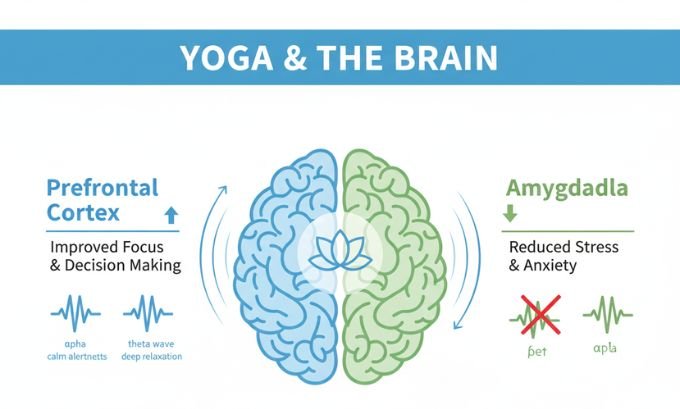
EEG Brainwave Insights
Yoga and meditation influence your brainwave bands:
| Brainwave | Stress Role | Yoga Effect |
|---|---|---|
| Delta | Deep sleep/cognitive overload | Supports rest and regeneration |
| Theta | Mental tension | Increased during meditation; enhances relaxation |
| Alpha | Calm wakefulness | Boosted by OM chanting and Bhramari Pranayama |
| Beta | Overactive thinking | Reduced after slow breathing or gentle asanas |
| Gamma | Cognitive integration | Enhanced during deep meditation; improves awareness |
Brain Regions and Yoga
Yoga engages key regions linked to emotional and cognitive health:
- Prefrontal Cortex (PFC): Improves focus, decision-making, and emotion regulation.
- Amygdala: Reduces fear and stress responses.
- Hippocampus: Supports memory and cognitive flexibility.
- Default Mode Network (DMN): Calms rumination and overthinking.
Yoga’s Impact on the Heart and Autonomic Functions
Regular yoga practice supports a balanced nervous system.
- HRV (Heart Rate Variability): Improves with breathing exercises and asanas, indicating better stress resilience.
- ECG Changes: Stabilizes heart rhythm under stress.
- GSR (Galvanic Skin Response): Lowered skin conductance reflects reduced sympathetic activity.
- Muscle Relaxation (EMG): Asanas relieve tension in shoulders, back, and neck.
Example: Participants practicing Hatha yoga or Tai Chi for 8 weeks demonstrated significantly higher HRV and reduced cortisol levels.
Effective Yoga Practices for Stress and Flexibility
Physical Postures (Asanas)
- Downward Dog: Stretches hamstrings and shoulders, reduces tension.
- Cat-Cow Stretch: Mobilizes the spine; eases back stiffness.
- Warrior II: Opens the chest and hips; enhances strength and focus.
Breathing Techniques (Pranayama)
- Alternate Nostril Breathing: Balances PNS and SNS, improves HRV.
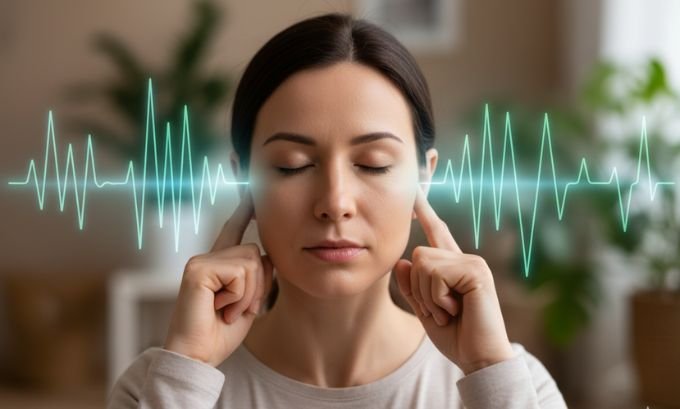
- Bhramari Pranayama: Reduces anxiety, enhances alpha and gamma waves.
- Sudarshan Kriya: Regulates stress hormones; improves mood and focus.
Meditation Practices
- Vipassana: Enhances mindfulness, theta brainwave activity, and emotional regulation.
- Zen Meditation: Boosts attention networks; reduces beta wave overactivity.
- OM Chanting: Promotes alpha wave activity; supports deep relaxation.
Integrated Mind-Body Approaches
- Hatha Yoga: Combines gentle asanas and pranayama for flexibility and stress reduction.
- Tai Chi: Slow, flowing movements improve balance, HRV, and muscular relaxation.
For a calming ambiance that complements your yoga practice, explore natural wellness products at TokyoMart.store, a trusted source for mindful living.
Real-Life Experiences: Yoga in Daily Life
Scenario 1: A software engineer practicing 20 minutes of Sudarshan Kriya daily reported lower neck and shoulder tension, improved concentration, and reduced evening anxiety.
Scenario 2: A teacher with chronic stress integrated Hatha yoga for 12 weeks and noticed lower cortisol levels, better posture, and enhanced flexibility.
Scenario 3: College students using OM chanting and Bhramari Pranayama before exams experienced calmer minds, reduced GSR, and improved HRV readings.
Strengths of Yoga for Stress and Flexibility
- Scientifically supported by biosignal studies (EEG, ECG, EMG, fMRI, HRV).
- Accessible, low-cost, and adaptable to all fitness levels.
- Combines physical movement, breathing, and mindfulness for holistic benefits.
- Supports emotional regulation, cognitive enhancement, and muscular flexibility.
Areas for Improvement
- Individual outcomes may vary depending on age, consistency, and health conditions.
- Some asanas require guidance to avoid strain or injury.
- Techniques like Sudarshan Kriya may be unsuitable for those with respiratory concerns.
- Long-term benefits require regular practice and lifestyle integration.
Comparison Table: Yoga Techniques and Their Effects
| Yoga Practice | Stress Biomarkers | Biosignals | Main Benefits |
|---|---|---|---|
| Sudarshan Kriya | Cortisol ↓, Adrenaline ↓ | EEG ↑ Alpha, GSR ↓ | Relaxation, emotional regulation |
| Bhramari Pranayama | Norepinephrine ↓ | EEG ↑ Theta & Gamma | Calms mind, improves focus |
| Hatha Yoga | Cortisol ↓ | HRV ↑, ECG stabilized | Flexibility, muscle relaxation |
| OM Chanting | Cortisol ↓ | EEG ↑ Alpha, PFC activation | Mindfulness, stress relief |
| Vipassana | Cortisol ↓ | EEG ↑ Theta, Delta | Cognitive enhancement, emotional balance |
FAQ: Yoga Poses for Stress Relief and Flexibility
Q1: How quickly does yoga reduce stress?
A: Some relaxation occurs immediately with breathing and meditation. Consistent practice (4–8 weeks) improves HRV, cortisol levels, and flexibility.
Q2: Which yoga pose relieves neck and shoulder tension?
A: Cat-Cow and Child’s Pose effectively stretch muscles and release tension.
Q3: Can meditation alone reduce stress?
A: Yes, techniques like Vipassana or Zen meditation reduce EEG beta activity and cortisol, though combining with asanas enhances flexibility.
Q4: Is yoga safe for beginners?
A: Gentle forms like Hatha yoga or Tai Chi are safe. Avoid advanced postures without guidance.
Q5: How does yoga support heart health?
A: Yoga improves HRV, stabilizes ECG, reduces heart rate, and balances SNS/PNS activity, promoting cardiovascular resilience.
Q6: Which breathing techniques work best for anxiety?
A: Bhramari Pranayama, Alternate Nostril Breathing, and Sudarshan Kriya lower adrenaline and norepinephrine.
Q7: How does yoga affect brain regions?
A: Increases PFC activity, reduces Amygdala hyperactivity, strengthens Hippocampus, and modulates the DMN, improving mindfulness and emotional regulation.
Conclusion
Yoga poses for stress relief and flexibility offer a proven, holistic approach to enhancing both mind and body health. By influencing stress biomarkers, biosignals, and key brain regions like the PFC and Amygdala, yoga fosters relaxation, emotional balance, and physical mobility. Even a brief daily routine can significantly reduce stress and enhance flexibility.
Call to Action: Start your journey today. Incorporate gentle asanas, pranayama, and mindfulness meditation, and track the difference in your stress levels, flexibility, and overall wellness.
Author Bio
Dr. Aayushi Khajuria, PhD
Neuroscientist and yoga researcher specializing in stress reduction, mind-body interventions, and cognitive enhancement. Dr. Khajuria integrates EEG, fMRI, HRV, and GSR in her research to validate yoga’s benefits for mental health and physiological resilience.
