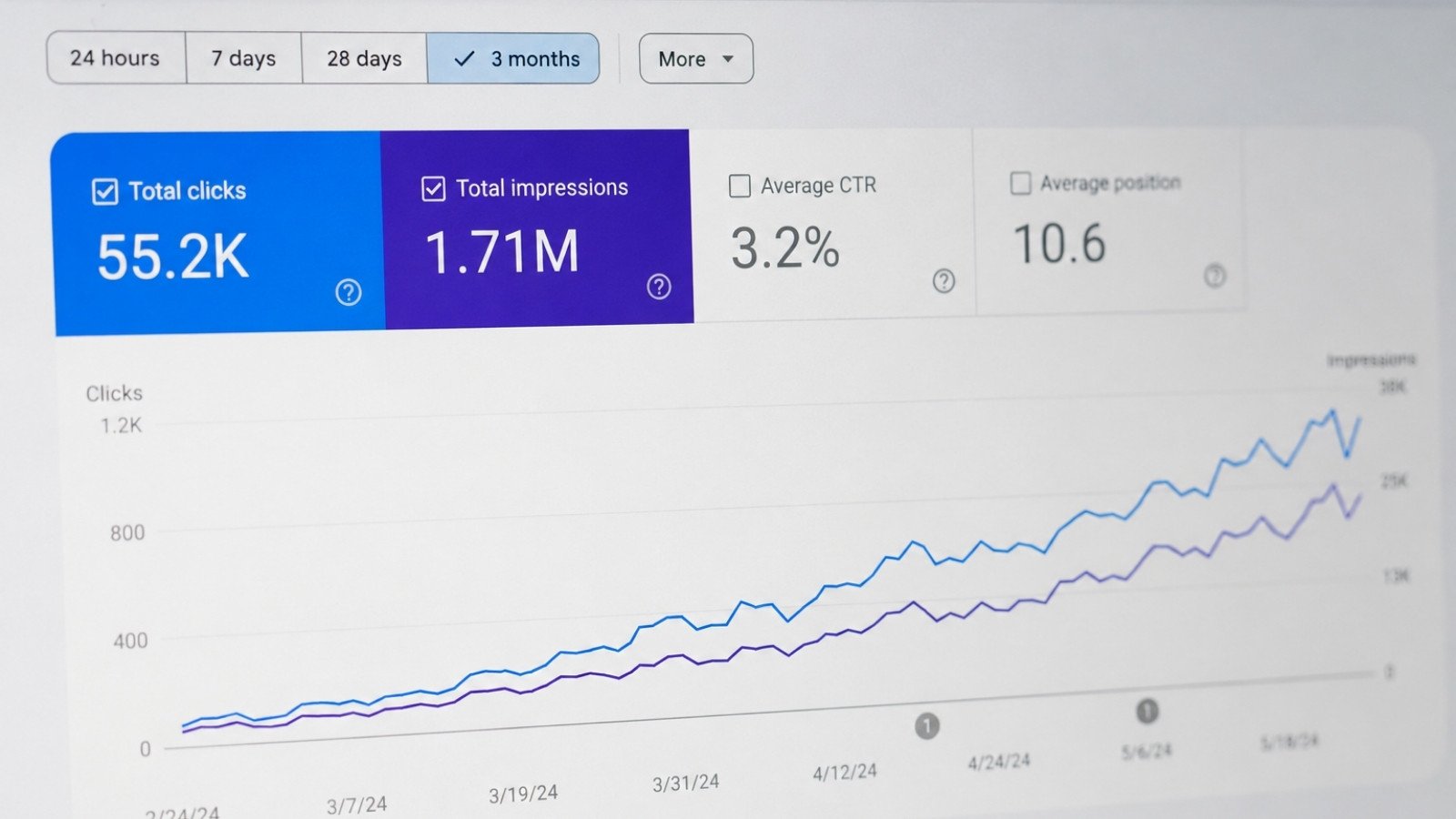
Increasing organic traffic without backlinks is entirely achievable. Focus on on-page SEO, long-tail keyword targeting, content freshness, technical optimization, and internal linking. These strategies help search engines discover, index, and rank your content – without relying on third-party endorsements.
Backlinks have long been treated as the holy grail of SEO. And while a strong backlink profile certainly helps, the obsession with link building has led many content teams to overlook a set of highly effective strategies that operate entirely within their own domain.
The truth? You can grow organic traffic significantly without earning a single backlink. Google’s algorithm weighs dozens of ranking factors, and many of the most actionable ones—content quality, keyword strategy, page experience, and site structure—are entirely within your control.
This guide breaks down exactly How to increase organic traffic without backlinks. Whether you’re a solo creator with a niche blog or a marketing team managing a large content operation, these tactics are practical, proven, and require no outreach whatsoever.
Table of Contents
Why organic traffic without backlinks is possible
Backlinks signal authority and trust to search engines. But they’re not the only signal that matters. Google’s Search Quality Evaluator Guidelines place significant weight on E-E-A-T: Experience, Expertise, Authoritativeness, and Trustworthiness. Several components of E-E-A-T—such as demonstrating first-hand experience, structuring content clearly, and maintaining factual accuracy—can be built entirely through on-site work.
Additionally, Google has stated publicly that content relevance and user satisfaction are core ranking considerations. A page that directly answers a search query, loads quickly, and keeps users engaged will compete strongly—even in the absence of backlinks.
How to rank content without backlinks: the core strategies
1. Target long-tail keywords with low competition
Competing for high-volume, short-tail keywords without a strong backlink profile is an uphill battle. Long-tail keywords—phrases of three or more words—attract lower search volume individually, but they’re far easier to rank for and often signal stronger purchase or research intent.
For example, rather than targeting “email marketing,” a page optimized for “best email marketing tools for small nonprofits” faces a much smaller competitive field. Aggregate enough of these lower-competition pages, and the cumulative traffic can rival—or exceed—what a single high-competition keyword would deliver.
How to find low-competition long-tail keywords:
- Use Google’s autocomplete and “People also ask” features for free keyword ideas
- Filter by keyword difficulty (KD) below 20 in tools like Ahrefs, Semrush, or Ubersuggest
- Look for question-based queries that don’t yet have a strong featured snippet
2. Optimize on-page SEO with precision
On-page SEO remains one of the highest-leverage activities in organic search. Done correctly, it tells search engines exactly what your page is about—and signals that it deserves to rank.
Key on-page elements to optimize:
- Title tag: Include your primary keyword near the beginning. Keep it under 60 characters.
- Meta description: Write a compelling summary (under 155 characters) that includes the target keyword and a reason to click.
- H1 and H2 structure: Use your primary keyword in the H1 and related terms in H2s to signal topical depth.
- URL slug: Keep URLs short, descriptive, and keyword-rich (e.g.,
/organic-traffic-without-backlinks). - Image alt text: Describe images accurately with relevant keywords where they fit naturally.
- Internal links: Link to related content on your site using descriptive anchor text.
Neglecting any of these elements leaves ranking potential on the table—regardless of how strong your content is.
3. Build topical authority through content clusters
Search engines reward websites that demonstrate deep expertise on a subject. One of the most effective ways to signal that expertise is through a content cluster strategy: creating a pillar page that covers a broad topic comprehensively, then supporting it with a series of more focused articles that link back to the pillar.
For example, a pillar page on “content marketing” might be supported by individual articles on content briefs, content calendars, repurposing content, and measuring content ROI. Each piece reinforces the others and collectively signals to Google that your site is a reliable authority on the topic.
This approach also improves internal linking, which helps search engines crawl your site more efficiently and distributes ranking signals across your content.
4. Refresh and update existing content regularly
New content gets the attention, but updated content often gets the rankings.
Google prioritizes freshness for queries where recency matters—industry trends, statistics, tool comparisons, and how-to guides. A post published two years ago with outdated information may be losing rankings it once held, simply because newer pages have replaced it.
How to update content for maximum impact:
- Refresh statistics and data with more recent sources
- Add new sections that address questions your current content doesn’t cover
- Update the publish date after making substantive changes (not just cosmetic edits)
- Improve readability by breaking up long paragraphs and adding subheadings
According to HubSpot, updating and republishing old blog posts can increase organic traffic to those posts by as much as 106%. That’s a significant return for a fraction of the effort required to write something from scratch.
5. Optimize for featured snippets and AI Overviews
Featured snippets—the boxed answers that appear at the top of Google’s search results—can deliver disproportionate visibility, especially for question-based queries. Ranking in the featured snippet position doesn’t necessarily require more backlinks than your competitors; it requires better-structured content.
AI Overviews (Google’s AI-generated summaries) follow similar logic. Content that is clearly structured, factually dense, and written in plain language is more likely to be cited.
How to optimize for featured snippets:
- Identify questions your target audience is searching for
- Provide a direct, concise answer (40–60 words) at the top of the relevant section
- Use numbered lists for process-based queries and definition-style paragraphs for conceptual ones
- Structure headings as questions where appropriate (e.g., “What is topical authority in SEO?”)
6. Improve technical SEO to maximize crawlability
Even the best content won’t rank if search engines struggle to find or index it. Technical SEO forms the foundation on which every other strategy sits.
Priority technical SEO improvements:
- Page speed: Google has confirmed that page speed is a ranking factor. Use Google PageSpeed Insights to identify and fix loading issues.
- Core Web Vitals: Google’s Core Web Vitals—Largest Contentful Paint (LCP), Interaction to Next Paint (INP), and Cumulative Layout Shift (CLS)—measure real-world user experience. Pages that pass these thresholds receive a ranking boost.
- Mobile-friendliness: Google uses mobile-first indexing, meaning it primarily crawls the mobile version of your site. A responsive design is non-negotiable.
- XML sitemap: Submit a sitemap to Google Search Console to ensure all important pages are discovered and indexed.
- Canonical tags: Use canonical tags to prevent duplicate content from splitting ranking signals across multiple URLs.
7. Use internal linking strategically
Internal linking is one of the most underrated SEO tactics available. Every internal link you add to your site passes authority from one page to another, helping lower-performing pages gain visibility.
A well-structured internal linking system also improves crawl efficiency—search engines can follow links to discover and index new or updated content faster.
Best practices for internal linking:
- Link from high-traffic pages to newer or lower-ranking ones
- Use descriptive, keyword-rich anchor text rather than generic phrases like “click here”
- Add contextual links within the body of your content, not just in navigation menus
- Audit your site periodically for orphan pages—pages with no internal links pointing to them
8. Leverage structured data (schema markup)
Schema markup is a form of code that helps search engines understand the context of your content. Adding schema to your pages can unlock rich results—enhanced search listings that include star ratings, FAQs, how-to steps, and more.
Rich results improve click-through rates even when rankings stay the same. A higher CTR signals to Google that your content is relevant and useful, which can further strengthen your position over time.
Common schema types that increase organic visibility include FAQ schema, HowTo schema, Article schema, and Review schema.
9. Optimize for search intent—not just keywords
Ranking requires more than matching keywords. Google’s algorithms have grown sophisticated enough to evaluate whether a page genuinely satisfies the intent behind a search query—what a user actually wants to accomplish when they type something into the search bar.
Search intent falls into four main categories:
- Informational: The user wants to learn something (e.g., “how does SEO work”)
- Navigational: The user is looking for a specific site or page
- Commercial: The user is researching before making a purchase decision
- Transactional: The user is ready to buy or sign up
Mismatching content to intent is one of the most common reasons well-optimized pages fail to rank. A product page targeting an informational query will rarely outperform a comprehensive guide—and vice versa.
Before writing any piece of content, search the target keyword, analyze the top-ranking results, and align your format and depth with what Google is already rewarding.
What results can you realistically expect?
Organic growth without backlinks is real, but it takes time. Most SEO experts cite three to six months as a reasonable timeline before new content begins generating meaningful traffic—though technically strong, well-optimized sites in low-competition niches can see movement sooner.
The compounding nature of content-driven SEO is its greatest advantage. Each new page you publish, each update you make, and each internal link you build adds to a body of work that grows more valuable over time.
Start growing organic traffic on your own terms
Backlinks remain a legitimate ranking factor, but they’re far from the only path to organic growth. By prioritizing long-tail keyword targeting, on-page optimization, topical authority, technical SEO, and content freshness, you can build a durable traffic engine that doesn’t depend on what other sites choose to do.
Start with a content audit. Identify which of your existing pages have the most ranking potential, then apply the strategies above systematically. The results won’t come overnight—but they will come.
Want to turn your content into a business? Learn how to start a tech blog and make money online with practical tips on niche selection, SEO and monetization.
FAQs about increase organic traffic
Can you rank on Google without any backlinks?
Yes. Pages can and do rank without backlinks, particularly for long-tail keywords with low competition. Technical SEO, content quality, topical relevance, and user experience are all ranking factors Google weighs alongside backlinks. For lower-competition queries, these factors alone are often sufficient.
How long does it take to increase organic traffic without building links?
Most SEO changes take three to six months to reflect in search rankings, according to industry benchmarks. However, technical fixes (like improving page speed or fixing indexing errors) can produce results faster. Content updates to existing high-potential pages tend to yield quicker gains than publishing brand-new content.
What is topical authority and why does it matter for SEO?
Topical authority refers to the depth and breadth of coverage a website demonstrates on a given subject. Search engines reward sites that cover topics comprehensively—through pillar pages and supporting cluster content—with stronger rankings across related queries. Building topical authority reduces the need for backlinks by signaling genuine expertise within a niche.
Is on-page SEO enough to rank competitive keywords?
On-page SEO alone is typically not sufficient for highly competitive keywords where top-ranking pages have strong backlink profiles. For those terms, a combination of on-page optimization, topical authority, and domain credibility is usually required. For low-to-medium competition keywords, however, on-page SEO is often the deciding factor.
What’s the most impactful thing you can do to increase organic traffic quickly?
Updating and refreshing existing content is generally the fastest path to organic traffic gains. According to HubSpot, republishing updated posts can increase traffic to those posts by over 100%. Pair content updates with targeted on-page SEO improvements for maximum impact.
Does page speed affect organic rankings?
Yes. Google has confirmed that page speed is a direct ranking factor for both desktop and mobile search. Slow-loading pages also increase bounce rates, which can further suppress rankings. Use Google PageSpeed Insights or Core Web Vitals data in Google Search Console to identify and address speed issues.
