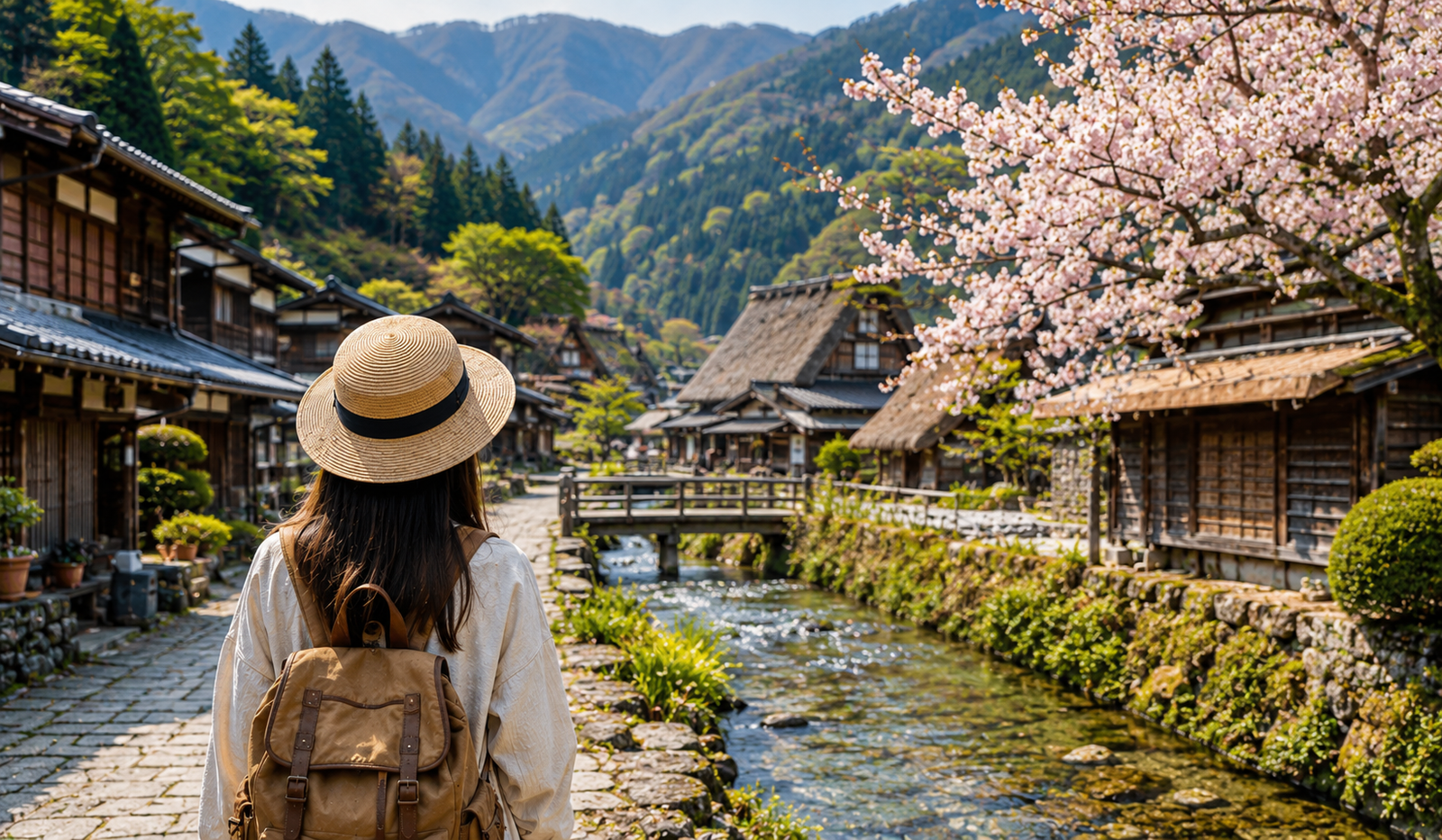
Japan’s most rewarding travel experiences often happen far from Tokyo and Kyoto. Destinations like Tohoku, the Noto Peninsula, and the Iya Valley offer stunning landscapes, authentic culture, and far fewer tourists—making them ideal for travelers seeking a deeper connection with Japan’s history and traditions.
Most people who visit Japan follow the same well-worn path: Tokyo, Osaka, Kyoto, maybe a day trip to Nara. And honestly, it’s easy to see why. These cities are spectacular. But Japan is a country of 6,852 islands, ancient mountain villages, and coastal towns where life moves at a pace that feels completely disconnected from the modern world. If you’re willing to step off the tourist trail, you’ll find a version of Japan that most visitors never get to see.
This guide takes a deep look at the regions, towns, and experiences that deserve far more attention than they get. From the snow-covered highlands of Tohoku to the subtropical forests of Yakushima, Japan’s hidden corners reward the curious traveler with something increasingly rare in modern tourism: genuine discovery.
Whether this is your first trip to Japan or your fifth, there’s always more to explore. Here’s where to start.
What Makes Off-the-Beaten-Path Japan So Different From the Popular Tourist Destinations?
The most obvious difference is crowd density. During peak seasons like cherry blossom in late March and autumn foliage in November, popular spots like Arashiyama in Kyoto or Senso-ji in Tokyo can feel overwhelming. Finding a quiet moment, let alone a quiet photo, becomes nearly impossible.
But the difference runs deeper than that. In lesser-visited parts of Japan, you’re more likely to encounter locals living their everyday lives rather than a tourism economy built around foreign visitors. Ryokan owners in rural Tohoku will sit down to share tea with you. Fishing families in small Kyushu coastal towns will wave you in to try their catch of the day. These moments of genuine human connection are harder to find in places where tourism is the primary industry.
There’s also the question of preservation. Remote Japan has held onto traditions, crafts, and architectural styles that have largely disappeared from more urbanized areas. This is where you’ll find thatched-roof farmhouses still in use, traditional paper-making workshops unchanged for centuries, and festivals that date back over a thousand years—attended almost entirely by locals.
Where Is Tohoku, and Why Is It One of Japan’s Best-Kept Secrets?
Tohoku is the northeastern region of Japan’s main island, Honshu. It covers six prefectures—Aomori, Iwate, Miyagi, Akita, Yamagata, and Fukushima—and despite being just two hours from Tokyo by bullet train, it remains one of the country’s least-visited regions among international tourists.
The reasons to visit are compelling. Aomori’s Hirosaki Castle, surrounded by 2,600 cherry trees, rivals any blossom spot in Kyoto—but without a fraction of the crowds. Akita Prefecture is home to the Nyuto Onsen group, a cluster of traditional hot spring inns tucked so deep into the mountains that several are only accessible on foot through snow-laden forest trails. Yamagata’s Yamadera temple, perched on a rocky mountain ridge, inspired the haiku poet Matsuo Basho to write some of his most celebrated work after visiting in 1689.
Tohoku also carries significant cultural weight. The Nebuta Festival in Aomori—held every August—features enormous illuminated floats depicting samurai and mythological figures, and is considered one of Japan’s three great festivals. The Oga Peninsula in Akita is home to the Namahage tradition, where men dressed as fearsome demon-like figures visit homes on New Year’s Eve to encourage children to be hardworking and respectful.
Getting to Tohoku is simple. The Tohoku Shinkansen connects Tokyo to Sendai in under 90 minutes, and regional rail lines fan out from there. For slower, more scenic travel, local buses and rental cars open up parts of the region that trains simply don’t reach.
You can find a detailed Tohoku travel itinerary at Japan National Tourism Organization’s Tohoku guide.
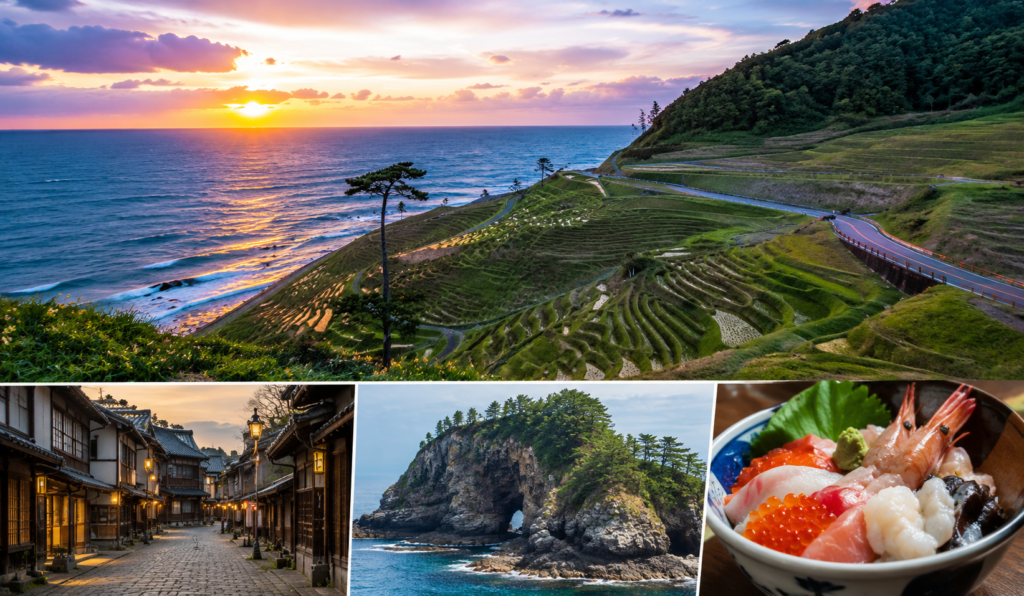
What Awaits Travelers Who Venture Into the Noto Peninsula in Ishikawa Prefecture?
The Noto Peninsula extends into the Sea of Japan from Ishikawa Prefecture like a crooked finger pointing northwest. It’s rugged, windswept, and largely agricultural—and it’s exactly the kind of place that rewards slow, unhurried travel.
The peninsula’s coastline alternates between dramatic cliff faces and calm, shallow bays where oyster and abalone farming operations have operated for generations. The area around Wajima is particularly striking. Wajima’s morning market, which has run for over a thousand years, stretches for roughly 360 meters along the main street and sells everything from locally caught seafood to handmade lacquerware—Wajima Nuri lacquerware is one of Japan’s most prized traditional crafts, recognized as an Important Intangible Cultural Heritage.
Heading further up the peninsula, the Senmaida rice terraces near Shiroyone offer one of the most visually arresting landscapes in Japan. Roughly 1,000 small rice paddies cascade down a hillside into the sea, and during certain seasons, LED lights illuminate the terraces at night. It’s a scene that belongs in a photography book—yet many travelers have never heard of it.
Noto’s food culture is equally compelling. The region’s most distinctive product is Noto salt, harvested using the Agehama method—an ancient salt-making technique unique to this part of Japan. Local restaurants use it to season everything from fresh sashimi to handmade tofu, and the flavor difference is immediately noticeable.
The January 2024 Noto earthquake caused significant damage to parts of the peninsula, and recovery efforts are still ongoing. Before visiting, check updated travel advisories and consider ways to support local businesses as part of your trip. Visiting itself is one of the most meaningful forms of support for a region that depends on tourism.
Why Do Travelers Who Visit the Iya Valley in Shikoku Say It Feels Like Stepping Back in Time?
The Iya Valley sits in the mountainous interior of Shikoku Island, carved by the Yoshino River and accessible only via winding mountain roads that cling to steep valley walls. For centuries, this remoteness made the Iya Valley a refuge for defeated warrior clans—most famously, the Heike clan following their defeat at the Battle of Dan-no-ura in 1185.
The isolation that once sheltered those warriors now makes the valley one of Japan’s most atmospheric rural retreats. Traditional thatched-roof farmhouses—known as kayabuki—dot the slopes, several of which have been converted into rustic guesthouses. Staying in one overnight, surrounded by mist-wrapped mountains and the sound of the river below, is an experience that’s difficult to put into words.
The valley is also famous for its vine bridges. The Kazurabashi vine bridge, constructed from mountain vines, spans the river at a height that’s dizzying enough to make your heart rate spike. It’s deliberately rustic—rebuilt every three years using traditional techniques—and walking across it feels like a genuine test of nerve.
Wildlife is abundant here too. The Iya Valley is one of the few places in Japan where the Japanese giant salamander—the world’s second-largest amphibian, reaching up to 1.5 meters—can still be found in its natural habitat.
Access requires some planning. Trains from Osaka reach Oboke Station in roughly three hours, and from there, buses and taxis serve the valley. A rental car gives significantly more flexibility, especially for reaching the more remote upper valley areas.
What Is the Best Way to Experience Yakushima, Japan’s Ancient Forest Island?
Yakushima is a small, almost perfectly circular island off the southern coast of Kyushu, and it’s genuinely unlike anywhere else in Japan. Roughly 42% of the island is designated a UNESCO World Heritage Site, primarily to protect its ancient cedar forests. The Yakusugi cedars—trees that have lived for more than 1,000 years—are the island’s most iconic attraction, and the oldest among them, Jomon Sugi, is estimated to be between 2,170 and 7,200 years old.
The hike to Jomon Sugi is demanding—roughly 10 hours round trip—but deeply rewarding. The trail winds through dense moss-covered forest, alongside mountain streams, and past smaller cedars that are themselves hundreds of years old. Yakushima receives an extraordinary amount of rainfall—the island gets rain on up to 35 days per month in parts of the interior—which feeds the lush vegetation and gives the forest its legendary atmospheric quality. It’s widely reported that Studio Ghibli’s film Princess Mononoke drew significant visual inspiration from Yakushima’s forests.
The island also has excellent snorkeling and diving, sea turtle nesting beaches, and a resident population of Japanese macaques who show remarkably little fear of humans. Yakushima is best reached by ferry or direct flight from Kagoshima, with the high-speed ferry taking approximately two hours.
For planning your visit, the Yakushima Island Tourism Association provides updated trail conditions, accommodation listings, and guided tour options.
How Can Travelers Get the Most Out of Visiting Rural Japan Responsibly?
Off-the-beaten-path travel in Japan comes with a set of responsibilities that are worth taking seriously. Many rural communities are experiencing significant population decline—Japan’s rural depopulation rate has been a documented challenge for decades—and tourism can play a genuine role in sustaining local economies. Choosing locally owned ryokan over chain hotels, eating at family-run restaurants, and buying crafts directly from artisans keeps money within the community.
Learning a few words of Japanese goes a long way. Rural Japan sees far fewer English speakers than Tokyo or Osaka, and even a basic greeting or thank you in Japanese will open doors that formal tourist infrastructure can’t. Translation apps have made this considerably easier.
Traveling outside peak seasons—late spring (excluding Golden Week in early May) and autumn—reduces pressure on infrastructure and means you’re more likely to have meaningful interactions with locals who aren’t overwhelmed by visitor numbers. Midwinter travel in regions like Tohoku and the Japanese Alps rewards the cold-tolerant with some of the most dramatic snow landscapes on earth, often with very few other travelers in sight.
Renting a car is worth considering for truly rural exploration. Japan’s rural road network is excellent, driving on the left becomes intuitive quickly, and getting to hidden shrines, coastal viewpoints, and mountain villages is far more flexible by car than by infrequent rural bus.
For broader travel planning and regional guides across Japan, Lonely Planet’s Japan destination page offers practical itinerary advice that covers both popular and lesser-known regions.
The Real Japan Is Still Out There—Here’s How to Find It
Japan’s major cities are extraordinary, and nothing in this article is meant to suggest otherwise. But the country’s rural heartland holds something different—a quieter, slower, more intimate version of Japanese life that’s been largely unchanged for generations.
The regions covered here—Tohoku, the Noto Peninsula, the Iya Valley, and Yakushima—are just starting points. Japan has 47 prefectures, and the majority of them contain landscapes, traditions, and experiences that rarely appear on popular travel lists. The barrier to discovering them is lower than most travelers assume. A JR Pass, some willingness to navigate limited English signage, and an openness to slowing down are essentially all you need.
The crowds in Kyoto and Tokyo exist for a reason. But if you’ve already done that, or if you’re looking for something more unexpected on a first visit, Japan’s lesser-known regions offer a depth of experience that’s hard to match anywhere else in the world.
Frequently Asked Questions About Visiting Off-the-Beaten-Path Japan
Is it difficult to travel in rural Japan without speaking Japanese?
Rural Japan has significantly less English-language infrastructure than major cities, but navigation apps like Google Maps work reliably, and translation apps such as Google Translate handle most real-world communication needs. Accommodation staff in rural ryokan are usually adept at communicating with foreign guests through a combination of written notes, apps, and patience.
What is the best time of year to visit lesser-known regions of Japan?
Spring (late March to early May, avoiding Golden Week) and autumn (mid-October to late November) offer the most comfortable temperatures and dramatic natural scenery. Winter is ideal for Tohoku snow landscapes and onsen experiences. Summer works well for Yakushima’s forest hikes if you’re prepared for heat and rain.
How much does it cost to travel off the beaten path in Japan compared to popular tourist areas?
Rural travel in Japan can be considerably more affordable. Accommodation at a family-run ryokan in Tohoku or Shikoku often costs less than city hotels, and local restaurants typically offer generous set meals at modest prices. The main additional cost is transportation—rural areas may require rental cars or taxis where train access is limited.
Are remote areas of Japan safe for solo travelers?
Japan consistently ranks among the world’s safest countries for solo travel, including in rural areas. Crime rates are extremely low, and locals are generally helpful to travelers who appear lost or confused. Solo female travelers regularly report feeling safe in rural Japanese communities.
Do I need to book accommodation in advance for rural Japan?
Yes, especially for smaller ryokan with limited rooms. Many rural inns have only four to eight rooms, and popular ones book out months in advance during peak seasons. Off-peak travel provides more flexibility, but booking at least a few weeks ahead is always advisable.
