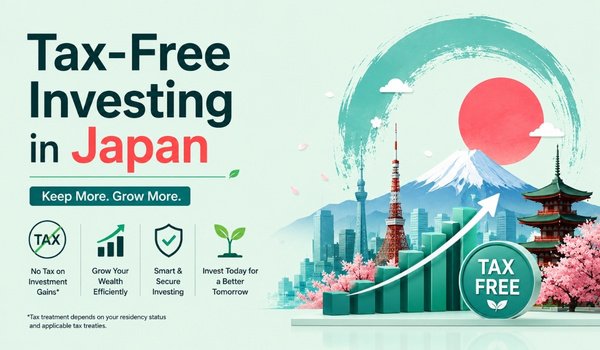
Tax-Free Investing in Japan Through NISA for Foreign Residents and Long-Term Wealth
Japan has become an increasingly attractive destination for foreign professionals, entrepreneurs, students, and long-term residents. Along with its stable economy, high standard of living, and strong financial system, Japan offers unique opportunities for investors who want to grow their wealth while minimizing taxes. One of the most attractive options available today is tax-free investing through Japan’s government-supported investment programs.
For foreigners living and working in Japan, understanding how tax-free investing works can provide significant financial benefits over time. Many international residents are surprised to learn that they may be eligible to use the same tax-advantaged investment accounts as Japanese citizens. These accounts allow investors to earn capital gains and dividends without paying the standard investment taxes that would normally apply.
Tax-free investing has become especially important as inflation, rising living costs, and retirement planning concerns encourage people to seek better ways to build long-term wealth. By taking advantage of Japan’s tax-free investment programs, foreigners can potentially maximize returns while reducing their overall tax burden.
This guide explains everything foreigners need to know about tax-free investing in Japan, including available investment accounts, eligibility requirements, benefits, risks, and practical strategies for maximizing financial growth.
Why Do Investors Normally Pay Taxes on Investments in Japan and How Much Could Tax-Free Accounts Save?
Before exploring tax-free investing options, it is important to understand how investment taxation normally works in Japan.
When an investor buys stocks, exchange-traded funds (ETFs), mutual funds, or other securities and later sells them at a profit, the gain is generally subject to taxation. Similarly, dividends received from investments are also taxable.
Japan typically imposes approximately 20.315% tax on investment income. This includes national income tax and local resident tax components. For investors who generate significant returns over many years, these taxes can substantially reduce overall wealth accumulation.
For example, if an investor earns ¥1,000,000 in capital gains, approximately ¥203,150 may be owed in taxes. Over decades of investing, the cumulative effect of these taxes can be enormous.
Tax-free investment accounts eliminate or reduce these taxes, allowing investors to keep more of their earnings. This creates a powerful compounding effect, where returns generate additional returns without tax deductions slowing growth.
What Is the New NISA Program and Why Is It Considered the Best Tax-Free Investment Option in Japan?
The New NISA program has become the centerpiece of tax-free investing in Japan. NISA stands for Nippon Individual Savings Account and was introduced by the Japanese government to encourage long-term investment among residents.
The revised NISA system, introduced in 2024, significantly expanded investment limits and flexibility compared to previous versions.
One of the biggest advantages of NISA is that capital gains and dividends generated within the account are completely tax-free. Investors can buy approved stocks, ETFs, mutual funds, and other eligible securities while enjoying tax-exempt growth.
The New NISA consists of two main sections:
- The first is the Tsumitate Investment Framework, which focuses on long-term, diversified investing through selected mutual funds and ETFs.
- The second is the Growth Investment Framework, which provides broader investment opportunities, including individual stocks and a wider range of ETFs.
Together, these frameworks allow investors to build diversified portfolios tailored to their financial goals while benefiting from tax-free growth.
Who Can Open a NISA Account in Japan and Are Foreign Residents Eligible to Participate?
Many foreigners mistakenly assume that NISA is only available to Japanese citizens. In reality, citizenship is not the primary requirement.
Foreign residents living in Japan can generally open a NISA account if they meet residency requirements and possess the necessary documentation.
Typically, eligible foreigners need:
- A valid residence status in Japan.
- A registered address in Japan.
- A My Number identification number.
- A Japanese brokerage account.
- Proof of identity and residence.
Most major Japanese brokerage firms welcome foreign residents, although some may require Japanese-language support during the application process.
Whether someone is a permanent resident, working professional, spouse visa holder, or long-term resident, they may be eligible to participate in NISA as long as residency requirements are satisfied.
How Does the Tax-Free Growth Advantage of NISA Help Foreign Investors Build Wealth Faster?
One of the most powerful benefits of NISA is the effect of tax-free compounding.
Imagine two investors each invest ¥100,000 annually and earn an average return of 7% per year over 30 years.
The investor using a taxable account may lose a portion of gains each year to taxes. The NISA investor keeps all eligible gains within the tax-free structure.
Over decades, the difference can become substantial. The tax savings are not limited to immediate gains. Instead, the money that would have been paid in taxes remains invested and continues generating additional returns.
This compounding effect can potentially result in significantly higher portfolio values by retirement.
For foreign professionals working in Japan for many years, this feature can make NISA an extremely valuable wealth-building tool.
What Types of Investments Can Foreigners Hold Inside a NISA Account in Japan?
The New NISA system allows access to various investment products.
Investors can typically choose from:
- Japanese stocks.
- International stocks.
- Exchange-traded funds (ETFs).
- Index funds.
- Actively managed mutual funds.
- Real estate-related funds.
- Dividend-focused investments.
Many financial experts recommend low-cost index funds because they offer diversification, simplicity, and historically competitive long-term returns.
Global index funds are particularly attractive for foreigners who wish to diversify beyond the Japanese market. These funds provide exposure to companies across North America, Europe, Asia, and emerging markets.
By combining Japanese and international investments, investors can reduce concentration risk while benefiting from global economic growth.
Why Are Index Funds Often Recommended for Foreigners Seeking Tax-Free Investing Success in Japan?
Index funds have become increasingly popular among investors worldwide.
Rather than attempting to outperform the market, index funds seek to replicate the performance of a specific market index.
Examples include:
- Global stock market indexes.
- U.S. stock market indexes.
- Developed market indexes.
- Emerging market indexes.
The benefits of index funds include lower fees, broad diversification, reduced management risk, and long-term consistency.
For foreigners unfamiliar with Japanese stock selection, index funds provide a simple and efficient investment approach. Combined with the tax advantages of NISA, they create a powerful framework for long-term wealth accumulation.
Many investors choose automated monthly contributions into diversified index funds, reducing emotional decision-making and encouraging disciplined investing habits.
How Can Foreign Residents Open a Tax-Free Investment Account in Japan Step by Step?
Opening a NISA account is generally straightforward.
The process usually involves:
- Selecting a brokerage firm.
- Opening a regular securities account.
- Submitting identity verification documents.
- Providing a My Number card or notification.
- Completing the NISA application.
- Waiting for approval from tax authorities.
- Funding the account.
- Beginning investments.
Many online brokers offer low fees and broad investment selections. Investors should compare account features, customer service availability, platform usability, and available investment products before making a decision.
Once approved, investors can begin purchasing eligible securities within their NISA account.
What Are the Biggest Benefits of Tax-Free Investing in Japan for Foreign Professionals and Expats?
Foreign residents can enjoy several significant advantages.
First, tax-free growth increases investment efficiency. More earnings remain invested rather than being paid to the government.
Second, NISA encourages long-term investing. Investors who stay invested over many years often experience stronger compounding benefits.
Third, diversified investment options allow exposure to both Japanese and international markets.
Fourth, the account structure is relatively simple and accessible.
Fifth, NISA can support retirement planning, financial independence goals, education savings, and future wealth-building objectives.
For expatriates who expect to remain in Japan for an extended period, these benefits can create substantial financial advantages compared to investing solely through taxable accounts.
What Risks Should Foreign Investors Understand Before Using Tax-Free Investment Accounts in Japan?
Although tax-free investing offers substantial benefits, investors should recognize potential risks.
Market risk remains the primary concern. Investments can decline in value due to economic downturns, corporate performance issues, geopolitical events, or changes in investor sentiment.
Currency risk may affect foreigners who eventually return to another country. Exchange rate fluctuations between the Japanese yen and their home currency can impact final returns.
Investment product risk also varies. Individual stocks tend to be more volatile than diversified funds.
Another consideration involves future relocation. If an investor leaves Japan, account treatment may change depending on residency status and applicable regulations.
Investors should carefully evaluate their financial goals, risk tolerance, and investment horizon before making decisions.
How Should Foreigners Build a Long-Term Tax-Free Investment Strategy While Living in Japan?
A successful investment strategy begins with clear objectives.
Investors should determine whether they are saving for retirement, a home purchase, children’s education, financial independence, or general wealth creation.
Many experts recommend focusing on:
- Regular monthly contributions.
- Diversified global investments.
- Low-cost index funds.
- Long-term holding periods.
- Periodic portfolio reviews.
- Avoiding emotional market timing.
- Consistency often produces better outcomes than attempting to predict short-term market movements.
A disciplined approach allows investors to benefit from market growth, dividend reinvestment, and tax-free compounding over many years.
What Common Mistakes Do Foreign Residents Make When Starting Tax-Free Investing in Japan?
Several mistakes frequently reduce investment success.
Some investors wait too long before starting. Delaying investments means losing valuable years of compounding.
Others focus excessively on short-term market fluctuations rather than long-term growth.
Some choose overly concentrated portfolios that lack diversification.
Another common mistake is investing without understanding fees. High-cost funds can significantly reduce returns over time.
Finally, some investors contribute irregularly, missing opportunities to build wealth through consistent investing.
Avoiding these mistakes can improve long-term outcomes and help investors maximize the advantages of Japan’s tax-free investment system.
Why Could Tax-Free Investing in Japan Become One of the Most Important Financial Decisions for Foreigners Living Abroad?
Living abroad presents unique financial challenges and opportunities. Foreign residents often need to manage multiple currencies, international tax considerations, and long-term retirement planning.
Japan’s tax-free investment programs provide a valuable solution by allowing eligible residents to grow wealth without paying taxes on qualifying investment gains and dividends.
The combination of tax-free growth, expanded contribution limits, diversified investment options, and long-term compounding makes NISA one of the most attractive financial tools available in Japan today.
For foreigners planning to stay in Japan for several years, starting early and investing consistently can create significant financial advantages. While every investment carries risk, a thoughtful and disciplined approach to tax-free investing can help build a stronger financial future and provide greater financial security over time.
Foreign investors looking to diversify their portfolios beyond Japan can also read our article on how to invest in Dubai property as a foreigner.
Frequently Asked Questions About Tax-Free Investing in Japan for Foreigners
Can foreigners legally open a NISA account in Japan?
Yes. Foreign residents who meet Japanese residency requirements and possess the necessary documentation can generally open a NISA account.
Do I need Japanese citizenship to use NISA?
No. Japanese citizenship is not required. Residency in Japan is the key requirement.
Are dividends earned in a NISA account tax-free?
Yes. Eligible dividends earned within a NISA account are generally exempt from Japanese investment taxation.
Can I buy U.S. stocks through NISA?
Many brokerage firms allow investments in foreign stocks and international funds through eligible NISA investment options.
Is there a minimum amount required to start investing?
Requirements vary by brokerage, but many investors can begin with relatively small monthly contributions.
What happens to my NISA account if I leave Japan?
Rules may vary depending on residency status and future circumstances. Investors should consult their brokerage firm and tax advisor before relocating.
Is NISA better than a regular brokerage account?
For eligible investments, NISA often provides significant tax advantages because gains and dividends can grow tax-free.
Can I hold both Japanese and international investments in NISA?
Yes. Many investors diversify by holding both domestic and international funds or securities.
Are there risks involved with tax-free investing?
Yes. Market fluctuations, currency changes, and investment-specific risks still apply even when investments are held in tax-free accounts.
What is the best strategy for beginners?
Many beginners benefit from regularly investing in diversified, low-cost index funds and maintaining a long-term investment horizon.
