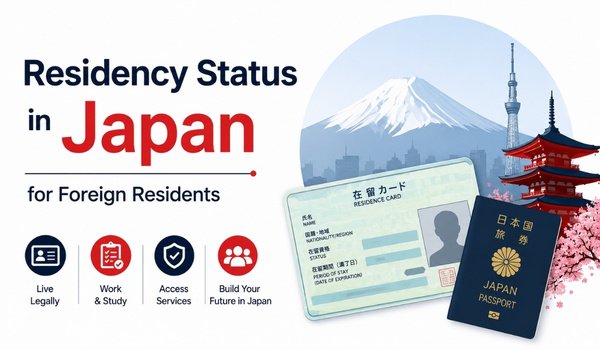
Japan has become an increasingly attractive destination for foreign professionals, entrepreneurs, students, and long-term residents. As more people build their lives and careers in Japan, many begin exploring ways to grow their savings and investments. One of the most popular investment programs available today is the Nippon Individual Savings Account (NISA), a tax-advantaged investment scheme designed to encourage long-term wealth building.
However, a common question among foreign residents is whether their residency status affects their eligibility for NISA. Since visa categories, tax residency, and long-term residence plans can influence financial decisions, understanding how NISA works alongside residency requirements is essential before opening an account.
This guide explains the relationship between NISA and residency status in Japan, helping foreign residents understand eligibility rules, tax implications, and what happens if they leave the country.
Why Has NISA Become One of the Most Popular Investment Programs in Japan?
NISA is a government-sponsored investment account that allows individuals to invest in eligible financial products while enjoying tax-free investment gains. Introduced to encourage personal investment and reduce reliance on savings accounts, NISA has become increasingly popular among Japanese citizens and foreign residents alike.
Under the current NISA system, investors can purchase investment trusts, exchange-traded funds (ETFs), stocks, and other eligible financial products without paying taxes on capital gains or dividends generated within the account.
Normally, investment profits in Japan are subject to taxation. NISA provides a valuable exception by allowing eligible investments to grow tax-free, making it an attractive option for long-term investors.
For many foreign residents living and working in Japan, NISA offers a practical way to build wealth while benefiting from favorable tax treatment.
How Does Residency Status Affect Eligibility for Opening a NISA Account in Japan?
One of the most important factors in determining NISA eligibility is residency in Japan.
To open a NISA account, an individual must generally be a resident of Japan and possess a valid residence record. Financial institutions require proof of identity, a Japanese address, and a My Number identification number during the application process.
Unlike some investment programs that are restricted to Japanese nationals, NISA is available to foreign residents who legally reside in Japan. Citizenship is not the determining factor; residency status is.
Whether someone holds a work visa, spouse visa, permanent residency, or another eligible residence status, they may generally apply for a NISA account as long as they meet the residency requirements established by Japanese financial institutions and tax authorities.
This accessibility has made NISA particularly appealing to expatriates who plan to remain in Japan for several years and wish to participate in the country’s investment market.
Which Types of Residency Status Usually Allow Foreign Residents to Open a NISA Account?
Many foreign residents are surprised to learn that NISA eligibility is not limited to permanent residents.
Individuals holding various residence statuses may typically qualify, including:
- Engineer/Specialist in Humanities/International Services visas
- Highly Skilled Professional visas
- Business Manager visas
- Spouse or Child of Japanese National visas
- Dependent visas in certain circumstances
- Long-Term Resident visas
- Permanent Resident visas
The key requirement is lawful residence in Japan and the ability to provide the necessary documentation requested by financial institutions.
Brokerages and banks may have additional internal requirements, such as minimum identification standards or verification procedures. Therefore, applicants should always review the specific rules of the institution where they intend to open a NISA account.
What Documents Are Usually Required When Applying for a NISA Account as a Foreign Resident?
Opening a NISA account generally involves providing several forms of identification and residency verification.
Commonly requested documents include:
- Residence card
- My Number card or notification document
- Proof of Japanese address
- Passport in some cases
- Bank account information
- Personal identification documents
Financial institutions conduct identity verification procedures to comply with Japanese financial regulations and anti-money laundering requirements.
Foreign residents should ensure that all documents are current and that the address information matches across submitted records. Inconsistencies may delay account approval.
Many online brokers now offer digital application processes, making it easier than ever for residents to complete the setup process without visiting a branch office.
Why Is Tax Residency Different From Immigration Residency Status in Japan?
A common misunderstanding involves the difference between immigration residency and tax residency.
Immigration residency refers to an individual’s legal status under Japanese immigration law. Examples include work visas, spouse visas, and permanent residency.
Tax residency, on the other hand, determines how an individual is taxed by Japanese authorities.
In many situations, a person may simultaneously be:
- A legal resident under immigration rules.
- A tax resident under Japanese tax law.
However, tax residency can become more complex when individuals divide their time between multiple countries, work remotely, or maintain significant financial ties abroad.
For NISA purposes, residency within Japan is generally required. Nevertheless, investors should understand how their overall tax situation may affect reporting obligations both in Japan and in their home country.
Seeking professional tax advice is particularly important for individuals with international income sources or cross-border tax responsibilities.
What Happens to a NISA Account If a Foreign Resident Leaves Japan?
One of the most frequently asked questions concerns what happens when a foreign resident relocates outside Japan.
Historically, moving abroad often resulted in restrictions on NISA account usage. Regulatory changes have introduced greater flexibility in some situations, but requirements remain dependent on individual circumstances.
When leaving Japan, investors typically need to notify their financial institution regarding their change of residency status.
Depending on the length of absence, destination country, and applicable regulations, several outcomes may occur:
- Existing investments may remain in the account.
- New investments may be restricted.
- Special procedures may be required before departure.
- Certain tax treatments may change.
Because regulations can evolve over time, investors should contact their broker or financial institution well before relocating overseas.
Failure to report a change in residency could create administrative or compliance issues later.
How Should Long-Term Foreign Residents Decide Whether NISA Is Worth Using?
For foreign residents planning to remain in Japan for several years, NISA can offer substantial benefits.
The program allows investors to take advantage of tax-free growth while building diversified portfolios over time. Individuals saving for retirement, future education expenses, home purchases, or long-term financial goals often find NISA particularly attractive.
Several factors should be considered before opening an account:
- Expected length of stay in Japan
- Investment objectives
- Risk tolerance
- Future relocation plans
- Tax obligations in other countries
Investors who anticipate remaining in Japan for the foreseeable future may benefit significantly from the tax advantages offered through NISA.
Those expecting to relocate within a short period should carefully review account restrictions and future management options before investing.
How Does the New NISA System Make Long-Term Investing More Attractive?
Recent reforms have significantly expanded the appeal of NISA.
The revised system introduced larger contribution opportunities and eliminated some of the limitations associated with earlier versions of the program.
Among the major advantages are:
- Permanent tax-free investment framework
- Increased lifetime investment capacity
- Greater flexibility in investment choices
- Enhanced opportunities for long-term wealth accumulation
These improvements have strengthened NISA’s position as one of Japan’s primary investment vehicles for individual investors.
Foreign residents who qualify can potentially benefit from the same tax advantages available to Japanese citizens, making NISA an important component of personal financial planning.
What Risks Should Foreign Residents Consider Before Investing Through NISA?
Although NISA provides tax advantages, it does not eliminate investment risk.
The value of investments can rise or fall depending on market conditions. Investors may experience losses, especially during periods of economic uncertainty.
Important risks include:
- Stock market volatility
- Currency fluctuations
- Interest rate changes
- Economic downturns
- International market risks
Foreign residents should also consider how future relocation might affect investment management and tax obligations.
Diversification, long-term planning, and careful product selection remain essential regardless of the tax benefits provided by NISA.
Investors should avoid assuming that tax-free status guarantees positive returns.
Why Is Professional Financial and Tax Advice Important for International Residents?
International residents often face financial situations that are more complex than those of domestic investors.
Factors such as foreign income, overseas assets, tax treaties, dual residency concerns, and future relocation plans can all influence investment decisions.
Professional advice can help investors:
- Understand tax reporting obligations
- Evaluate cross-border financial impacts
- Plan for international moves
- Optimize investment strategies
- Avoid compliance issues
While NISA can be an excellent investment vehicle, its suitability ultimately depends on each individual’s personal circumstances and long-term goals.
Careful planning ensures that investors maximize benefits while minimizing potential complications.
What Should Foreign Residents Remember About NISA and Residency Status in Japan?
NISA offers a valuable opportunity for foreign residents to invest and grow wealth tax-efficiently while living in Japan. Eligibility is generally based on residency rather than nationality, meaning many visa holders can access the program.
Understanding the distinction between immigration residency and tax residency is crucial, especially for individuals with international financial interests. Investors should also be aware of the procedures required if they plan to leave Japan in the future.
For those intending to stay in Japan for the medium to long term, NISA can serve as an effective foundation for building a diversified investment portfolio and achieving long-term financial goals.
By understanding residency requirements, maintaining compliance with financial regulations, and planning ahead for future changes in residence status, foreign residents can make informed decisions and fully utilize the benefits that NISA provides.
Frequently Asked Questions About NISA and Residency Status in Japan
Can Foreigners Open a NISA Account in Japan?
Yes. Foreign residents who legally reside in Japan and meet the required documentation and residency conditions can generally open a NISA account.
Does Permanent Residency Guarantee NISA Eligibility?
Permanent residency is not required. Many visa holders can qualify as long as they are residents of Japan and satisfy financial institution requirements.
Can I Keep My NISA Account After Leaving Japan?
Possibly. The treatment of a NISA account after departure depends on regulations, the financial institution’s policies, and individual circumstances. Investors should notify their provider before moving abroad.
Is NISA Available Only to Japanese Citizens?
No. NISA is based on residency rather than citizenship, allowing many foreign residents to participate.
Do I Need a My Number to Open a NISA Account?
Yes. Financial institutions generally require a My Number for account opening and tax-related procedures.
Are NISA Investment Profits Tax-Free?
Eligible gains and dividends earned within a NISA account are generally exempt from Japanese investment taxation under applicable NISA rules.
What Is the Difference Between Residency Status and Tax Residency?
Residency status relates to immigration permission to live in Japan, while tax residency determines how an individual is taxed under Japanese tax law.
Should Short-Term Residents Use NISA?
It depends on their expected length of stay, investment goals, and future relocation plans. Reviewing the implications of leaving Japan before investing is advisable.
Shop original Amazon Japan products easily at HinodeMart.com with confidence and trusted international shipping.
