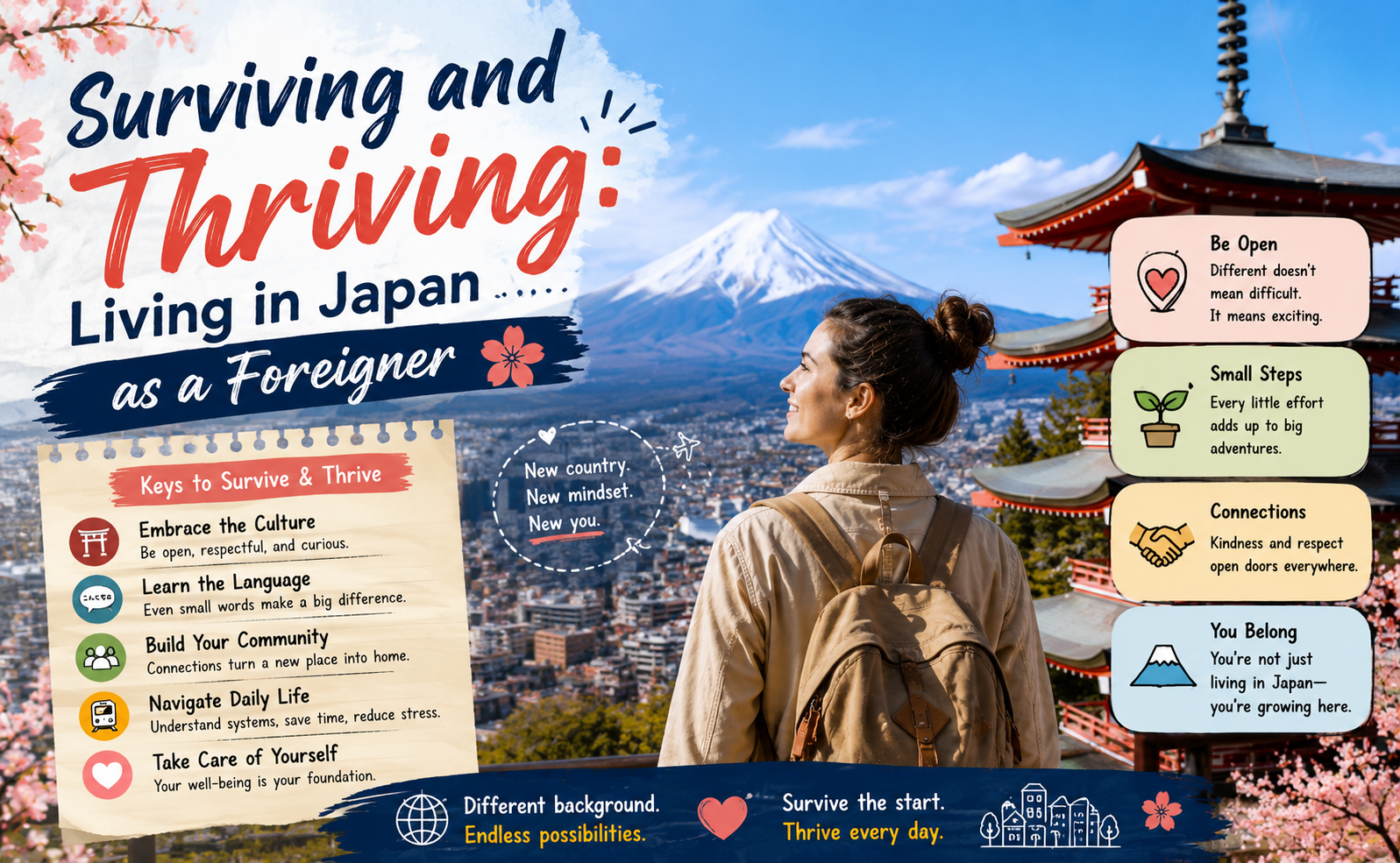
Moving to Japan is a dream for many people around the globe. The appeal is undeniable, drawing expats with its incredible cuisine, deep cultural history, and the legendary safety and efficiency of daily life. From the neon-lit streets of Tokyo to the serene temples of Kyoto, the country offers an experience that is both intensely modern and beautifully traditional.
However, stepping off the plane and actually settling into daily life brings a sharp reality check. While Japan is undoubtedly an amazing country, navigating its notoriously complex bureaucracy can quickly become overwhelming. Cultural nuances dictate everything from how you throw away your trash to how you address your coworkers, and the language barrier can make even simple tasks feel like monumental challenges.
The purpose of this post is to provide a realistic, comprehensive roadmap for expats looking to make a successful transition to Japanese life. Adjusting to a new country requires more than just packing your bags and buying a plane ticket. It demands patience, preparation, and a willingness to adapt to a society that operates quite differently from Western norms.
In the following sections, you will find practical advice tailored specifically for foreigners. We will cover the essentials of securing a visa and handling initial paperwork. You will also learn how to find an apartment in a unique housing market, understand the unspoken rules of the workplace, and eventually build a supportive community.
Table of Contents
Securing the Right Visa and Handling Bureaucracy
Before you can start enjoying matcha lattes and weekend trips to hot springs, you need to navigate the immigration system. Japan offers several visa categories, and finding the right one is your first major hurdle.
Common Visa Types for Expats
Most foreigners enter Japan under a few specific visa categories. The Working Holiday visa is popular for young adults from participating countries, allowing them to travel and work part-time for up to a year. Professionals often secure the Specialist in Humanities or Instructor visas, which cover most office jobs and English teaching positions, respectively. Alternatively, a Student visa is an excellent route if you plan to enroll in a university or a full-time Japanese language school.
Your First Steps Upon Arrival
The bureaucratic process begins the moment you land. At major airports like Narita, Haneda, or Kansai, immigration officers will issue your Residence Card, known as a Zairyu Card. This card is your primary form of identification, and you are legally required to carry it with you at all times.
Within 14 days of finding a permanent place to live, you must visit your local ward office (kuyakusho) or city hall to register your address. The clerks will print your new address on the back of your Residence Card. During this visit, you will also enroll in the National Health Insurance system and the national pension scheme, both of which are mandatory for residents.
Navigating the Banking System
Setting up a bank account can be a catch-22 for new arrivals. Many major banks require a Japanese phone number, but you often need a bank account to get a phone contract. Your best bet is to visit a Japan Post (Yucho) bank. They are traditionally much more foreigner-friendly and generally allow you to open an account with just your Residence Card and a registered address.
Navigating the Japanese Housing Market
Finding a place to live in Japan involves a steep learning curve. The rental market operates with a distinct set of rules, vocabulary, and financial expectations that often catch expats off guard.
Understanding the Upfront Costs
Renting an apartment here requires significant upfront capital. You will encounter fees rarely seen in other countries. Reikin, or “key money,” is a non-refundable mandatory gift given to the landlord, often equivalent to one or two months of rent. You also have shikikin, a security deposit that is sometimes partially refunded when you move out. Add in agency fees, lock exchange fees, and fire insurance, and you can easily expect to pay four to five times your monthly rent before you even get the keys.
The Role of the Guarantor
Another unique aspect of Japanese real estate is the necessity of a guarantor (hoshonin). This is a person who legally agrees to cover your rent or damages if you fail to pay. Landlords typically prefer a Japanese citizen with a steady income. Since most newcomers do not know anyone who can take on this massive financial responsibility, you will likely need to use a guarantor company. Many real estate agencies will help you set this up for an additional fee.
Foreigner-Friendly Housing Options
To avoid the massive initial costs and strict requirements, many expats start out in foreigner-friendly housing. Companies like Sakura House or Oakhouse offer sharehouses and furnished apartments with minimal move-in fees. They do not require key money or a guarantor, and they provide services in English. Living in a sharehouse is an excellent way to ease your transition, giving you a comfortable base while you explore the city and plan your next move.
The Realities of Japanese Work Culture
Working in Japan is an eye-opening experience. The corporate landscape is heavily influenced by tradition, group harmony, and a deep respect for hierarchy.
Office Dynamics and Hierarchy
A fundamental concept in the Japanese workplace is kuuki wo yomu, which translates to “reading the air.” It refers to the ability to understand unspoken social cues and adjust your behavior accordingly. Group consensus is highly valued, meaning that decisions are rarely made by one person on the spot.
You must also understand the sempai/kohai (senior/junior) dynamic. Your sempai is anyone who has been at the company longer than you, regardless of their age. Showing respect to your seniors is paramount, and they are expected to guide and mentor you in return.
Overtime and the Modern Workplace
Historically, Japanese work culture was synonymous with extreme overtime and mandatory after-work drinking parties (nomikai). While nomikai remain a common way to bond with colleagues and break down professional barriers, the landscape is shifting. Recent government initiatives aimed at work-life balance reforms are strictly regulating overtime hours. However, the expectation to show dedication by staying late still lingers in many traditional companies.
The Importance of Language Skills
English-only jobs exist, particularly in IT and education, but they severely limit your career trajectory. Emphasize learning Japanese as early as possible. Achieving a JLPT (Japanese Language Proficiency Test) N4 or N3 level can drastically improve your job prospects and make daily workplace interactions significantly smoother. Consider downloading recommended language learning apps like WaniKani or Duolingo, or enrolling in a local language school to fast-track your progress.
Building a Social Life and Integrating
Relocating across the world is incredibly exciting, but it can also be lonely. Establishing a strong social network is vital for your mental health and long-term happiness in Japan.
Friendships and Politeness
Japanese people are famous for their hospitality and politeness. However, breaking through the polite surface to form deep, lasting friendships can take significant time and effort. People often maintain a strict boundary between their public face (tatemae) and their true feelings (honne). Be patient and consistent in your social efforts.
Finding Your Community
One of the best ways to integrate and meet locals is by joining clubs or “circles” based on your hobbies. Whether it is a local futsal team, a photography group, or a traditional tea ceremony class, participating in shared activities bridges the cultural gap. Websites like Meetup are highly active in major cities like Tokyo and Osaka, offering regular language exchanges and networking events where you can meet both locals and fellow expats.
Embracing Your New Life in Japan
Living in Japan as a foreigner is an adventure filled with profound highs and inevitable frustrations. By preparing for the bureaucratic hurdles, understanding the housing market, respecting the work culture, and actively seeking out community, you set yourself up for long-term success.
Take things one step at a time. Start by downloading a few language apps today and researching the specific visa requirements for your situation. With the right mindset and a bit of preparation, you can transform the daunting prospect of moving abroad into a deeply rewarding chapter of your life.
