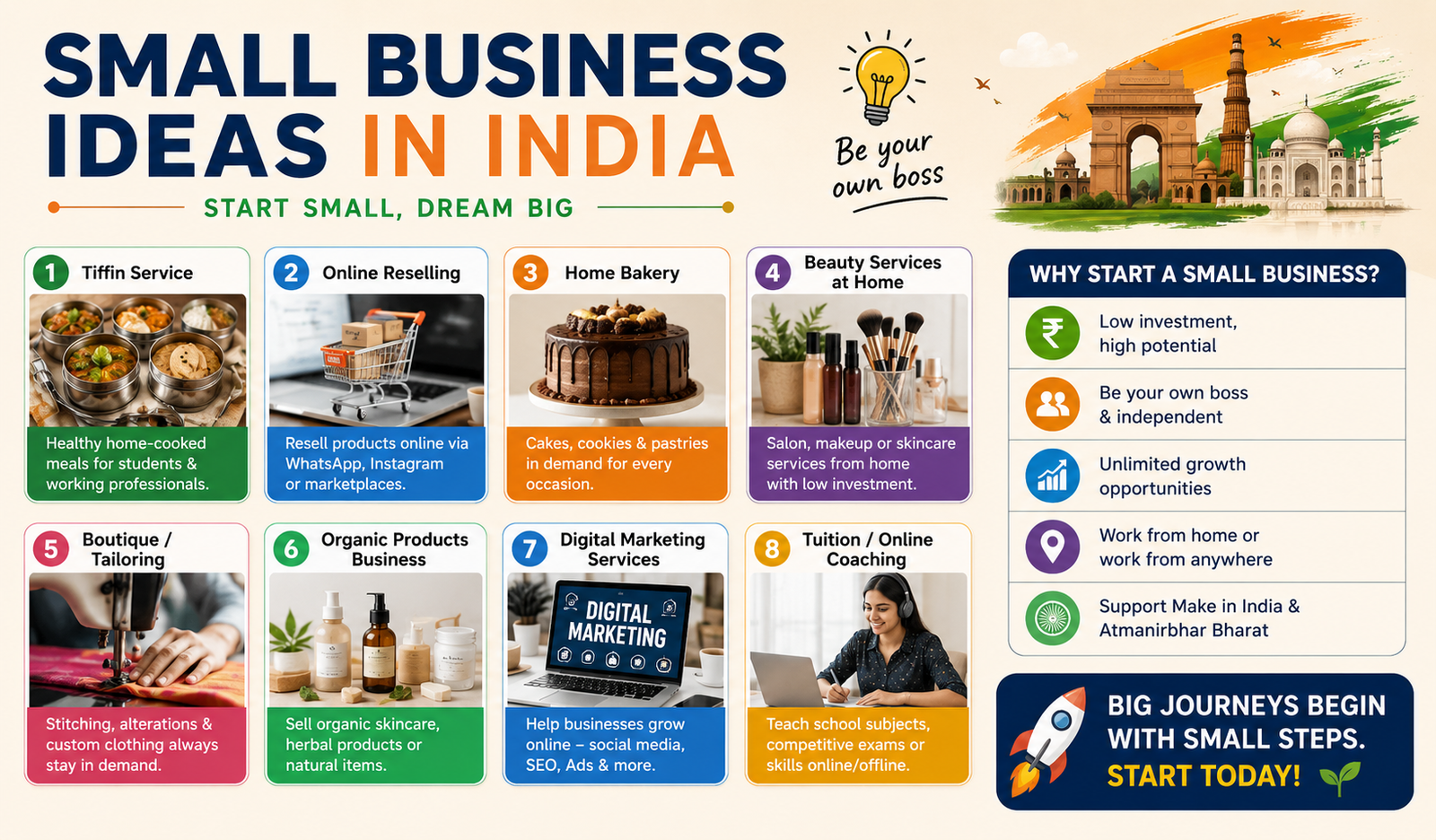
India presents a massive landscape of opportunity for new entrepreneurs. A rapidly growing middle class, widespread digital adoption, and supportive government initiatives have created an ideal environment for starting a company. You do not need massive capital to make an impact. Many successful ventures begin with a simple concept and a focused execution strategy.
Finding the right concept requires understanding local market demands and matching them with your personal skills. Consumer behavior across the country is shifting toward convenience, sustainability, and digital integration. This shift opens up numerous avenues for agile startups that can solve everyday problems efficiently.
This guide highlights some of the most viable small business ideas in India right now. We cover a range of industries, from digital services and e-commerce to food delivery and sustainable energy. Reading through these options will help you identify a profitable niche that aligns with your resources and goals.
Table of Contents
Tech and Digital Services
The digital revolution has fundamentally changed how Indian consumers and businesses operate. High-speed internet is accessible in both urban and rural areas, creating a massive demand for online services.
Freelance App Development
Smartphone usage across the country is staggering. Businesses of all sizes recognize the need for a dedicated mobile presence to reach their target audience. If you have coding skills, starting an app development agency requires minimal overhead. You can begin by serving local retailers or restaurants and eventually expand to larger corporate clients. Focus on creating user-friendly interfaces and lightweight applications that perform well on various network speeds.
Social Media Marketing Agency
Every modern brand needs visibility on platforms like Instagram, LinkedIn, and Facebook. Many business owners lack the time or expertise to manage their digital presence effectively. A specialized social media agency can fill this gap by offering content creation, community management, and paid advertising services. You can start this venture from home with just a laptop and a reliable internet connection.
Regional Language Content Creation
India is a linguistically diverse nation, and the demand for content in regional languages is surging. Brands are actively looking for writers, translators, and video producers who can communicate effectively in Hindi, Tamil, Bengali, Marathi, and other local languages. Building a content agency that specializes in vernacular media can quickly attract clients wanting to reach non-English speaking demographics.
E-commerce and Retail
Online shopping is no longer restricted to major metropolitan areas. Tier 2 and Tier 3 cities are experiencing a massive boom in e-commerce activity, creating unique retail opportunities.
Dropshipping Business
Dropshipping eliminates the need for holding physical inventory. You create an online storefront, market the products, and route orders directly to a third-party supplier who handles fulfillment. This model significantly reduces financial risk. Finding reliable Indian suppliers and focusing on niche markets, such as specialized fitness gear or custom electronics accessories, will help you stand out against broader retail giants.
Handcrafted and Artisanal Goods
There is a growing appreciation for authentic, handmade products. Consumers actively seek out unique home decor, organic soaps, and traditional textiles. You can partner with local artisans or create the products yourself. Platforms like Etsy or dedicated Instagram storefronts make it relatively simple to market these items to a national audience that values craftsmanship over mass production.
Food and Beverage
The food industry remains a highly lucrative sector in India. Changing lifestyles and busy work schedules are driving new consumption habits.
Cloud Kitchens
Also known as ghost kitchens, these establishments operate exclusively for delivery. Without the need for a physical dining space, you save heavily on real estate and interior decoration costs. You can operate multiple food brands from a single kitchen space, optimizing your equipment and staff. Partnering with delivery aggregators like Swiggy and Zomato allows you to reach thousands of hungry customers in your immediate vicinity.
Organic and Health Food Delivery
Health consciousness is rising rapidly among urban professionals. There is a strong market for fresh salads, cold-pressed juices, and balanced meal subscriptions. You can start a subscription-based delivery service targeting office workers who want nutritious lunches. Sourcing ingredients directly from local organic farmers ensures quality while supporting sustainable agriculture.
Education and Training
Indian families place a high value on education and continuous learning. The ed-tech sector is booming, but there is still plenty of room for specialized, small-scale training businesses.
Niche Online Tutoring
General academic tutoring is highly competitive, so specializing can give you an edge. Focus on specific competitive exams, foreign languages, or specialized software training. Conducting live classes via Zoom or Google Meet allows you to teach students nationwide. As your reputation grows, you can hire additional tutors and scale the operation into a comprehensive learning platform.
Corporate Skill Development
Companies frequently need to upskill their workforce. Creating training modules for soft skills, digital literacy, or specific compliance standards can be highly profitable. You can offer these workshops virtually or on-site. Building strong relationships with HR departments at mid-sized companies will provide a steady stream of corporate clients.
Sustainability and Green Business
Environmental awareness is translating into concrete consumer choices. Green businesses receive significant public interest and often benefit from government subsidies.
Solar Panel Consultation and Installation
The Indian government actively promotes renewable energy adoption. Homeowners and commercial properties are increasingly looking to install solar panels to reduce electricity bills. You can start a business that handles the entire process, from site assessment and procurement to installation and maintenance. This requires some technical knowledge and capital, but the return on investment is substantial.
Upcycled Fashion and Products
Textile waste is a major environmental issue. You can build a brand around collecting discarded fabrics and transforming them into trendy clothing, bags, or home accessories. This circular economy model appeals strongly to environmentally conscious millennials and Gen Z consumers. Marketing the story behind your products is a powerful way to build brand loyalty.
Frequently Asked Questions About Indian Small Businesses
How much capital do I need to start a business in India?
Capital requirements vary drastically based on your chosen industry. Service-based digital businesses, like freelance writing or social media management, can be started with almost zero funding. Physical ventures like cloud kitchens or retail stores might require an initial investment ranging from ₹1 Lakh to ₹5 Lakhs to cover equipment, licensing, and initial marketing.
Do I need to register my small business immediately?
While you can test an idea informally, registering your business provides legal protection and makes it easier to open a corporate bank account. Options like a Sole Proprietorship or a Limited Liability Partnership (LLP) are popular for small ventures due to their relatively simple compliance requirements. Registration is also mandatory if you plan to apply for government business loans.
What are the best marketing channels for a new Indian business?
Digital marketing provides the best return on investment for new ventures. WhatsApp Business is incredibly effective for local communication and customer retention. Instagram and Facebook are essential for visual products like fashion and food. Search Engine Optimization (SEO) ensures your website appears when potential clients actively search for your services.
Take Your First Entrepreneurial Step Today
Starting a small business in India requires research, dedication, and adaptability. The market is dynamic, rewarding those who can identify specific consumer pain points and deliver reliable solutions. You have a wealth of options available, ranging from low-cost digital agencies to sustainable retail operations.
Review your personal strengths, assess your available budget, and select an idea that excites you. Focus on creating a solid business plan and providing excellent value to your first few customers. Growth will naturally follow as you establish trust within your target market. Your entrepreneurial journey can start the moment you decide to take action.
