
Studying Japanese in Japan combines formal language school enrollment, daily immersion, and cultural participation. The most effective learners combine structured classes with real-world practice—shopping, commuting, and socializing entirely in Japanese. Programs range from short-term intensive courses to multi-year university degrees, with costs varying by school type and city.
There’s no shortcut to fluency. But there might be a fast lane and it runs straight through Japan.
Studying Japanese while living in Japan compresses years of classroom learning into months of real-world exposure. You’re not just memorizing vocabulary from a textbook; you’re reading menus, navigating train stations, negotiating with landlords, and overhearing conversations that no textbook would ever include. The language stops being an academic exercise and starts being the tool you rely on every single day.
That said, simply moving to Japan won’t make you fluent on its own. Plenty of people spend years in the country without progressing much beyond basic phrases—usually because they stay within English-speaking social circles or expat communities. Real language acquisition requires a deliberate strategy: choosing the right program, structuring your immersion, and leaning into discomfort at every opportunity.
This guide walks you through everything you need to know about studying Japanese in Japan—from choosing a language school and understanding visa requirements to maximizing your daily immersion and managing your finances. Whether you’re planning a three-month intensive course or a multi-year study abroad experience, the information here will help you make the most of it.
What Are the Different Ways to Study Japanese While Living in Japan?
The path you take depends heavily on your goals, budget, and timeline. There’s no single “right” approach—but there are meaningful differences between the options, and choosing the wrong one can cost you both time and money.
Private language schools (often called nihongo gakkō) are the most common route for international students. These institutions are specifically designed for foreign learners and offer structured curricula that progress from beginner hiragana through to advanced grammar and kanji. Most offer morning and afternoon session options, which frees up your evenings for independent study and social practice. Schools like the Nihongo Center in Kyoto and ISI Language School in Tokyo are well-regarded options with established international student communities.
University exchange programs offer a more academic environment and often include elective courses on Japanese history, culture, and literature alongside formal language instruction. These are ideal for learners who want immersion paired with broader intellectual engagement—though admission requirements and program costs vary significantly between institutions.
Intensive short-term courses cater to learners who can’t commit to six months or longer. These compressed programs typically run four to twelve weeks and push students through a significant amount of material quickly. The trade-off is depth: you’ll cover more ground faster, but you may not retain as much without the sustained exposure that longer programs provide.
Finally, some learners opt for self-directed study supported by private tutors, language exchange partners, and apps like Anki or WaniKani. This works well as a supplement to formal schooling—less so as a standalone approach, especially at the beginner level.
For a full breakdown of accredited Japanese language schools by region, visit GoGoNihon’s school directory to compare programs, tuition, and application requirements.
What Visa Do You Need to Study Japanese in Japan, and How Do You Get It?
This is often the most confusing part of the process for first-time students—and getting it wrong can derail your plans entirely.
If you’re planning to study for more than 90 days, you’ll need a Student Visa (ryūgaku visa). To apply, you first need to secure admission to a recognized educational institution in Japan. Once accepted, your school will apply to the Ministry of Justice on your behalf for a Certificate of Eligibility (CoE). This process typically takes two to three months, so applying early is essential—especially if you’re targeting an April or October intake, which are the two most common enrollment periods.
Once you receive your CoE, you submit it along with a visa application to your nearest Japanese embassy or consulate. Processing times vary by country but generally take one to two weeks after the CoE arrives.
Citizens of certain countries—including the US, UK, Australia, and most EU nations—can enter Japan without a visa for up to 90 days under a tourist or temporary visitor status. Some learners use this window to enroll in short-term programs before returning home or transitioning to a student visa. Be aware, however, that Japan’s immigration system is strict, and attempting to study informally on a tourist visa for extended periods carries real legal risk.
For the most current visa requirements and application timelines, refer to the Japan Ministry of Foreign Affairs official website.
Where in Japan Should You Study, and How Does Location Affect Your Learning?
The city you choose matters more than most prospective students realize—not just for lifestyle reasons, but for the quality of your linguistic immersion.
Tokyo is the obvious choice for many. It offers the widest selection of language schools, the most active expat communities, and unparalleled access to career opportunities. The downside? Tokyo’s size and cosmopolitan character mean English is widely spoken in many neighborhoods, particularly around Shinjuku, Shibuya, and Roppongi. If convenience matters most to you, Tokyo delivers. If you want to be forced into Japanese at every turn, it may require more deliberate effort to create that environment.
Kyoto appeals to learners drawn to traditional Japanese culture. The city’s slower pace, historic architecture, and strong connection to classical Japanese arts create a different kind of immersion—one that’s linguistically rich and culturally distinctive. Schools like Kyoto Japanese Language School and the Nihongo Center offer strong programs, and the city’s compact size makes daily exploration on foot or by bicycle far more practical than in Tokyo.
Fukuoka, Osaka, and Sendai are increasingly popular alternatives. These cities are less expensive than Tokyo, have fewer English-language concessions built into daily life, and offer vibrant local cultures that reward curious learners. Regional Japanese dialects (hōgen) can be an initial challenge, but exposure to natural spoken variation is ultimately a strength, not a setback.
Explore city-by-city cost comparisons and school recommendations on GoGoNihon’s study destination guide.
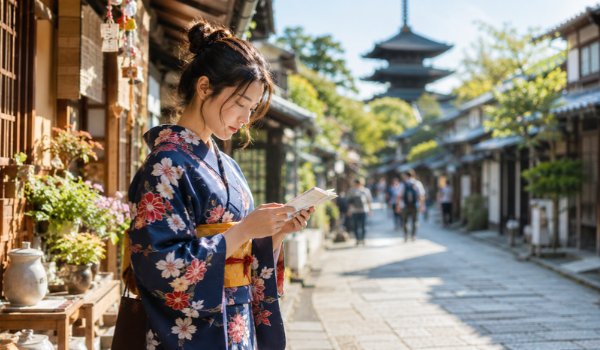
How Can You Maximize Japanese Language Immersion Outside the Classroom?
Classroom hours build your foundation—but fluency is constructed in the spaces between lessons. The students who progress fastest treat every waking hour as study time, even when they’re not consciously studying.
Make Japanese the language of your daily logistics. Grocery shopping, banking, ordering food, asking for directions, dealing with your landlord—do all of it in Japanese, even when a simpler English option exists. These low-stakes, high-frequency interactions build conversational reflexes that drills and flashcards can’t replicate.
Find a language exchange partner. Tandem partners (known as language exchange or tandem partners) are Japanese speakers who want to practice English—or another language you speak—in exchange for helping you with Japanese. Apps like Tandem and HelloTalk connect you with native speakers for text, voice, and video conversations. Meeting weekly with a consistent partner builds both vocabulary and genuine cultural understanding.
Consume Japanese media deliberately. Watching Japanese TV, reading manga, listening to podcasts, and following Japanese social media accounts all reinforce vocabulary in authentic contexts. The key word is deliberately—passive exposure with English subtitles provides minimal benefit. Engage actively: pause, look up unfamiliar words, and revisit content until it clicks.
Join local clubs and activities. Community sports leagues, volunteer groups, traditional craft workshops, cooking classes—any recurring group activity conducted in Japanese puts you in proximity to native speakers in low-pressure social situations. Many Japanese people are genuinely interested in connecting with international residents but may not initiate conversation without an organic shared context.
What Does It Cost to Study Japanese in Japan, and How Do You Budget Effectively?
Costs vary widely depending on your school, city, and lifestyle—but a realistic budget is possible to put together with the right information.
Tuition at private Japanese language schools typically ranges from ¥600,000 to ¥900,000 (~$4,000–$6,000 USD) per year, though shorter programs can cost proportionally more per month. University programs and government-sponsored scholarships like the MEXT Scholarship can significantly reduce this expense for eligible students—MEXT covers tuition, accommodation, and provides a monthly stipend, making it one of the most competitive and valuable options available to international learners.
Accommodation in a private apartment averages ¥50,000–¥80,000/month in major cities, though student dormitories and share houses offer substantially lower costs, often between ¥30,000 and ¥50,000/month. Most language schools either provide dormitory options or maintain partnerships with local housing providers, which simplifies the search considerably.
Daily living expenses—food, transportation, social activities—add another ¥60,000–¥100,000/month depending on your habits. Japan’s convenience store culture makes eating affordably very realistic: a filling meal from a konbini like 7-Eleven or FamilyMart typically costs ¥400–¥600.
Start Your Japanese Study Journey With the Right Foundation
Studying Japanese in Japan is one of the most effective—and genuinely rewarding—ways to reach fluency. The combination of structured instruction and total daily immersion creates conditions that accelerate learning in ways that classroom-only environments simply cannot match.
The key is going in with a plan. Choose your program type and location based on your actual goals, not just the most familiar option. Secure your visa well in advance. Build routines outside the classroom that force you to use the language. And accept, early on, that discomfort and confusion are not setbacks—they’re the mechanism through which real acquisition happens.
Japan has an extraordinary amount to offer anyone willing to engage with it seriously. The language is the key that unlocks almost all of it.
Frequently Asked Questions About Studying Japanese in Japan
How long does it take to become conversational in Japanese while studying in Japan?
With dedicated study and active immersion, most learners reach a conversational level (JLPT N3–N4) within 12 to 18 months of full-time study in Japan. Results vary significantly based on prior language experience, study habits, and the quality of immersion outside the classroom.
Do I need to know any Japanese before moving to Japan to study?
No. Most language schools offer beginner-level programs designed for students with zero prior knowledge. However, learning hiragana and katakana before you arrive gives you a meaningful head start and makes daily life considerably easier from day one.
Is it possible to work part-time while studying Japanese in Japan on a student visa?
Yes. Student visa holders are permitted to work up to 28 hours per week, which many students use to offset living costs. Working in a Japanese-speaking environment—retail, hospitality, or food service—also provides valuable immersion practice, though balancing work and study requires careful scheduling.
What is the JLPT, and should I aim for a specific level during my studies?
The Japanese Language Proficiency Test (JLPT) is the internationally recognized benchmark for Japanese language ability, ranging from N5 (beginner) to N1 (advanced). Targeting JLPT certification gives your studies a concrete goal and provides recognized credentials for employment or further education. N3 is a practical milestone for daily functional communication.
What is the best time of year to start a Japanese language program in Japan?
Most schools offer April and October intakes, aligning with Japan’s academic calendar. April is the more popular starting point, with larger cohorts and more active school communities. October intake tends to have smaller class sizes, which some learners prefer for more individualized instruction.
