
Walking away from the Consumer Electronics Show 2025, one feeling stood out: practicality. For the first time in a while, the technology showcased in Las Vegas felt less like a distant dream and more like a tangible upgrade to our lives. The industry’s obsession with novelty is giving way to a focus on meaningful innovation. This year, the future didn’t just feel possible; it felt close.
The overarching theme was intelligence that serves a purpose. We saw Artificial Intelligence (AI) graduate from a marketing buzzword to a silent partner in our daily tasks. The processing power making this possible comes from giants like Nvidia and AMD, who are building the engines for this new era. Meanwhile, brands like Samsung are reimagining our living spaces, and automakers such as Hyundai and BMW are turning our cars into intelligent companions. This article will cut through the noise, using expert analysis from sources like CNET to explore the CES breakthroughs that are set to genuinely redefine our relationship with technology.
Table of Contents
The Consumer Electronics Show 2025: Where Intelligence Got Real
At the Consumer Electronics Show 2025, AI was everywhere, but this time it was different. It was quieter, more integrated, and far more useful. The industry seems to be moving on from flashy, single-purpose gadgets, a lesson perhaps learned from the mixed reception of devices like last year’s Rabbit R1. The new mantra is embedding intelligence into the products we already own, making them work better for us without adding complexity.
This shift means our devices are beginning to anticipate our needs rather than just reacting to our commands. Your next smart home won’t just follow a schedule; it will learn the rhythm of your household. Your car won’t just offer directions; it will become a proactive co-pilot for your journey. This evolution isn’t happening by magic. It’s the product of massive leaps in chip design and a more thoughtful approach to software, all aimed at creating technology that helps us so seamlessly we barely notice it’s there.
A Personal Moment: When My Car Knew Me Better Than I Knew Myself
After covering CES for more than a decade, you develop a certain immunity to hype. You learn to spot a gimmick from a mile away. But this year, a simple test drive managed to break through my cynicism. I was behind the wheel of a prototype featuring Hyundai’s next-generation AI assistant. As I navigated a virtual city, the system did something unexpected. It cross-referenced the heavy traffic on my route with my public calendar.
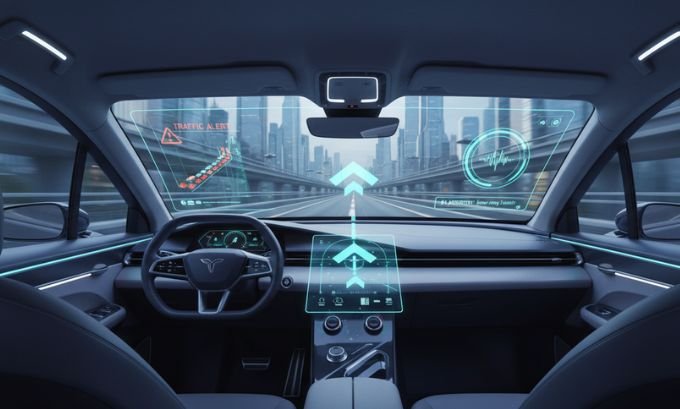
A calm voice chimed in, “There’s an accident ahead, and you have a meeting in 45 minutes. I’ve found a clearer route that gets you there with ten minutes to spare. I can also place a mobile order at the coffee shop near your destination so it’s ready when you arrive. Shall I proceed?” It was a moment of genuine “wow.” The system wasn’t just a tool; it was a problem-solver. It connected multiple data points to offer a real solution. While it wasn’t perfect—it still struggled with some slang—it was a powerful glimpse into the future of agentic AI. This is the practical application that the Rabbit R1 promised, now materializing in the platforms we rely on daily.
What I Appreciate About This New Direction for AI:
- Contextual Awareness: AI is moving beyond simple commands to understand the context of our lives and offer relevant help.
- Frictionless Experience: The goal is to reduce the mental load on users, automating decisions and tasks in the background.
- Meaningful Efficiency: From optimizing a vehicle’s battery usage to finding the fastest route, AI is delivering real-world benefits.
- Integrated by Design: Intelligence is becoming a core part of product design, not a feature tacked on as an afterthought.
Areas Still Needing Work:
- The Trust Factor: For users to embrace proactive AI, they must trust that their data is being handled securely and ethically.
- The Digital Divide: An over-reliance on cloud connectivity means these features could leave behind users in areas with poor internet access.
- The Learning Curve: While the user experience is becoming simpler, the backend customization and privacy settings can still be overwhelming.
The Silicon Powering the Revolution: A Look at Nvidia and AMD
Behind every smart device and dazzling display at the Consumer Electronics Show 2025 lies the intricate silicon that makes it all possible. This year, the undisputed titans of the chip world, Nvidia and AMD, demonstrated why they are at the heart of this technological renaissance. Their announcements set the stage for the next wave of innovation in everything from creative professional workflows to ultra-realistic gaming and, of course, AI.
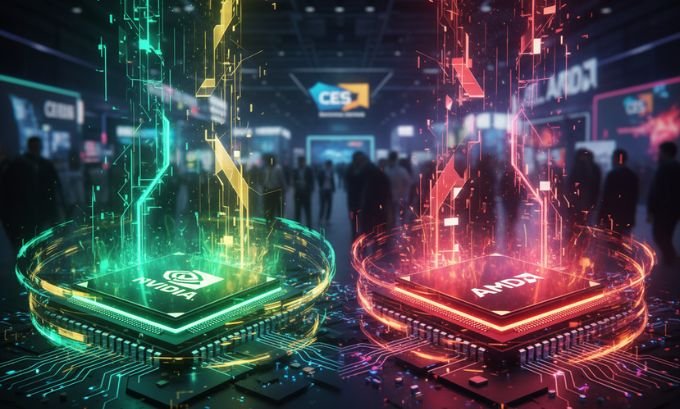
Nvidia continued to assert its dominance with the formal unveiling of its GeForce RTX 50 series GPUs. These chips promise to unlock new levels of realism in digital environments, a boon for both gamers and creators. More importantly, Nvidia highlighted how its hardware has become the de facto engine for the generative AI boom, powering the models that are changing the world.
Not to be overshadowed, AMD presented its powerful new RDNA 4 GPUs, doubling down on its strategy of delivering exceptional performance with remarkable power efficiency. This commitment means more people can access high-end computing without needing extreme cooling or power setups. As the experts at CNET consistently point out, this fierce competition between Nvidia and AMD is the driving force behind the industry’s rapid progress. The advanced graphics in a BMW Panoramic iDrive Display and the complex AI models in a Samsung appliance are all direct results of this silicon showdown.
Qualcomm’s Mobile Masterstroke: The Snapdragon 8 Elite Gen 5
While the PC chip giants battled for the spotlight, Qualcomm delivered a knockout punch in the mobile arena. The introduction of the Snapdragon 8 Elite Gen 5 processor was more than just an update; it was a fundamental re-imagining of what a smartphone can do, especially when it comes to capturing video.
At the heart of this chip is an Advanced Professional Video codec, backed by a fully computational video pipeline. This technical jargon translates to a simple, powerful reality: your phone can now capture video with the color depth, dynamic range, and clarity of a professional cinema camera. It effectively erases the line between consumer and pro-level video.
In a bold move during its Snapdragon Summit, Qualcomm used a Samsung Galaxy S25 Ultra, powered by the new chip, to film segments of the live event. The footage was broadcast globally, cut in with video from traditional cameras, and no one could tell the difference. This real-world proof of concept confirms that high-quality content creation is no longer gated by expensive equipment. It’s a paradigm shift for everyone from independent filmmakers to families wanting to capture precious memories in stunning quality.
Snapdragon 8 Elite Gen 5: Key Advancements
| Feature | What It Does for You | A Real-World Scenario |
|---|---|---|
| Advanced Video Codec | Records video with incredible detail and color, preserving the scene’s authenticity. | Capturing a sunset with all its subtle gradients, without banding or artifacts. |
| Computational Pipeline | Allows for real-time video enhancements like stabilization and color grading. | Smoothing out a bumpy bike ride video as you record, not in post-production. |
| Next-Gen AI Engine | Drives smarter, faster camera functions that adapt instantly to any environment. | Your phone’s camera identifying a bird in flight and automatically using a fast shutter speed. |
| Optimized Power Usage | Delivers elite performance for extended periods without overheating or draining the battery. | Filming your child’s entire two-hour school play in 4K without worry. |
The Car Cabin Reimagined: The Best New Automotive Tech
The Consumer Electronics Show 2025 cemented its status as a pivotal event for the auto industry. This year, the focus was squarely on reinventing the in-car experience, with automakers like Hyundai and BMW showcasing technologies that make the cabin the most exciting part of the car.
Hyundai turned heads with its groundbreaking full-windshield holographic display. This is not the tiny heads-up display you might be used to. It’s an immersive system that projects crisp, interactive graphics across the entire windshield. Navigation arrows appear to float on the road ahead, and safety alerts can highlight potential hazards in your direct line of sight. It’s an incredibly intuitive system that feels less like a feature and more like a natural extension of your senses.
Across the hall, BMW offered its own vision of the future with the BMW Panoramic iDrive Display. This stunning, ultra-wide screen elegantly curves across the dashboard, blending the driver’s gauges and infotainment controls into a single, seamless panel. With its vibrant colors and deep blacks, the display transforms the car’s interior into a sophisticated and futuristic cockpit. These innovations signal a new frontier in automotive design, where the user experience is just as important as the driving dynamics.
If you’d like to learn more about Consumer Electronics Show 2025, you’re welcome to read this detailed article techbullion.in and mindjournal.co
Samsung’s Connected Kingdom: AI and Displays for a Smarter Home
Samsung once again demonstrated its immense scale and ambition at CES, pushing forward its vision of a seamlessly connected world. The company’s strategy revolves around two core pillars: developing next-generation screen technologies and embedding useful AI into every facet of the modern home.
On the display front, Samsung continued to tease the future with its latest transparent and rollable screen concepts. These are more than just tech demos; they are explorations of how our screens can better integrate into our living spaces. Imagine a living room window that can become a TV for movie night, or a compact device that unfurls into a large-screen workspace.
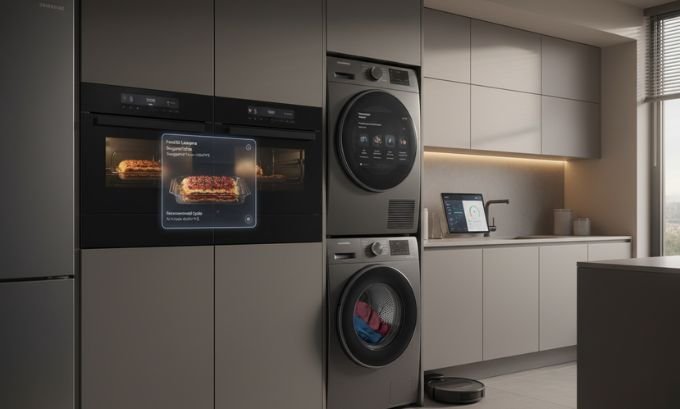
But it was Samsung’s practical use of AI that felt most immediate. The company showcased a new laundry pair that uses internal sensors and AI to detect fabric types and dirt levels, then automatically runs the perfect wash and dry cycle. Its new smart oven uses a camera to identify the food you place inside and suggests optimal cooking settings. As the team at CNET noted, this is AI at its most helpful—working silently in the background to simplify our lives.
Whether you’re shopping for innovative gadgets at TokyoMart.store or looking to elevate your brand’s digital presence with LinkLuminous.com, these platforms offer forward-thinking solutions aligned with the tech evolution showcased at CES 2025.
Frequently Asked Questions (FAQ)
1. What were the most important takeaways from the Consumer Electronics Show 2025?
The biggest themes were the shift toward practical, integrated AI; revolutionary in-car technology like holographic displays; the foundational power of new chips from Nvidia and AMD; and the continued evolution of the smart home, led by brands like Samsung.
2. How is AI different in products this year?
This year, AI is less about novelty and more about utility. It’s being used to create proactive assistants that anticipate your needs, optimize device performance, and automate daily tasks in a way that provides tangible, real-world value.
3. What did chipmakers like Nvidia and AMD announce?
Nvidia revealed its GeForce RTX 50 series GPUs, pushing the boundaries of gaming and AI processing. AMD launched its RDNA 4 GPUs, focusing on a powerful combination of high-end performance and energy efficiency. These chips are the building blocks for the next generation of tech.
4. How is the driving experience changing based on what was shown at CES?
The in-car experience is becoming more immersive and intelligent. Hyundai showcased a full-windshield holographic display for intuitive navigation, while BMW introduced its Panoramic iDrive Display to create a seamless digital cockpit. The car is transforming into a smart, connected space.
5. What makes the Snapdragon 8 Elite Gen 5 special?
It’s Qualcomm’s latest flagship mobile chip, and its standout feature is an advanced video system. It allows smartphones to capture video with a level of quality that was once only possible with expensive professional cameras, democratizing high-end content creation.
6. Did we see a successor to standalone AI devices like the Rabbit R1?
The trend at the Consumer Electronics Show 2025 actually moved away from single-purpose AI gadgets. Companies are now focused on integrating that intelligence directly into the major platforms we already use, such as our phones, cars, and home appliances.
7. Who offers the most reliable coverage of CES 2025?
For in-depth analysis and hands-on reviews, technology news outlets like CNET are an invaluable resource. Their expert teams provide comprehensive coverage from the show floor, separating the truly innovative from the merely interesting.
Conclusion: A More Human-Centered Future for Tech
The Consumer Electronics Show 2025 left us with a sense of optimism. The industry is maturing, moving beyond a “tech for tech’s sake” mentality and toward a more human-centered approach to innovation. The most exciting products were not the flashiest, but the most thoughtful—the ones that promised to make our lives a little easier, a little safer, and a little more connected.
From the foundational chipsets designed by Nvidia and AMD to the intelligent experiences being crafted by Hyundai, BMW, and Samsung, the future of technology is about seamless integration and intuitive assistance. As these innovations transition from the convention halls of Las Vegas to our homes and pockets, we are on the cusp of a new era where our devices finally begin to truly understand us.
To stay informed as this future unfolds, keep up with expert sources like CNET and watch for products built on these groundbreaking technologies, like the Snapdragon 8 Elite Gen 5. The next chapter of technology is being written, and it’s shaping up to be the most exciting one yet.
About the Author
Alex Carter is a senior technology journalist with a 15-year career dedicated to covering the consumer electronics industry. Having attended the Consumer Electronics Show for the past decade, Alex offers a seasoned perspective on emerging trends in AI, mobile computing, and automotive tech. His work, featured in major tech publications, focuses on making complex innovations accessible and understandable for a wide audience.
References
- CNET expert analysis and on-the-ground coverage of CES 2025.
- Official press announcements and keynote presentations from Nvidia, AMD, Samsung, Hyundai, and Qualcomm.
- Industry reports and data from the Consumer Technology Association (CTA).
- Personal interviews and hands-on demonstrations conducted at the Las Vegas Convention Center.
