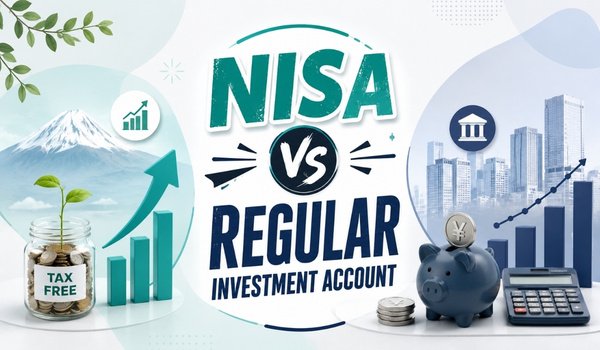
NISA vs Regular Investment Account Key Differences Benefits and Which One to Choose
Investing has become one of the most effective ways for individuals to grow their wealth, protect their savings from inflation, and achieve long-term financial goals. In Japan, investors often face an important decision before they begin investing: should they use a NISA account or a regular investment account? While both options allow individuals to invest in stocks, mutual funds, exchange-traded funds (ETFs), and other financial products, the tax treatment and long-term benefits can be significantly different.
Understanding the differences between a NISA account and a regular investment account is essential for making informed financial decisions. The choice can impact how much of your investment returns you keep, how quickly your portfolio grows, and how efficiently you achieve your financial goals.
This comprehensive guide explores the key differences between NISA and regular investment accounts, helping you determine which option is best suited for your investment strategy.
What Is a NISA Account and Why Has It Become So Popular Among Investors in Japan?
NISA stands for Nippon Individual Savings Account. It is a tax-advantaged investment account introduced by the Japanese government to encourage individuals to invest and build long-term wealth. The primary benefit of a NISA account is that investment profits, including capital gains and dividends, can be earned tax-free within certain contribution limits.
The government launched NISA to help citizens move away from keeping large amounts of cash in low-interest savings accounts and instead participate in long-term investing. In recent years, the NISA system has undergone significant improvements, making it more attractive and flexible than ever before.
With a NISA account, investors can purchase eligible investment products and enjoy tax-free growth. This means that profits generated from investments remain entirely yours rather than being reduced by taxes.
The popularity of NISA has grown because it provides a simple and efficient way for both beginners and experienced investors to maximize their investment returns.
What Is a Regular Investment Account and How Does It Work for Everyday Investors?
A regular investment account is a standard brokerage account that allows investors to buy and sell financial products without receiving special tax benefits. These accounts are widely available through banks, online brokers, and financial institutions.
In a regular investment account, investors have greater flexibility because there are typically no annual contribution limits. You can invest as much money as you want, depending on the rules of your brokerage firm and your financial capacity.
However, unlike NISA accounts, profits generated in a regular investment account are generally subject to taxation. This includes taxes on capital gains when investments are sold for a profit and taxes on dividends received from stocks or funds.
While taxation may reduce net returns, regular investment accounts remain valuable because they offer unlimited investment capacity and access to a broader range of investment products.
Why Does Taxation Make Such a Big Difference When Comparing NISA and Regular Investment Accounts?
One of the most important differences between NISA and regular investment accounts is taxation.
In Japan, investment gains earned through a regular investment account are generally taxed at approximately 20.315%. This tax applies to capital gains and dividends.
For example, if an investor earns ¥100,000 in profits from investments held in a regular account, approximately ¥20,315 may be paid in taxes, leaving the investor with around ¥79,685.
By contrast, profits generated within eligible NISA investments are tax-free. If the same investor earns ¥100,000 in profit within a NISA account, the full ¥100,000 remains available to the investor.
Over time, this difference becomes substantial. As profits are reinvested, tax-free growth can significantly accelerate wealth accumulation through the power of compound returns.
How Can Tax-Free Compounding Help Investors Build More Wealth Over Time?
Compounding is one of the most powerful concepts in investing. It occurs when investment earnings generate additional earnings over time.
When taxes are deducted from investment gains, less money remains invested and available to compound. This slows portfolio growth.
With a NISA account, gains can remain fully invested without tax deductions. As a result, the investment portfolio can grow faster.
Imagine two investors each invest ¥1,000,000 and earn an average annual return of 7%. One invests through a NISA account, while the other uses a taxable account. Over many years, the NISA investor may accumulate significantly more wealth simply because taxes do not reduce the compounding process.
For long-term investors, tax-free compounding can be one of the greatest advantages offered by the NISA system.
What Are the Main Contribution Limits and Restrictions That Investors Should Understand Before Opening a NISA Account?
Although NISA provides substantial tax benefits, it also comes with contribution limits and eligibility requirements.
The current NISA framework establishes annual investment limits and a lifetime investment allowance. Investors must stay within these limits to maintain tax-free status.
Regular investment accounts do not have these restrictions. Investors can contribute any amount they choose and continue investing without worrying about annual caps.
For individuals with substantial investment capital, a combination of NISA and regular investment accounts may be the most practical solution. They can maximize tax-free benefits through NISA and invest additional funds through a standard brokerage account.
Understanding contribution limits is important because exceeding them may require investments to be placed in taxable accounts.
Which Types of Investment Products Can Be Purchased Through NISA and Regular Accounts?
NISA accounts provide access to many popular investment products, including:
- Domestic stocks
- International stocks
- Mutual funds
- Index funds
- Exchange-traded funds (ETFs)
However, not every investment product qualifies for NISA treatment. The government establishes eligibility requirements to encourage long-term, diversified investing.
Regular investment accounts typically offer access to a wider range of financial products. Depending on the brokerage platform, investors may purchase additional securities, specialized funds, derivatives, and other investment vehicles.
For most beginner investors focused on long-term wealth creation, the investment options available within NISA are more than sufficient.
Why Is NISA Often Recommended for Beginner Investors Who Are Just Starting Their Investment Journey?
Many financial experts recommend NISA for beginners because it combines simplicity with significant tax advantages.
New investors often feel overwhelmed by investing terminology, tax regulations, and portfolio management. NISA simplifies part of the process by removing concerns about taxes on eligible investment profits.
Because investors keep 100% of their gains, they can focus on building good investing habits and maintaining a long-term perspective.
Additionally, many NISA investors choose diversified index funds that require minimal maintenance. This approach aligns well with beginners who want a simple and effective investment strategy.
The combination of tax-free growth, ease of use, and long-term investing principles makes NISA an attractive starting point.
When Might a Regular Investment Account Be Better Than a NISA Account for Certain Investors?
Although NISA offers compelling benefits, there are situations where a regular investment account may be preferable.
Investors who have already reached their NISA contribution limits must use taxable accounts for additional investments.
Active traders who frequently buy and sell securities may also prefer regular accounts because of broader product access and fewer restrictions.
Individuals investing large sums beyond NISA limits often rely on regular accounts as part of a diversified investment strategy.
Some investors use both account types simultaneously. They maximize tax-free opportunities through NISA and then allocate additional investments to regular accounts.
This hybrid approach allows investors to enjoy the advantages of both systems.
How Should Long-Term Investors Evaluate the Advantages and Disadvantages of Both Account Types?
Long-term investors should consider several factors before choosing an account type.
The advantages of NISA include:
- Tax-free capital gains
- Tax-free dividends
- Enhanced compounding potential
- Government support for long-term investing
- Investor-friendly structure
Potential disadvantages include:
- Contribution limits
- Product eligibility restrictions
- Regulatory requirements
The advantages of regular investment accounts include:
- Unlimited contributions
- Greater investment flexibility
- Access to broader investment products
- Suitable for larger portfolios
Potential disadvantages include:
- Taxes on gains and dividends
- Reduced compounding efficiency
- Lower net investment returns
Evaluating personal goals, investment size, and time horizon can help investors determine the best approach.
What Investment Strategy Can Help Investors Get the Most Value from Both NISA and Regular Investment Accounts?
Many experienced investors use a layered strategy.
First, they maximize annual NISA contributions by investing in diversified, long-term assets such as index funds and ETFs. This ensures that tax-free benefits are fully utilized.
Second, any additional investment capital is placed into regular investment accounts. This allows continued portfolio growth without being limited by NISA contribution caps.
Such a strategy combines tax efficiency with investment flexibility.
Investors can also periodically review their portfolio allocation, risk tolerance, and financial goals to ensure their account structure remains appropriate.
What Should Investors Consider Before Deciding Between NISA and a Regular Investment Account?
Before making a decision, investors should ask themselves several important questions:
- How much money do I plan to invest each year?
- Am I investing for the long term?
- Do I want to maximize tax efficiency?
- Will my investments exceed NISA contribution limits?
- Do I require access to specialized investment products?
For many people, the answers will point toward opening a NISA account first. The tax advantages are difficult to ignore, especially for individuals focused on long-term wealth creation.
However, regular investment accounts remain essential for investors who wish to invest beyond NISA limits or require greater flexibility.
Conclusion: Which Is Better for Most Investors, NISA or a Regular Investment Account?
The answer depends on individual circumstances, but for most long-term investors in Japan, NISA is generally the better starting point. Its tax-free treatment of capital gains and dividends can significantly improve long-term returns and accelerate wealth accumulation.
A regular investment account remains an important tool because it offers unlimited investment capacity and broader flexibility. Rather than viewing the two account types as competitors, many successful investors use them together.
By maximizing NISA benefits first and then utilizing a regular investment account for additional investments, investors can create a balanced strategy that combines tax efficiency with unlimited growth potential.
Ultimately, the best investment account is the one that aligns with your financial goals, risk tolerance, and long-term wealth-building objectives.
Frequently Asked Questions About NISA vs Regular Investment Accounts
What Is the Biggest Advantage of a NISA Account Compared to a Regular Investment Account?
The biggest advantage is tax-free investment gains. Investors can keep all eligible profits and dividends without paying investment taxes.
Can I Have Both a NISA Account and a Regular Investment Account at the Same Time?
Yes. Many investors use both account types. They maximize tax-free investing through NISA and use regular accounts for additional investments.
Is NISA Suitable for Beginner Investors?
Yes. NISA is widely considered one of the best options for beginner investors because it offers tax benefits and encourages long-term investing.
Are There Contribution Limits in a NISA Account?
Yes. NISA accounts have annual and lifetime investment limits established by government regulations.
Do I Pay Taxes on Profits Earned in a Regular Investment Account?
Yes. Capital gains and dividends earned through regular investment accounts are generally subject to taxation.
Can I Invest in International Stocks Through NISA?
Yes. Many NISA-approved investment products provide exposure to international markets through stocks, ETFs, and mutual funds.
Which Account Is Better for Long-Term Wealth Building?
For most investors, NISA is better for long-term wealth building due to its tax-free growth benefits. However, regular investment accounts are useful for investing beyond NISA limits.
Should High-Income Investors Use NISA?
Absolutely. High-income investors can benefit significantly from tax-free investment growth and often use NISA alongside larger taxable investment accounts.
Get professional support for SEO, web development and social media growth at LinkLuminous.
