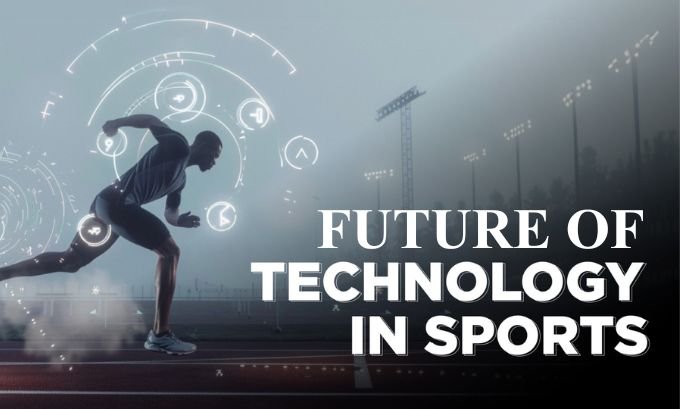
Sports are evolving faster than ever — and technology is at the heart of this revolution. The future of technology in sports is not just about enhancing athletic performance; it’s about transforming how fans experience the game, how teams strategize, and how events are managed globally.
Whether it’s a wearable sensor tracking a sprinter’s heartbeat, AI analyzing match tactics, or VR immersing fans in stadiums from home, technology is creating a smarter, more connected sports world.
Table of Contents
Wearable Technology & Data Analytics: Your Personal Coach on the Wrist
Wearables track your every move, helping athletes train smarter, prevent injuries, and reach peak performance.

From fitness trackers to smart clothing, wearable technology provides athletes and coaches with real-time data on speed, heart rate, endurance, and muscle performance.
Real-Life Example:
Olympic sprinter Elaine Thompson-Herah uses wearable sensors to monitor muscle fatigue during training. Coaches can tweak her routine to reduce injury risk while maximizing sprint efficiency.
What I Like / Strengths:
- Precise, real-time performance insights
- Personalized training and recovery plans
- Motivation through measurable goals
Areas for Improvement:
- Data privacy concerns with sensitive athlete metrics
- Risk of over-reliance, reducing instinctive decision-making
Artificial Intelligence & Machine Learning: Smarter Decisions, Better Results

I and ML analyze massive data sets to optimize performance, predict injuries, and guide game strategies.
Artificial Intelligence is transforming coaching, scouting, and match analysis. Machine Learning algorithms automatically review hours of footage, highlight trends, and even forecast injury risk.
Case Study:
European football clubs, like Manchester United, use AI to assess players’ positioning and fatigue levels. This insight allows coaches to adjust tactics and substitutions mid-game.
Strengths:
- Predictive performance insights
- Faster, data-driven tactical decisions
- AI-assisted talent scouting
Areas for Improvement:
- Bias in AI predictions based on incomplete data
- Ethical questions regarding athlete monitoring
Internet of Things (IoT): A Connected Game

IoT links players, stadiums, and equipment to create a seamless, data-driven sports ecosystem.
Smart stadiums use IoT to manage crowd flow, ticketing, and security, while connected devices like smart balls and shoes track performance metrics in real time.
Example:
At Tottenham Hotspur Stadium, IoT devices track ball speed, player positions, and even fan movements. This ensures a safe, engaging, and immersive experience for both athletes and spectators.
Strengths:
- Enhanced fan engagement through interactivity
- Real-time monitoring for performance and safety
- Data-rich insights for teams and coaches
Areas for Improvement:
- High setup and maintenance costs
- Vulnerabilities to cybersecurity threats
Virtual Reality & Augmented Reality: Immersive Sports Experiences

VR and AR provide safe training environments for athletes and captivating experiences for fans.
VR Training: Athletes can practice game scenarios virtually, reducing injury risk.
AR for Fans: Spectators can view live stats, virtual replays, and 3D visualizations from anywhere.
Case Study:
Mercedes F1 drivers use VR simulators to navigate complex circuits. Fans can use AR apps to see player stats overlayed on the field during live matches.
Strengths:
- Safe, controlled environments for athletes
- Interactive and engaging fan experiences
- Blends physical and digital worlds seamlessly
Areas for Improvement:
- Accessibility and high costs
- Risk of sensory overload for some users
If you want to explore the future of technology in sports in even more depth, you can check out these insightful articles on ponta.in, techbullion.in and MindJournal.co
Blockchain & Digital Transactions: Trust in the Digital Arena

Blockchain provides secure, transparent systems for contracts, ticketing, and fan collectibles.
Blockchain ensures tamper-proof contracts, anti-doping records, and transparent ticketing. NFTs (Non-Fungible Tokens) also allow fans to own unique digital collectibles.
Example:
NBA Top Shot enables fans to buy, sell, and trade highlight clips as NFTs, connecting digital ownership with sports fandom in a secure way.
Strengths:
- Transparent and secure record-keeping
- Innovative revenue streams via NFTs
- Enhances fan engagement
Areas for Improvement:
- Energy-intensive blockchain systems
- Learning curve for general users
Esports & Digital Communities: The New Frontier

Esports combines competitive gaming with traditional sports, creating global fan communities and digital engagement.
Esports tournaments like FIFA eWorld Cup draw millions of viewers worldwide. Platforms like Twitch and YouTube Gaming allow fans to interact with players, fostering a sense of community similar to traditional sports.
Integration with Traditional Sports: Many sports organizations now host esports leagues, blending real-world and digital competitions.
Strengths:
- Expands fan base globally
- Generates new digital revenue streams
- Builds interactive, community-driven experiences
Areas for Improvement:
- Risk of player burnout
- Regulatory challenges across international jurisdictions
Ethical, Economic, and Social Implications: Playing Fair in a Digital Era

Technology in sports comes with ethical and social responsibilities that must be managed carefully.
Key Considerations:
- Privacy: Athlete biometrics and fan data must be protected
- Equity: Smaller teams may lack access to advanced tech, widening performance gaps
- Sustainability: High-tech systems can be energy-intensive
Best Practices:
- Implement strict data governance
- Ensure equitable access to technology
- Promote transparency in AI and analytics
For unique tech-related products in Japan, be sure to visit TokyoMart.store And if you’re looking for expert marketing services to grow your brand in Japan, check out LinkLuminous.com — a digital agency helping businesses shine online.
Comparison Table: Technologies Shaping Sports
| Technology | Purpose | Benefits | Challenges |
| Wearables & Data Analytics | Track performance | Personalized training, injury prevention | Privacy, over-reliance |
| AI & ML | Strategy & scouting | Predictive insights, better decisions | Data bias, ethical concerns |
| IoT | Smart venues & equipment | Fan engagement, real-time monitoring | High costs, security risks |
| VR & AR | Training & fan experience | Immersive simulation, interactive viewing | Cost, accessibility |
| Blockchain | Contracts & collectibles | Transparency, security, fan engagement | Learning curve, energy use |
| Esports | Online competitions | Community growth, revenue | Regulation, fatigue risk |
FAQs: Answering Your Top Questions
1. How does wearable tech improve athlete performance?
By tracking metrics like heart rate, speed, and endurance, wearables provide actionable insights for training and recovery.
2. What role does AI play in sports strategy?
AI predicts trends, suggests tactics, and automates video analysis to optimize performance.
3. How do fans benefit from AR and VR?
Fans enjoy immersive experiences, live stats, and virtual stadium tours, creating deeper engagement.
4. Is blockchain secure for sports transactions?
Yes, blockchain ensures transparency and tamper-proof records for contracts, ticketing, and anti-doping.
5. How is esports changing traditional sports?
It opens new revenue streams, builds global communities, and integrates digital engagement into traditional leagues.
6. Are there ethical concerns with sports technology?
Yes. Data privacy, accessibility, and fair use are key considerations.
7. What trends will define the future of technology in sports?
Expect deeper AI integration, immersive VR/AR experiences, connected IoT systems, and blockchain-based transparency.
Conclusion: The Human-Centered Future of Sports
The future of technology in sports is a fusion of human talent and digital intelligence. From wearables and AI to VR simulations and NFT fan experiences, technology is enhancing performance, fan engagement, and operational transparency.
Yet, technology must be balanced with ethics and inclusivity. Protecting privacy, promoting fairness, and ensuring accessibility will define the next era of sports. The game is evolving — and with smart adoption, both athletes and fans will win.
