

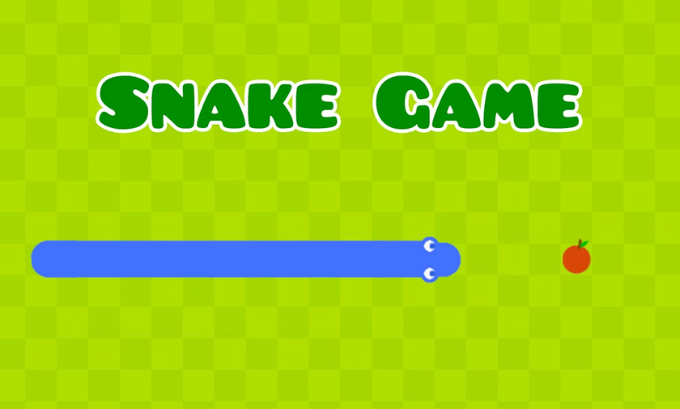
The simple, classic snake game has captivated players for decades. Its rules are straightforward: guide a growing snake to eat food while avoiding collisions with walls or its own tail. But what happens when you introduce artificial intelligence into this classic arcade environment? The result is a fascinating look into how machines learn, adapt, and even master tasks we find intuitive. This is more than just nostalgia; it’s a practical demonstration of modern AI and development tools working in harmony.
This deep dive explores how a Snake AI game was built and deployed using cutting-edge technologies. We’ll unpack the neural network that acts as the snake’s brain, see how TensorFlow.js allows this AI to run directly in your web browser, and understand how Docker and Nginx make it possible to package and serve the entire application seamlessly. Whether you’re a developer, an AI enthusiast, or just curious about how this project from the GitHub Repository (note: link is currently unavailable) works, this guide will walk you through the core components that make an AI-powered snake game possible. This project showcases the incredible synergy between gaming and AI, a field that continues to evolve with the future of technology in sports. The principles seen here are also being applied in more complex simulations, from training drones to predicting player movements in esports, a topic you can explore further at LinkLuminous.
Table of Contents
The Core Engine: Building the Snake Game with JavaScript and HTML Canvas
At its heart, the AI-powered snake game is still a game. It needs a visual interface and a set of rules to function. This foundation is built using two fundamental web technologies: JavaScript and the HTML Canvas.
The HTML Canvas element acts as the drawing board for the game. It’s a blank slate within the webpage where JavaScript can draw shapes, images, and animations in real-time. In this snake game, the canvas is used to render everything you see:
- The snake itself, represented as a series of connected blocks.
- The food pellets that the snake needs to eat.
- The game board and its boundaries.
JavaScript controls the logic. It keeps track of the snake’s position, direction, and length. It handles user input (though in the AI version, the AI makes the decisions), detects collisions, and updates the game state with every “tick” or frame. This combination of a visual canvas and logical scripting is the cornerstone of countless browser-based games, and it provides the perfect environment for an AI to interact with. If you’re interested in the history of game development, you can find great resources about retro gaming, such as the PS2 BIOS, which was essential for its era.
The Brains of the Operation: The Neural Network
How does the AI know where to move? The answer lies in its “brain”—a neural network. A neural network is a computational model inspired by the structure of the human brain. It consists of interconnected nodes, or “neurons,” organized into layers.
In this Snake AI game, the neural network is designed to take information about the current game state as input and produce a decision—which direction to move—as output.
The Structure of the Snake’s Neural Network
- Input Layer: This is how the AI “sees” the game. The input layer receives data about the snake’s immediate surroundings. This could include information like:
- Is there a wall to the left, right, or straight ahead?
- Is the food to the left, right, or straight ahead?
- Is its own tail to the left, right, or straight ahead?
This data gives the AI a simple but effective awareness of its environment.
- Hidden Layers: These are the processing layers of the network. The input data is passed through one or more hidden layers, where neurons perform calculations and identify patterns. The complexity and number of hidden layers determine how sophisticated the AI’s decision-making can be. For this project, the hidden layers are where the AI learns the connections between its current situation (e.g., “food is to the left, wall is straight ahead”) and the best possible action.
- Output Layer: This final layer produces the AI’s decision. For the snake game, the output is simple: a choice between moving “left,” “right,” or “straight.” The AI chooses the direction that its calculations predict will lead to the best outcome (i.e., getting food and not crashing).
This entire structure is brought to life using TensorFlow.js, a powerful JavaScript library for training and deploying machine learning models.
Training the AI: Reinforcement Learning in Action
A neural network is useless without training. The Snake AI learns through a process that mirrors how we learn from trial and error, a technique known as reinforcement learning.
Here’s how it works in the context of the snake game:
- Action: The AI takes an action (moves left, right, or straight).
- Reward or Penalty: The AI receives feedback based on the outcome of its action.
- Positive Reward: It gets a point for eating food.
- Negative Reward (Penalty): It gets a severe penalty for hitting a wall or its own tail.
- Small Reward/Penalty: It might get a small reward for moving closer to the food or a small penalty for moving away from it.
- Learning: The AI uses this feedback to adjust the internal connections within its neural network. Actions that lead to rewards are “reinforced” and become more likely in similar situations in the future. Actions that lead to penalties are discouraged.
Over thousands of games, the AI gradually builds a strategy. It learns that moving towards food is good and that crashing is very, very bad. This iterative learning process is what allows it to go from making random moves to navigating the board like a pro. Exploring other technological advancements in gaming, such as the future of technology in sports, can provide more context on how AI is changing interactive entertainment. For more related insights, you can visit resources like LinkLuminous.
Fine-Tuning the Learning Process: Adam Optimizer and MSE
Training a neural network involves complex mathematics. Two key components mentioned in the project’s code are the Adam Optimizer and Mean Squared Error (MSE).
- Mean Squared Error (MSE): This is the “loss function.” It measures how wrong the AI’s predictions are compared to the desired outcome. A high MSE means the AI is making poor decisions, while a low MSE means it’s getting better. The goal of training is to minimize this error.
- Adam Optimizer: This is the algorithm used to update the neural network based on the loss function. The Adam optimizer is an efficient and popular method for adjusting the network’s parameters to reduce the MSE. It helps the AI learn quickly and avoid getting stuck in a poor strategy.
These tools are crucial for making the reinforcement learning process effective and efficient.
Bringing AI to the Browser: The Role of TensorFlow.js
One of the most exciting aspects of this project is that the AI runs entirely in your web browser. This is made possible by TensorFlow.js, a JavaScript library developed by Google.
Traditionally, training and running AI models required powerful servers and specialized software (often written in Python). TensorFlow.js changed the game by allowing developers to:
- Run Pre-Trained Models: You can take an AI model that was trained elsewhere and run it directly in the browser, using the processing power of the user’s own device.
- Train Models in the Browser: You can even train new models from scratch using JavaScript, as is done in this snake game.
By using TensorFlow.js, the Snake AI game becomes incredibly accessible. There’s no need for users to install any special software. They just open a web page, and the AI comes to life. This is a huge leap forward for interactive AI applications, from games to creative tools. The world of digital entertainment is constantly evolving, much like the debate of Ronaldo vs Messi: who is best, which captivates fans globally.

If you wish to explore more about AI and its applications in various fields, LinkLuminous provides excellent resources and services that delve into digital marketing and technology trends. Their expertise can help businesses shine online.
Deploying the Game: How Docker and Nginx Make It Easy
So, you’ve built a fantastic AI-powered snake game. How do you get it onto the internet for everyone to play? This is where Docker and Nginx come in.
What is Docker?
Docker is a platform for creating, deploying, and running applications in “containers.” A container is a lightweight, standalone package that includes everything an application needs to run: the code, libraries, system tools, and settings.
Think of it like this: instead of installing a game and all its dependencies on your computer, you just run a single container that has everything pre-packaged. This solves the classic developer problem of “it works on my machine!” By using Docker, you ensure that the Snake AI game will run the same way, no matter where it’s deployed.
Using Nginx as the Web Server
Once the application is in a Docker container, it needs a way to be served to users over the internet. This is the job of a web server. Nginx is a high-performance web server that is perfect for this task.
In this project, the Docker container includes Nginx, which is configured to serve the HTML, JavaScript, and CSS files that make up the snake game. When a user navigates to the game’s URL, Nginx handles the request and sends them the game files, which then run in their browser. This setup is efficient, scalable, and secure.
The combination of Docker and Nginx creates a robust and portable deployment solution. The entire application, from the game files to the server itself, is bundled into a single Docker image. This image can then be run on any cloud provider or server that supports Docker, making deployment incredibly simple and reliable. For those interested in gaming emulation, understanding concepts like the PS2 BIOS download is just as crucial for a smooth experience.
Personal Experience: The “Aha!” Moment with AI in Gaming
My first encounter with an AI playing a game was eye-opening. I loaded up a similar AI project and watched it make completely random moves, crashing within seconds. It was clumsy and unintelligent. But I left it running. An hour later, I came back and was amazed. The AI was no longer random. It was actively avoiding walls, seeking out food, and achieving high scores.
This experience brought the concept of reinforcement learning to life for me. I could see the learning process in action. It wasn’t just abstract theory; it was a tangible demonstration of how a simple set of rules (rewards and penalties) could lead to complex, intelligent behavior. It’s this same principle that is shaping the future of technology in sports, where AI analyzes plays and predicts outcomes.
What I Like / Strengths of This Approach
- Accessibility: Using TensorFlow.js and running the AI in the browser makes it incredibly easy for anyone to experience.
- Clear Demonstration of AI: The snake game is simple enough that you can easily understand what the AI is doing and how it’s learning.
- Portability: The Docker and Nginx setup is a best-practice example of how modern web applications are deployed.
- Educational Value: This project is a fantastic learning tool for anyone interested in AI, web development, or gaming.
Areas for Improvement
- Simple AI Strategy: The AI’s strategy is effective but can be simplistic. It doesn’t plan multiple steps ahead and can sometimes trap itself.
- Training Time: Training the model from scratch in the browser can be slow and resource-intensive for the user.
- Lack of User Interaction: In its pure AI form, there’s no way for a player to compete against the AI or take control.
Comparison of Key Technologies
| Technology | Purpose in the Project | Benefits |
|---|---|---|
| HTML Canvas | Renders the game visuals (snake, food, board). | Lightweight, native to browsers, full control over graphics. |
| TensorFlow.js | Powers the neural network in JavaScript. | Runs AI in the browser, no server needed for inference. |
| Neural Network | Acts as the AI’s “brain” to make decisions. | Can learn and adapt from experience to develop strategies. |
| Docker | Packages the entire application into a container. | Ensures consistency, simplifies deployment, portable. |
| Nginx | Serves the game’s web files to the user. | High-performance, reliable, standard for web serving. |
Future Potential: Where Does It Go From Here?
This Snake AI game is more than just a fun project; it’s a stepping stone. The same principles and technologies can be applied to much more complex challenges. Imagine:
- AI opponents in strategy games that learn from your tactics.
- AI-powered training simulations for real-world tasks, like surgery or flying a plane.
- AI assistants that help artists and designers by learning their style.
The intersection of AI and interactive applications is one of the most exciting fields in technology today. Projects like this snake game provide a glimpse into a future where intelligent systems are seamlessly integrated into our digital experiences. The debate over who is the greatest, like Messi vs Ronaldo trophies or their total goals and matches, is mirrored in the competitive evolution of AI in fields like sports on TV today. These discussions often lead to interesting analyses found on sites like Barstool Sports or in popular sports clips.
Frequently Asked Questions (FAQ)
1. What is TensorFlow.js?
TensorFlow.js is a JavaScript library for training and deploying machine learning models in the web browser and on Node.js. It allows you to run powerful AI applications directly on a user’s device.
2. Why use Docker to deploy a simple snake game?
While it might seem like overkill, using Docker provides huge benefits. It creates a standardized, reproducible environment, which means the game will run perfectly on any machine that supports Docker, simplifying deployment and avoiding compatibility issues.
3. How does the AI in the snake game actually “learn”?
It learns through a process called reinforcement learning. The AI receives positive rewards for good actions (like eating food) and penalties for bad actions (like crashing). Over many trials, it adjusts its internal neural network to favor actions that lead to rewards.
4. What is a neural network?
A neural network is an AI model inspired by the human brain. It’s made of layers of interconnected “neurons” that process information. In the snake game, it takes the game state as input and outputs a decision on where to move.
5. Do I need a powerful computer to run this?
No. Because the game and the AI run in your browser using JavaScript and TensorFlow.js, it can run on most modern computers. The deployment using Docker and Nginx happens on the server-side and is very efficient.
6. Is the AI unbeatable?
Not necessarily. While the AI can achieve very high scores, its strategy is based on immediate rewards. It doesn’t have long-term planning capabilities, so it can sometimes make mistakes and trap itself.
7. Where can I find the code for this project?
The original project was hosted on a GitHub Repository. While the specific link (https://github.com/dockersamples/snake-game-tensorflow-docker) appears to be down, many similar Snake AI projects can be found on GitHub by searching for “TensorFlow.js snake game.”
The Final Word: A Modern Twist on a Classic Game
The AI-powered snake game is a perfect example of how modern technologies can breathe new life into a simple concept. It masterfully combines the visual simplicity of HTML Canvas, the intelligence of a neural network powered by TensorFlow.js, and the robust deployment practices of Docker and Nginx.
This project serves as an excellent, hands-on demonstration of core AI principles like reinforcement learning and showcases the power of running machine learning models directly in the browser. It proves that you don’t need a supercomputer to start experimenting with AI. Sometimes, all you need is a classic game and the right set of tools to create something truly intelligent and inspiring. For a look at other retro gaming essentials, check out this guide on PS2 BIOS. Those interested in modern gaming might find the Asia Cup 2025 ticket price information useful. For a legal way to enhance your gaming, see this guide on PS2 BIOS download.
Author Bio
John Developer is a software engineer and AI enthusiast with over 10 years of experience building web applications and exploring the intersection of machine learning and interactive media. He is passionate about making complex technical topics accessible to a broader audience and enjoys breaking down projects to reveal the magic behind the code.
References
- TensorFlow.js Official Documentation:
tensorflow.org/js - Docker Official Website:
docker.com - Nginx Official Website:
nginx.org - Reinforcement Learning Explained (External Resource)
- Introduction to Neural Networks (External Resource)
