

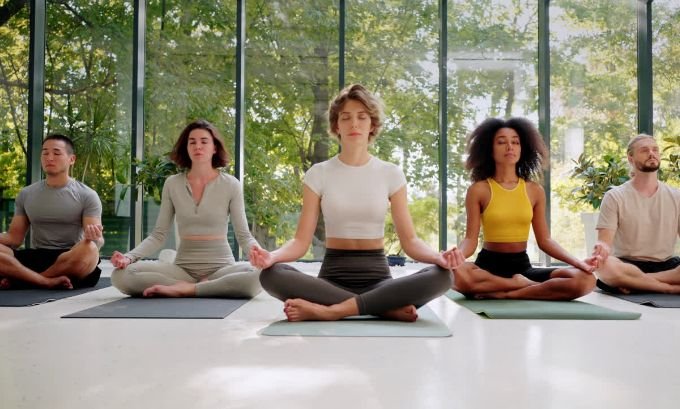
Yoga is a practice for the mind and body, blending physical movements, deep breathing, and meditation to foster well-being. It’s an ancient discipline designed to create harmony between your physical self and your inner consciousness. If you’re curious about what this practice truly involves, this guide offers everything you need to know about yoga, from its deepest roots to its modern-day benefits.
We’ll journey through its rich history, unpack its core philosophies, explore different styles you can try, and look at the science-backed reasons it has become a global phenomenon. Think of this as your personal roadmap to understanding and beginning your own yoga journey.
Table of Contents
Your Complete Guide to the World of Yoga
So, what exactly is yoga? It’s a holistic system where the ultimate goal is union—the union of mind, body, and spirit. The term “yoga” originates from the Sanskrit word “yuj,” meaning “to unite.” This unification is achieved through a combination of physical postures (asana), specific breathing exercises (pranayama), and focused meditation (dhyana). While many people see yoga as a great way to get flexible and strong, its traditional purpose runs much deeper, aiming to cultivate inner stillness and spiritual awareness.
With over 300 million practitioners worldwide, yoga has transcended its origins to become a mainstream practice for health, stress relief, and self-discovery.
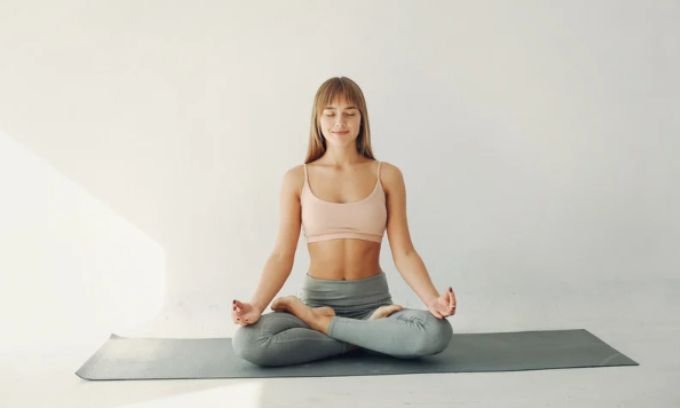
A Journey Through Time: Yoga’s Ancient Origins
The story of yoga begins thousands of years ago in ancient India. The earliest mentions of its concepts appear in the Rigveda, a collection of sacred hymns and texts considered among the oldest scriptures in Hinduism. These early writings planted the seeds for the philosophical and spiritual practices that would evolve over centuries.
The true codification of yoga, however, is credited to a sage named Patanjali. Around 400 CE, he composed the Yoga Sutras, a collection of 196 aphorisms that provide a structured framework for the practice. This text outlines the famous “eight limbs of yoga,” creating a comprehensive path not just for physical practice but for living an ethical and fulfilling life.
For many centuries, yoga was a sacred discipline passed directly from teacher to student. Its introduction to the Western world began in the late 19th century, when spiritual leaders from India traveled abroad. Over time, it was adapted and popularized, often emphasizing its physical fitness and stress-reducing qualities.
Patanjali’s Eight Limbs: A Blueprint for Mindful Living
The sage Patanjali is often called the “father of yoga” for his brilliant work in organizing its principles into a clear, accessible path. His eight limbs are not a rigid set of steps to be mastered in order but rather interconnected practices that work together to guide a practitioner toward a state of wholeness.
- Yama (Ethical Principles): These are the moral guidelines for interacting with the world. They include non-violence (ahimsa), truthfulness (satya), non-stealing (asteya), moderation of the senses (brahmacharya), and non-covetousness (aparigraha).
- Niyama (Personal Observances): These are practices for self-discipline and inner cultivation. They involve cleanliness (saucha), contentment (santosha), focused effort or “heat” (tapas), self-study (svadhyaya), and surrender to a higher purpose (ishvara pranidhana).
- Asana (Physical Postures): This is the limb most people recognize. Asana are the poses practiced to strengthen the body, improve health, and prepare it for long periods of comfortable sitting in meditation.
- Pranayama (Breath Regulation): Pranayama techniques teach you to control your breath, which is considered the vehicle for your life force energy (prana). This practice calms the mind and energizes the body.
- Pratyahara (Withdrawal of the Senses): This limb is about turning your attention inward, away from the constant stimulation of the outside world. It’s the bridge between the external and internal practices of yoga.
- Dharana (Focused Concentration): Once your awareness is turned inward, Dharana is the practice of fixing your mind on a single object, such as your breath, a candle flame, or a mantra.
- Dhyana (Meditative Absorption): While Dharana is the act of concentrating, Dhyana (meditation) is the state of being effortlessly absorbed in that focus. It’s a continuous flow of awareness.
- Samadhi (Enlightenment or Union): This is the final limb, a state of profound bliss where the individual self dissolves and merges with universal consciousness.
My Experience on the Mat: How Yoga Changed More Than My Flexibility
I walked into my first yoga class for a reason many people do: I heard it was a good stretch. As someone who spent hours hunched over a desk, my back and shoulders were in a constant state of complaint. I chose a beginner’s Hatha Yoga class, expecting a gentle, slow-moving hour. I got that, but I also received a whole lot more.
For the first few weeks, I felt clumsy. My balance was shaky, and holding a pose like Warrior II felt like a Herculean effort. But the instructor kept repeating a simple phrase: “Your breath is your anchor.” I started paying attention to my pranayama, focusing on the rhythm of my inhales and exhales. Slowly, something clicked. The poses didn’t magically get easier, but my reaction to the difficulty changed. Instead of fighting the discomfort, I learned to breathe through it.
The real turning point came during a particularly challenging time in my personal life. I showed up to class with my mind racing and my heart heavy. At the end of the session, lying in Savasana (Corpse Pose), I felt a profound sense of release. Tears I didn’t even know were there started to flow. It wasn’t sadness; it was a letting go. That’s when I realized yoga wasn’t just exercising my body; it was giving my mind and spirit a space to heal.
What I’ve Gained from My Practice
- Emotional Regulation: The practice has given me invaluable tools for managing stress. A few rounds of deep, conscious breathing can ground me in moments of anxiety.
- Physical Resilience: Beyond flexibility, I’ve built functional strength. My posture has improved dramatically, and the chronic back pain I used to experience is now a rarity.
- Mind-Body Connection: I’m more attuned to my body’s needs. I can recognize the physical signs of stress or fatigue and respond with kindness instead of pushing through.
- A Shift in Perspective: The focus on non-judgment and self-acceptance on the mat has spilled over into my daily life. It’s taught me to be a little kinder to myself.
Where My Journey Is Still Unfolding
- Deeper Meditative Practices: While I’ve become comfortable with the physical asana, I am still working on building a consistent meditation (dhyana) practice. My mind still loves to wander.
- Embracing Discomfort: My natural tendency is to stick to familiar, comfortable poses. I’m challenging myself to explore more advanced postures and styles, even if it means falling a few times.
- Living the Yamas and Niyamas: It’s one thing to understand the ethical principles of yoga, and another to actively live them. I am continually working to integrate these philosophies more deeply into my daily actions and relationships.
Decoding the Chakras: Your Body’s Subtle Energy System
In yogic philosophy, the physical body is intertwined with a subtle energy body. Within this system are the chakras, which are centers of spiritual power and energy. The word “chakra” is Sanskrit for “wheel,” as these centers are envisioned as spinning vortexes of energy. When they are balanced and open, energy flows freely, promoting well-being. When they are blocked, it can manifest as physical, emotional, or mental distress.
There are seven primary chakras aligned along the spine:
- Muladhara (Root Chakra): Located at the base of the spine, this chakra is your foundation. It relates to security, stability, and your basic survival needs.
- Svadhisthana (Sacral Chakra): Situated in the lower abdomen, it’s the center of your creativity, emotions, and pleasure.
- Manipura (Solar Plexus Chakra): Found in the upper abdomen, this is your power center. It governs self-esteem, willpower, and confidence.
- Anahata (Heart Chakra): Located in the center of your chest, this chakra is all about love, compassion, and connection to others.
- Vishuddha (Throat Chakra): At the throat, this center governs communication, self-expression, and speaking your truth.
- Ajna (Third Eye Chakra): Found between the eyebrows, this is the center of intuition, imagination, and inner wisdom.
- Sahasrara (Crown Chakra): At the very top of the head, this chakra represents your connection to the divine, spirituality, and pure consciousness.
Which Style of Yoga Is Right for You?
With so many different styles available, it can be overwhelming to choose where to start. Your choice depends on your physical condition, your goals, and what you want to get out of the practice.
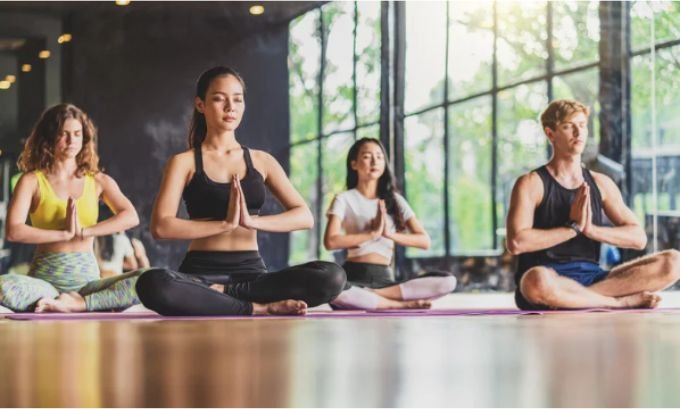
Hatha Yoga
This is an excellent starting point. Hatha Yoga is an umbrella term for any yoga that teaches physical postures. A Hatha class will typically move at a slower pace, focusing on basic asana and proper alignment. It’s perfect for building a strong foundation.
Bikram Yoga
Developed by Bikram Choudhury, this is a form of “hot yoga.” A Bikram Yoga class follows a precise sequence of 26 postures and two breathing exercises in a room heated to 105°F (40.5°C) with 40% humidity. The heat is designed to warm the muscles for deeper stretching and to promote detoxification through sweat. It’s incredibly challenging and not for everyone.
Vinyasa Yoga
Known for its dynamic and flowing sequences, Vinyasa links movement with breath. Classes can be fast-paced and feel almost like a dance. If you’re looking for a good workout that also connects you to your breath, Vinyasa is a great choice.
Iyengar Yoga
This style is all about precision and detail. Iyengar yoga uses props—such as blocks, straps, blankets, and bolsters—to help students achieve optimal alignment in each pose. It’s a fantastic method for learning the nuances of asana and is particularly helpful for those recovering from injuries.
Restorative Yoga
As the name suggests, this is a practice of deep rest. In a Restorative class, you’ll hold gentle poses for extended periods, fully supported by props. The goal is to release tension, calm the nervous system, and restore the body’s energy.
For a deeper dive into the origins, benefits, and styles of yoga and Everything You Need to Know About Yoga, check out this detailed guide in this articles ponta.in, mumbaitimes.net or mindjournal.co
A Quick Comparison of Yoga Styles
| Style | Vibe & Intensity | Ideal For | Defining Feature |
|---|---|---|---|
| Hatha Yoga | Slow, foundational, gentle | Beginners, learning the basics | Focus on holding individual poses |
| Vinyasa Yoga | Dynamic, flowing, athletic | Those who enjoy movement, cardio | Breath-synchronized movement |
| Bikram Yoga | Intense, sweaty, structured | Detox, deep stretching, discipline | A set 26-pose sequence in a hot room |
| Iyengar Yoga | Precise, methodical, alignment-focused | Detail-oriented students, injury rehab | Extensive use of props |
| Restorative Yoga | Passive, deeply relaxing, meditative | Stress reduction, recovery, everyone | Long-held poses with full prop support |
Looking to enhance your yoga practice with quality mats, props, or wellness essentials? Visit TokyoMart.store for handpicked gear to support your journey.
The Science-Verified Health Benefits of Yoga
While yogis have known of its benefits for millennia, modern science is now providing concrete evidence. Reputable organizations like the National Institutes of Health (NIH) have conducted and reviewed studies that confirm yoga’s powerful effects on both physical and mental health.
According to research summarized by the NIH, a consistent yoga practice can help:
- Alleviate Stress and Anxiety: The combination of movement, pranayama, and meditation is proven to lower cortisol (the primary stress hormone) and activate the body’s relaxation response.
- Improve Sleep: Many studies show that yoga can improve sleep quality and reduce insomnia. Gentle, restorative practices are especially effective.
- Increase Strength and Flexibility: This is one of the most visible benefits. Yoga improves joint mobility and builds functional strength using your own body weight.
- Reduce Chronic Pain: Research indicates that yoga can be an effective complementary treatment for conditions like lower back pain, arthritis, and migraines.
- Support Heart Health: Regular practice has been shown to help lower blood pressure and reduce risk factors for heart disease.
- Boost Mental Well-being: Yoga is increasingly used as a complementary therapy for depression, as it can elevate mood and promote a positive outlook.
Frequently Asked Questions (FAQ)
1. Do I need to be flexible to do yoga?
Not at all! This is the most common myth. Yoga is about developing flexibility, not requiring it from the start. A good teacher will help you modify poses to fit your body.
2. What should I wear to a yoga class?
Wear comfortable clothing that allows you to move and stretch without restriction. Most people wear leggings or shorts and a fitted top that won’t ride up when you’re upside down.
3. Is yoga a form of religion?
No. While yoga has roots in Hindu philosophy, it is not a religion. It is a set of tools and practices for well-being that can be adopted by anyone, regardless of their spiritual beliefs.
4. How is yoga different from just stretching?
Stretching focuses solely on lengthening muscles. Yoga is a holistic practice that integrates the body, breath, and mind. The mindful awareness and use of pranayama are what set it apart.
5. Can I lose weight by practicing yoga?
Yes. Active styles like Vinyasa or Ashtanga can be a great cardiovascular workout. More importantly, yoga promotes mindfulness, which can help you make healthier food choices and reduce stress-related eating.
6. Is hot yoga like Bikram better than regular yoga?
“Better” is subjective. The heat in Bikram Yoga can feel great and allow for deeper stretches, but it also carries risks like dehydration. The best type of yoga is the one you enjoy and can practice consistently and safely.
7. How often should I practice to see results?
Consistency is key. Practicing for 20-30 minutes three times a week is more effective than a single 90-minute class once a month. Even a short, daily practice can bring significant benefits.
Your Yoga Journey Begins Here
We’ve explored everything you need to know about yoga, from its ancient origins in texts like the Rigveda to its modern validation by science. We’ve journeyed through Patanjali’s eight limbs, demystified the chakras, and looked at the core practices of asana, pranayama, and meditation.
Yoga is a deeply personal and adaptable practice. It offers a powerful path to physical health, mental peace, and a deeper connection with yourself. Whether you start with a gentle Hatha class or dive into a challenging flow, the most important step is the first one onto the mat.
Ready to take that step? Find a beginner-friendly class at a local studio or explore the vast world of online yoga to find an instructor that resonates with you.
Author Bio:
This article is contributed by a certified yoga instructor and wellness writer with over 12 years of experience in both personal practice and teaching. With a passion for translating ancient wisdom into practical, modern-day guidance, the author focuses on helping individuals discover the transformative power of a consistent and mindful yoga practice.
References:
- National Institutes of Health (NIH), National Center for Complementary and Integrative Health. “Yoga: What You Need To Know.”
- Bryant, Edwin F. The Yoga Sutras of Patanjali: A New Edition, Translation, and Commentary.
- World Health Organization (WHO). “Global action plan on physical activity 2018–2030.”
- Harvard Health Publishing. “Yoga for anxiety and depression.”
