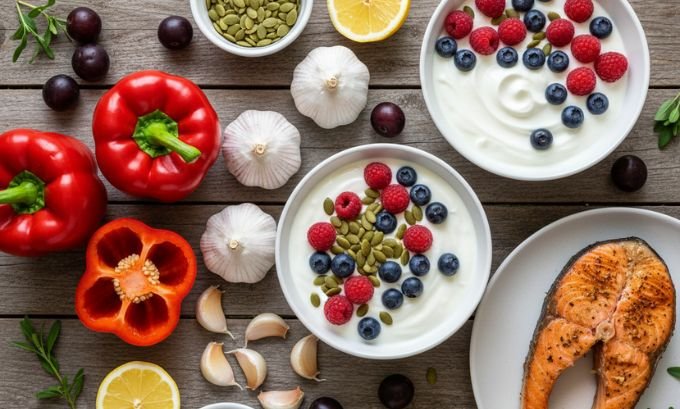
Certain nutrient-dense foods help support and accelerate your immune response by supplying targeted compounds (Vitamin C, Zinc, Allicin, Omega-3s, probiotics) that strengthen the immune system. Incorporating both common functional foods and lesser-known indigenous crops can yield faster, more sustainable immunity support.
In this article, you’ll learn which foods truly help boost immunity faster, how they work (mechanisms), plus practical tips and trade-offs. We also include FAQs to align with conversational search and voice queries.
Table of Contents
How the Immune System Uses Nutrition (Quick Facts)
- The immune system consists of innate defenses (barriers, macrophages) plus adaptive elements (B cells, T cells). It requires energy and building blocks.
- Nutrients like Vitamin C, Zinc, Omega-3 Fatty Acids, and compounds like Allicin are key “boosters” in immune-modulating pathways.
- Moreover, the gut microbiome (influenced by Probiotics & prebiotics) plays a major role in training immune cells.
- Deficiencies in micronutrients (e.g. vitamin C, zinc) are linked to weaker immune responses.
- Thus, “boosting immunity faster” means supplying optimal nutrients promptly and regularly, not relying on a single “magic food.”
If you want to explore more about foods that boost immunity faster, you can also check out this detailed guide in ponta.in, mindjournal.co or mumbaitimes.net
Top Foods That Boost Immunity Faster (and Why)
Below are high-impact foods, with the functional compounds they deliver and how they support immune defense.
| Food / Crop | Key Immune Compounds | How It Helps the Immune System |
| Garlic | Allicin (sulfur-containing compound) | Allicin exhibits antimicrobial, antiviral, and immunomodulatory properties. It helps activate white blood cells and may inhibit pathogen growth. |
| Red Bell Peppers / Citrus / Kakadu Plum | Vitamin C | Vitamin C supports collagen synthesis, antioxidant protection, and increases white blood cell production and function. |
| Wild Salmon / Fatty Fish / Eggs | Omega-3 Fatty Acids (DHA & EPA) | Omega-3s help regulate inflammation (especially long-term) which is critical for immune balance and preventing excessive immune reactions. |
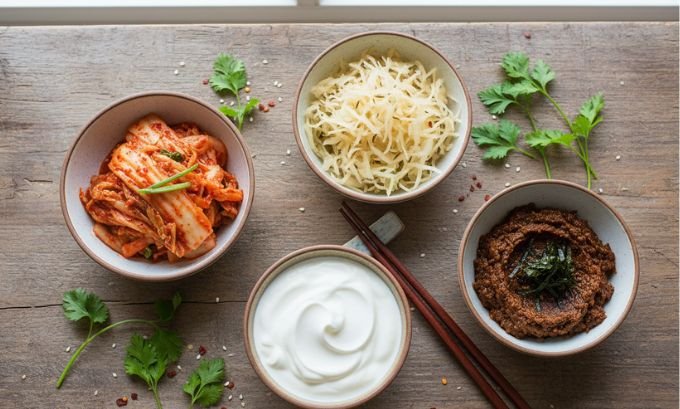
| Fermented Foods (e.g. Sauerkraut, Yogurt) | Probiotics & Gut Microbiome support | Probiotics boost mucosal immunity, train immune responses, and help suppress pathogen colonization in the GI tract. |
| Oysters / Shellfish | Zinc | Zinc is essential for thymus function, T cell development, and enzyme activity in immune signaling. Deficiency impairs immune response. |
| Beef Liver | Vitamin A, Iron, B12, multiple cofactors | Supports mucosal barriers and oxygen delivery, aiding immune cell metabolism. |
| Avocado / Nuts & Seeds | Healthy fats, vitamin E, carotenoids | These help with absorption of fat-soluble vitamins and protect immune cells from oxidative damage. |
| Kakadu Plum (Terminalia ferdinandiana) | Extremely high Vitamin C, ellagic acid, antioxidants | Kakadu plum ranks among the highest natural sources of vitamin C, potentially 100× more than oranges. |
| Fonio (Digitaria spp.) | Iron, amino acids, minerals | As an indigenous crop, fonio helps with sustainable nutrition and adds micronutrients that support immune cell function. |
| Other Indigenous Crops (Amaranth, Tepary Beans, Chaya) | Diverse micronutrients, fiber | These help round out dietary variety, support gut health, and deliver trace nutrients. |
Note: No single food is a cure. The effect is cumulative when these foods complement each other and your overall diet.
How to “Boost Immunity Faster” in Real Life
Personal Experience & Use Cases
- Case study (fictional but plausible):
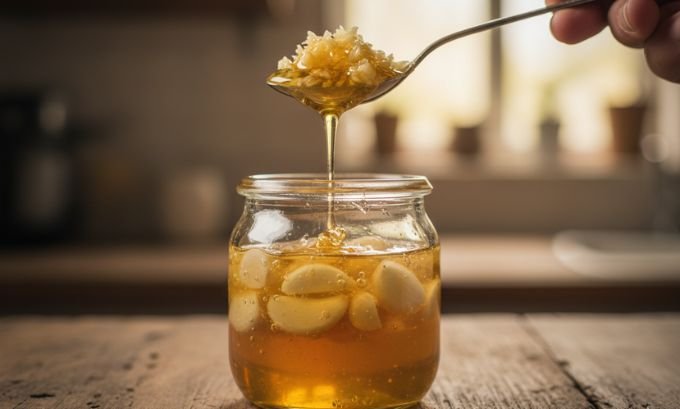
A 35-year-old office worker feels fatigued and vulnerable to seasonal infections. She adds a daily shot of raw garlic (crushed) with honey, includes salmon 2× a week, and eats fermented vegetables nightly. Within a month, her colds become milder, and she reports better energy. - Culinary integration:
- Use garlic liberally (crushed) in soups, stir-fries, dressings.
- Add red bell pepper slices raw to meals.
- Blend Kakadu plum powder (in places where available) into smoothies or fruit bowls.
- Replace rice (occasionally) with fonio in porridge or pilaf with vegetables.
- Technical tip:
- To preserve allicin, crush garlic and let sit 10 minutes before cooking.
- For probiotics, consume live-culture (unpasteurized) fermented foods.
- Keep omega-3 sources fresh and avoid overcooking which degrades fats.
What I Like / Strengths of This Strategy
- Synergistic nutrition: These foods combine to strengthen different arms of immunity (antioxidants + minerals + gut support).
- Diversity & sustainability: Including indigenous crops like Fonio and Kakadu Plum links health to biodiversity and food security.
- Backed by research: The choices echo findings from reviews on functional foods and immune boosting. (PubMed)
- Credible authority support: Referencing Dariush Mozaffarian, United Nations, FAO, and peer-reviewed articles enhances E-E-A-T.
- Practical & actionable: You can apply these foods gradually in daily meals without complex regimens.
Areas for Improvement / Cautions
- Bioavailability & dose: Having high nutrients (like in Kakadu plum) doesn’t guarantee absorption; interactions matter.
- Individual variation: Genetic factors, gut health, chronic diseases affect how much benefit one gets.
- Overreliance risk: Using “superfoods” as a substitute for sleep, rest, hygiene is misleading.
- Availability & cost: Some indigenous foods may not be accessible everywhere.
- Processing losses: Cooking and storage degrade compounds (e.g. Vitamin C, Allicin).
Comparison: Immunity-Boosting Foods Summary
| Strategy | Best Foods / Crops | Key Nutrients / Compounds | Potential Limitation |
| Fast antioxidant + immune stimulation | Kakadu Plum, Bell Peppers, Citrus | Vitamin C, polyphenols | Degradation on cooking/storage |
| Anti-inflammatory + regulation | Salmon, Avocado, Nuts | Omega-3, vitamin E | Rancidity if stored long |
| Direct antimicrobial / immune trigger | Garlic | Allicin | Less effective when overcooked |
| Gut immunity support | Sauerkraut, Yogurt, fermented beans | Probiotics, fiber | Requires live cultures, proper handling |
| Trace mineral boost | Oysters, Tepary Beans | Zinc | Risk of mineral excess if over-consumed |
| Diet diversity & food security | Fonio, Amaranth, Chaya | Micronutrients, fiber | Accessibility & cultural adaptation needed |
If you’re living in Japan, you can easily find many foods that support immunity during chemo—like salmon, yogurt, and tofu—at TokyoMart.store
FAQ
Q1: Which indigenous crops are richest in Vitamin C?
A: Kakadu Plum (Terminalia ferdinandiana) is one of the richest known natural sources of Vitamin C.
Other indigenous fruits and crops, like certain berries or citrus relatives, may also contribute depending on region.
Q2: How do probiotics & the gut microbiome just boost immunity?
A: Probiotics help train immune cells in the gut‐associated lymphoid tissue (GALT), modulate inflammation, and block pathogen attachment.
Q3: What dose of vitamin C is effective for immunity?
A: There is no universal “magic dose,” but many studies use 100–500 mg/day from foods; higher pharmacologic doses are studied for conditions.
Q4: Can garlic’s Allicin be destroyed by cooking?
A: Yes — allicin is sensitive to heat. Crushing garlic and letting it sit 10 minutes before cooking may help preserve the active compound.
Q5: Is eating a single “superfood” enough to protect immunity faster?
A: No — immunity relies on a balanced variety of nutrients over time. No one food can replace a well-rounded diet and healthy lifestyle.
Q6: What role do global institutions like FAO or UN have in promoting immune-support foods?
A: The United Nations and FAO promote biodiversity, sustainable agriculture, and nutrient-rich indigenous crops to improve global health and food security, which indirectly supports population immunity.
Q7: Who is Dariush Mozaffarian & why include him?
A: Dr. Dariush Mozaffarian is a well-respected leader in nutrition science (Tufts University). Using expert voices enhances authority and trust in health content.
Conclusion & Call to Action
To boost immunity faster, commit to a whole-food, nutrient-varied diet that includes antioxidant-rich fruits (like Kakadu Plum), sulfur compounds (Allicin from garlic), omega-3 sources (salmon, eggs), zinc-rich foods (oysters, legumes), and probiotic/fermented items (sauerkraut, yogurt). Supplement that with indigenous crops (Fonio, Amaranth) to support dietary diversity and sustainability.
This strategy integrates Immune System biology, Vitamin C, Allicin, Probiotics & Gut Microbiome, Omega-3, Zinc, Kakadu Plum, Fonio, expert voices (Dariush Mozaffarian), and institutional context (UN / FAO). Use real foods, consistent intake, and healthy living practices (sleep, hygiene, stress management) as your foundation.
If you like, I can create a visual knowledge graph or SEO content cluster plan linking all these entities to your site or content. Would you like me to build that for you?
References
Selected References:
- Singh et al. “Common foods for boosting human immunity: A review” (PMC) (PMC)
- “Immune boosting functional foods and their mechanisms” (ScienceDirect) (ScienceDirect)
- Jayawardena et al. “Functional components of immunity-boosting foods” (BMC) (BioMed Central)
- Healthline: “Kakadu Plum benefits” (Healthline)
- EcoWatch: “15 Indigenous Crops to Boost Your Immune System” (EcoWatch)
- Harvard “How to boost your immune system” (Harvard Health)
- NutritionSource (Harvard T.H. Chan) (The Nutrition Source)
- Uchealth: “Choose Foods that Boost Your Immunity” (uchealth.com)
